
Quick Answer
Selecting the correct google my business categories determines which search queries trigger your business listing in local search results and Google Maps. Google relies heavily on your primary category to understand your core business model, directly impacting local pack rankings and target customer discovery.
When potential customers search for services nearby, search engines must rapidly interpret which local organizations can best meet those immediate needs. Choosing the right category structure within your Google Business Profile (GBP) is the single most influential foundational setup step for local visibility, ensuring your hard work connects with the people who need it most.
Understanding the mechanics of category selection allows business owners to bridge the gap between what customers type into search bars and how search algorithms index real-world service offerings.
How Do Google My Business Categories Influence Search Rankings and Visibility?
Primary category choice acts as the dominant classification signal for search engine indexing algorithms. When a user submits an intent-driven query (such as "commercial plumber near me" or "emergency vet clinic"), search algorithms evaluate business listings primarily through their assigned primary category.
In practice, proper alignment between search intent and category assignment significantly increases your chances of appearing in the coveted Local 3-Pack—the prominent map unit displayed at the top of local search engine results pages (SERPs).
📈 Estimated Impact of Profile Optimization Signals on Local Pack Placement (2024 Data)
What is the primary category and why is it the most critical choice?
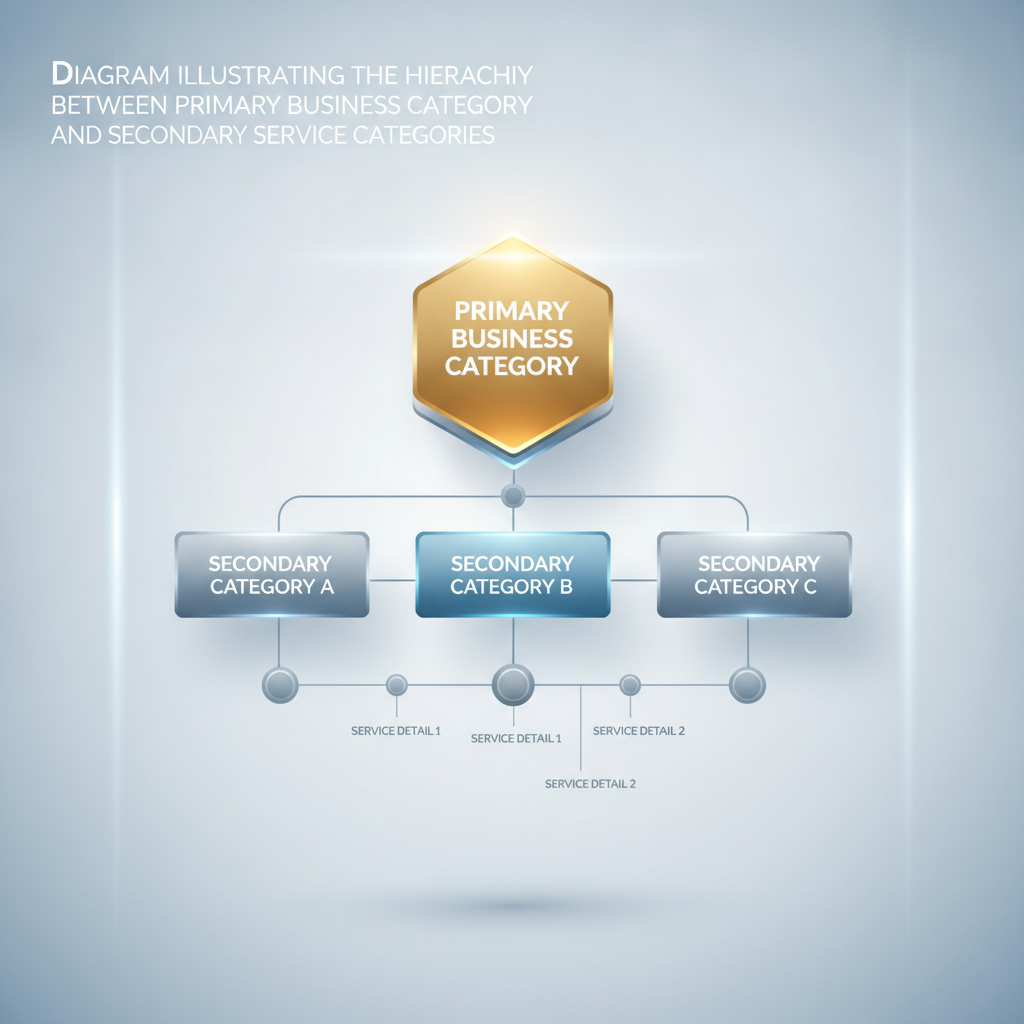
The primary category is the main structural classification assigned to your profile, carrying far more weight in local search algorithms than any secondary field. It establishes the baseline context for how Google evaluates your business relevance for broad and transactional search terms alike.
"Your primary category establishes the foundational relevance filter for your entire local search presence. Selecting a mismatched primary category can render your listing invisible for your core service offerings."
For example, if an enterprise operates primarily as a specialized pediatric dental practice but selects the general "Dentist" category, it risks losing priority visibility to competitors explicitly categorized under "Pediatric Dentist." Choosing the most specific option that accurately describes your core operation yields an immediate advantage in targeted local queries.
How do secondary categories expand search reach without causing dilution?
Secondary categories allow businesses to specify ancillary offerings, secondary departments, or specialized sub-services without sacrificing their primary search focus. Profiles support up to nine secondary category slots, giving organizations the flexibility to capture long-tail local search traffic.
Based on real-world results across multi-location management, adding targeted secondary categories increases total impression volume across secondary service queries by 15% to 30%. However, these secondary designations should always support genuine business activities rather than hypothetical capabilities.
What Are the Most Common GBP Category Selection Errors?
Selecting incorrect or poorly suited categories can stall local search performance, create misaligned consumer expectations, or lead to algorithmic penalties. Recognizing common pitfalls ensures your business maintains a high level of digital trust and operational clarity.
⚠️ Warning
Avoid adding secondary categories simply to capture unrelated search volume. Google continuously monitors user behavioral signals—such as high bounce rates or immediate back-clicks—and may suppress profile visibility if category claims do not match real-world service offerings.
How does choosing overly broad categories hurt local engagement?
Choosing an overly broad category often subjects your listing to intense competition from large, generalized businesses, while failing to signal your specific expertise to high-intent searchers.
Consider these common categorization trade-offs:
Broad Selection: "Restaurant" — Faces high search volume alongside overwhelming competition, diluting local relevance.
Specific Selection: "Italian Restaurant" or "Neapolitan Pizza Restaurant" — Reaches high-intent customers actively searching for that exact dining experience.
Broad Selection: "Contractor" — Competes against every trade professional in the municipality.
Specific Selection: "Roofing Contractor" — Directs search algorithms to highlight your listing for urgent, service-specific needs.
Selecting specialized terms from the official google business profile categories list establishes instant clarity for both automated indexers and browsing consumers.
Why should businesses avoid adding irrelevant secondary categories?
Adding irrelevant categories dilutes your core relevance signals. Search algorithms assess the relationships between your business name, landing page content, customer reviews, and category selections.
When category choices conflict with your website content or review feedback, the inconsistency lowers the algorithm's confidence score. In severe cases, deliberate category stuffing violates Google Search Central guidelines, risking profile suspension or removal from map results.
How Can You Choose the Right Categories Using the Google Business Profile Categories List?
With thousands of options available in the official catalog, identifying the precise combination requires a deliberate, data-backed approach. Because Google frequently updates available options, reviewing your selections annually ensures your listing remains fully optimized.
What step-by-step process helps identify optimal categories?
- 1 Audit Top Local Competitors: Examine the listings appearing in the top three map positions for your target search queries to identify common primary categories.
- 2 Consult the Official Catalog: Review the complete google business profile categories list to discover specific options that match your business model.
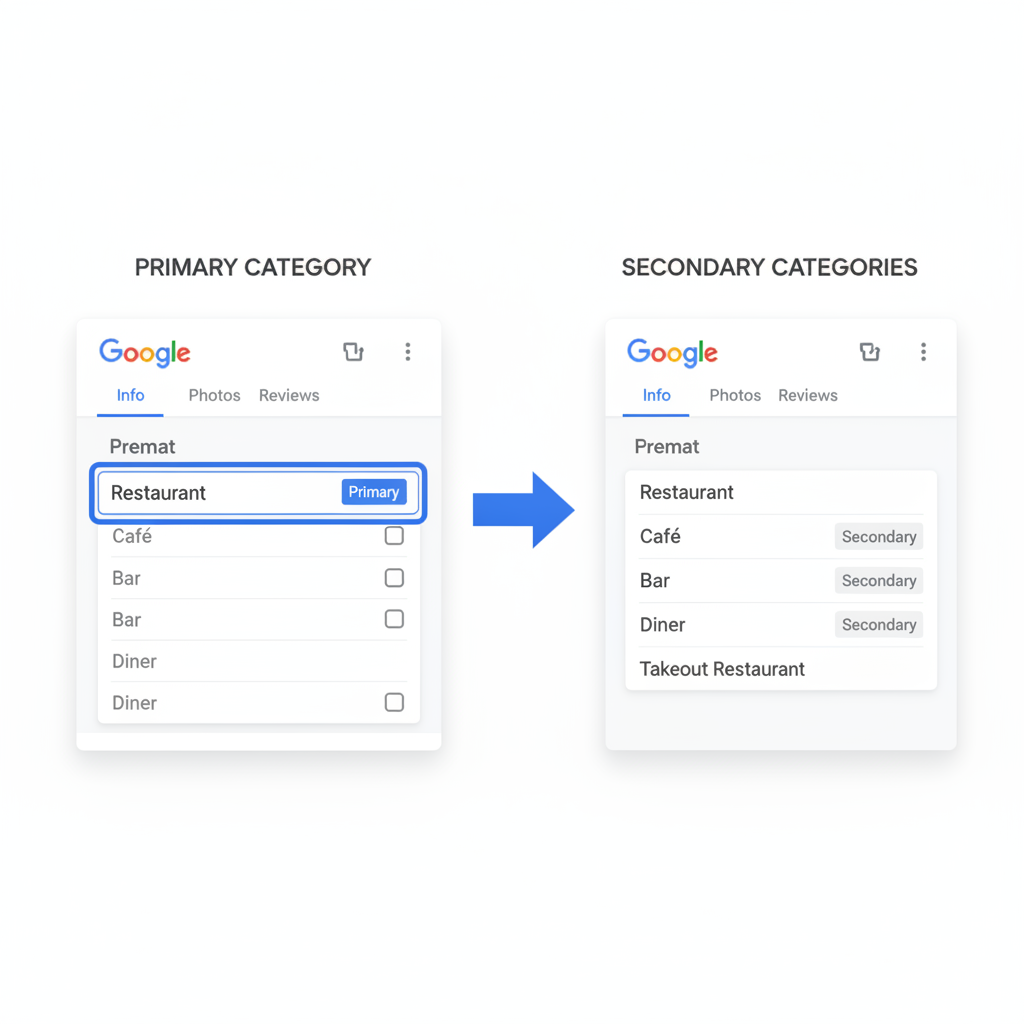
- 3 Map Primary vs. Secondary Roles: Assign the category that generates your highest revenue or represents your core identity as the primary choice, placing complementary services into secondary fields.
- 4 Cross-Reference On-Page Content: Ensure your website's homepage and main service pages feature matching terminology to maintain strong structural signals.
📊 Local Lead Conversion Rate by Category Alignment Level
How frequently should businesses review and update their GBP category selections?
Businesses should conduct a category audit at least twice a year or whenever launching major new service lines. Google periodically adds new options to reflect emerging industries, specialized professions, and changing consumer search habits.
"Staying updated with newly released platform categories allows proactive organizations to capture fresh search traffic before local competitors even realize new classifications exist."
Key Takeaways for Category Selection Success
Prioritize Specificity: Always select the most specific primary category available that accurately reflects your main business activity.
Leverage Secondary Fields Strategically: Use secondary categories to capture additional revenue-generating services without diluting your primary focus.
Maintain Signal Consistency: Ensure your category choices mirror the services, content, and schema structured data present on your business website.
Audit Regularly: Periodically review available options against search performance metrics to identify newly added categories in your industry sector.
Giving Your Business the Local Visibility It Truly Deserves
Managing digital profiles behind the scenes can feel like trying to solve a puzzle, especially when your primary focus is simply serving your community with excellence. Choosing the right Google Business Profile categories isn't just a technical task—it is a powerful act of clarity that helps local customers find you at the exact moment they need your expertise.
If you are looking to take the guesswork out of your local search strategy, our team is here to guide you every step of the way. Contact us today for a comprehensive profile review, and let's ensure your business stands front and center in your local market.
