
AI Search Optimization: How to Show Up in AI Overviews, ChatGPT and Answer Engines
AI search optimization is the strategic practice of structuring digital content so that artificial intelligence discovery engines—such as Google AI Overviews, ChatGPT, Microsoft Copilot, and Perplexity—can easily extract, cite, and present your brand as the definitive answer to user queries. To achieve high visibility across these platforms, organizations must implement Generative Engine Optimization (GEO) and Answer Engine Optimization (AEO). This involves publishing clear, factually verifiable information supported by structured schema markup and strong topical authority.
As search engines shift from traditional ten-blue-links results toward conversational answers, small business owners and enterprise leaders face a fundamental transformation in digital discovery. Securing visibility within AI-generated summaries requires a refined approach to content architecture, authority validation, and technical precision.
What Is AI Search Optimization and How Does It Differ From Traditional SEO?
AI search optimization refers to the methodology of formatting, refining, and distributing content to ensure synthetic intelligence models recognize your organization as a credible primary source. While conventional search engine optimization focuses heavily on keyword placement, backlink counts, and metadata tags to secure page-one rankings, modern AI models prioritize semantic context, verifiable accuracy, and concise factual extraction.
Understanding Generative Engine Optimization (GEO) and Answer Engine Optimization (AEO)
Generative Engine Optimization (GEO) and Answer Engine Optimization (AEO) represent specialized disciplines within the broader realm of modern search strategy. GEO focuses specifically on optimizing content to be ingested, synthesized, and cited by Large Language Models (LLMs) that construct original text responses.
Conversely, AEO targets direct-answer mechanisms—such as Google AI Overviews, voice assistants, and featured snippets—where users receive immediate, single-source solutions to specific inquiries.
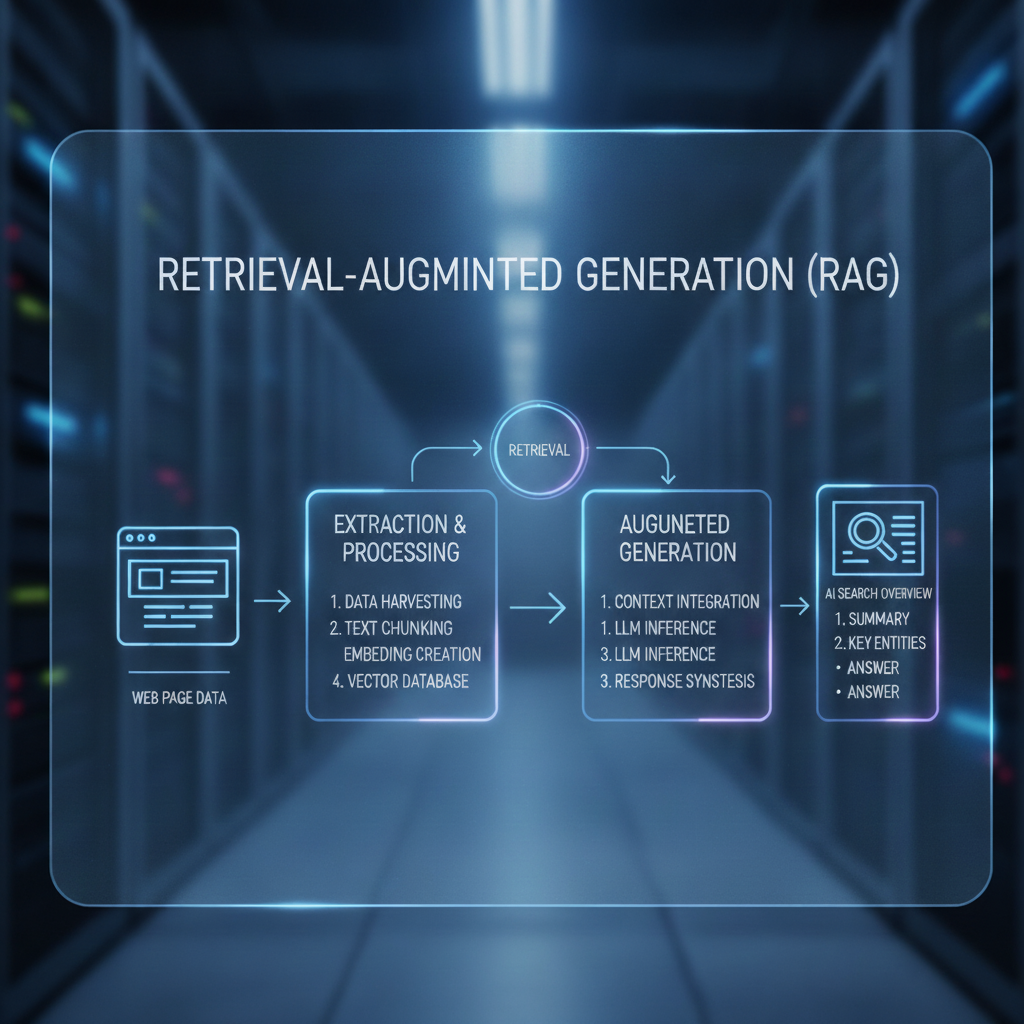
In practice, both frameworks require content to move beyond passive keyword distribution. Information must be engineered for semantic retrieval-augmented generation (RAG) systems. These systems search existing databases for authoritative sources before generating a final response to a user prompt.
ℹ️ Info
Generative Engine Optimization (GEO) does not replace traditional SEO; rather, it builds upon technical SEO foundations by structuring information so artificial intelligence language models can seamlessly interpret, verify, and cite your organization as a primary source.
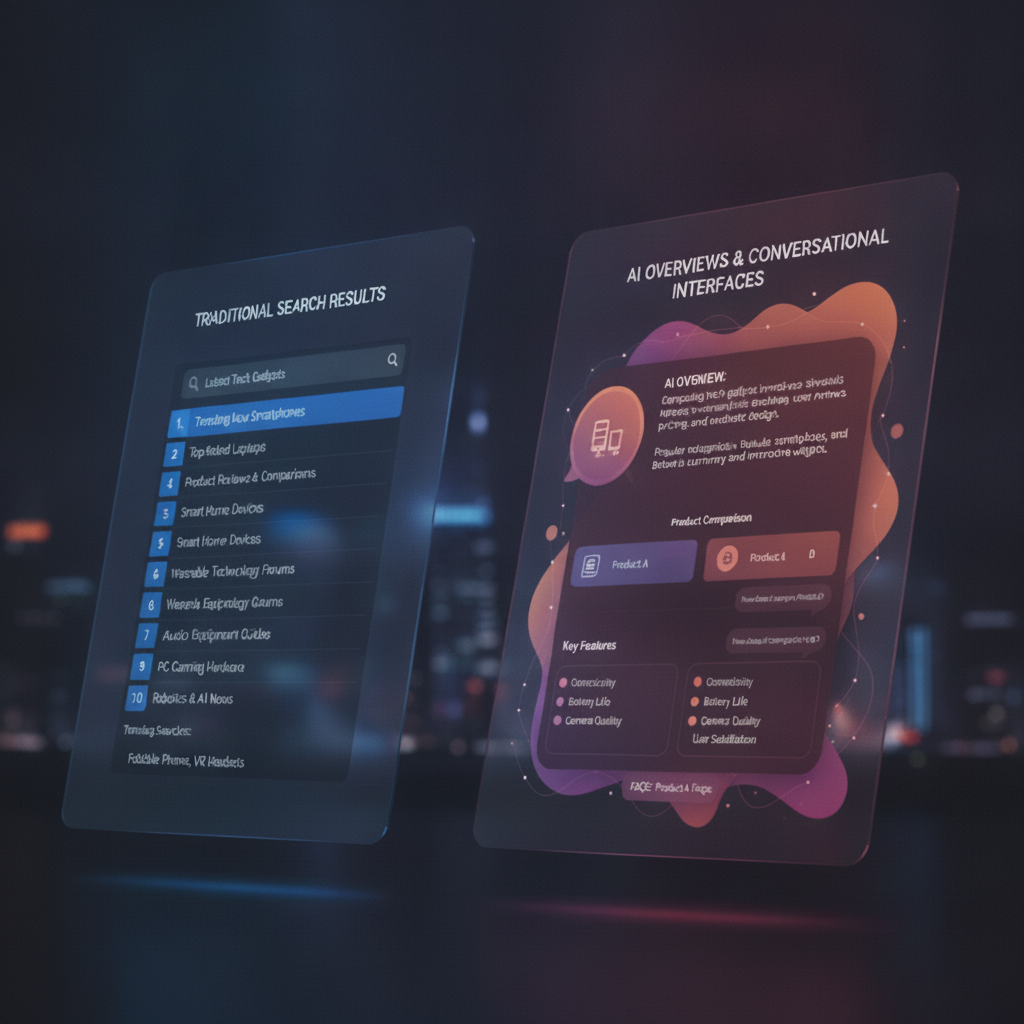
Key Differences Between AI Search Engine Results and Traditional Organic Listings
Traditional organic search engines evaluate web pages using crawlers that map link graphs and index document keywords. When a user submits a search query, the engine presents an index of URLs ranked by relevance and domain authority.
In contrast, AI answer engines evaluate the semantic relationships between concepts within a document. When processing a prompt, an AI engine analyzes millions of data vectors to extract precise entities, logical statements, and direct answers.
| Feature | Traditional SEO | AI Search Optimization (GEO/AEO) |
| :--- | :--- | :--- |
| Primary Goal | High rankings on Search Engine Result Pages (SERPs) | Inclusion and citation within AI Overviews & conversational answers |
| Evaluation Focus | Keywords, backlinks, page speed, meta tags | Entities, semantic relationships, concise answers, source credibility |
| User Interaction | User clicks a link to visit an external website | User reads an aggregated answer directly on the interface |
| Content Structure | Long-form articles optimized for target phrases | Structured Q&A formatting, schema data, clear factual assertions |
Recent research highlights how dramatically user interaction patterns change when generative summaries are presented. Organizations must adapt their strategies to maintain visibility in this evolving digital landscape.
📈 Primary Content Sources Cited in AI Search Overviews (2025 Industry Benchmark)
How Do AI Overviews and Answer Engines Select Sources for Citation?
AI platforms choose source material based on algorithmic models designed to maximize accuracy and minimize factual errors. When platforms like Google or OpenAI construct synthesized summaries, their retrieval systems scan indexed web pages for high-density, authoritative information.
Understanding these underlying evaluation mechanisms allows business leaders to position their digital assets for maximum exposure.
The Role of E-E-A-T and Authoritative Entity Graph Connections
Generative engines rely heavily on principles outlined in Google’s Search Quality Rater Guidelines, specifically Experience, Expertise, Authoritativeness, and Trustworthiness (E-E-A-T).
When evaluating potential citation sources, AI models cross-reference content assertions against established knowledge bases (Entity Graphs). An entity graph maps real-world objects, places, organizations, and concepts along with their relationships to one another.
"AI search engines do not merely read words on a page; they map recognized entities and measure the logical consistency of your statements against validated global data repositories."
If a local Houston business maintains consistent business information across verified directories, industry associations, and local publications, search models validate that enterprise as a recognized entity. Consequently, when a user asks an AI engine for recommendations regarding professional services in Houston, the engine is significantly more likely to cite that business because its underlying entity graph is verified and complete.
Content Formatting and Semantic Structure for AI Extraction
To be cited within AI Overviews, digital content must be structured for effortless machine extraction. Generative models operate with finite processing budgets; pages that present information cleanly without unnecessary narrative padding are processed far more efficiently.
Key architectural requirements for AI readability include:
Definition-First Paragraphs: Place immediate, direct answers in the initial 2-3 sentences of a section before providing supporting context.
Logical Heading Hierarchies: Maintain sequential HTML heading tags (H2 to H3) framed as direct questions or definitive statements.
Structured Lists: Utilize ordered (numbered) lists for process steps and unordered (bulleted) lists for item comparisons and feature sets.
Factual Precision: State clear facts, exact metrics, and unambiguous dates rather than vague marketing assertions.
📉 AI Answer Engine Adoption Growth 2023-2026
Key Strategies to Optimize Your Content for AI Overviews and ChatGPT
Securing consistent citations across AI platforms requires an integrated strategy that combines technical precision, clear writing, and strategic digital brand building. The following practices ensure your web content remains highly accessible to conversational discovery platforms.
Implementing Direct Answer Structures and Conversational Query Matching
Modern search queries are increasingly phrased as natural conversational questions. Rather than searching for short keyword combinations like "commercial real estate Houston," users present complex queries such as, "What are the key zoning regulations and lease terms I should consider when renting commercial space in Houston, TX?"
To capture these queries, your content strategy must reflect natural phrasing while adhering to the direct-answer format.
- 1 Identify High-Intent Conversational Questions: Analyze sales inquiries, customer support interactions, and industry forums to isolate the precise questions your clients ask.
- 2 Lead With Direct Declarative Statements: Start every target section with a concise answer that fully addresses the prompt in under 50 words.
- 3 Provide Methodical Supporting Detail: Follow the direct answer with detailed explanations, bullet points, data tables, and professional analysis.
By structuring content in this manner, you create self-contained blocks of text that AI systems can seamlessly extract and feature as synthesized direct answers.
Leveraging Schema Markup and Structured Data for Machine Readability
Structured data—encoded using Schema.org standards—serves as a explicit translation layer between your website and search engines. While language models are adept at parsing unstructured text, structured JSON-LD data provides verified, unambiguous facts about your business, products, services, and personnel.
Essential schema types for comprehensive AI SEO include:
`Organization` and `LocalBusiness`: Defines your official business name, logo, location coordinates, contact details, and operational boundaries.
`Article` / `BlogPosting`: Establishes headline parameters, publication dates, author identity, and main entity topics for published insights.
`FAQPage`: Explicitly pairs recurring industry questions with concise, verified answers.
`Product` / `Service`: Outlines clear offerings, pricing models, service regions, and verified consumer ratings.
Implementation of structured data eliminates ambiguity, allowing generative platforms to confidently pull factual details into synthesized recommendations.
Building Local Houston Brand Authority and Entity Footprints
For local businesses, regional service providers, and entrepreneurs operating within competitive markets like Houston, establishing localized topical authority is essential. Generative models prioritize entities that demonstrate strong geographic and industry context.
Building a resilient local entity footprint requires strategic execution across multiple digital touchpoints:
Local Directory Alignment: Ensure absolute consistency across your Name, Address, and Phone number (NAP) data on Google Business Profile, Apple Maps, Bing Places, and localized business directories.
Geographic Context Integration: Incorporate specific local terminology, regional regulatory details, and geographic landmarks naturally into service documentation.
Local Press and Citation Building: Secure mentions, interviews, and features in respected local news Outlets, business journals, and educational institutions across the greater Houston region.
When generative engines detect consistent references to your brand across localized authoritative domains, your platform is designated as a top-tier recommendation for regional inquiries.
"Establishing local entity authority requires rigorous data consistency across all digital platforms. Generative engines demand cross-verified consensus before recommending a business."
Measuring and Monitoring Your Performance in AI Search Engines
Tracking performance within AI-driven search environments requires expanding traditional web analytics metrics. Because generative engines often answer user questions directly on the display interface, measuring visibility involves analyzing brand sentiment, citation frequency, and referral traffic quality.
Key Metrics for Generative Engine Visibility and Traffic Tracking
To evaluate the success of your generative engine optimization initiatives, monitor the following critical indicators:
AI Overview Citation Frequency: Track how often your domain URL or brand name appears within AI-generated search blocks for high-value target keywords.
Brand Sentiment and Association: Analyze conversational platforms to evaluate how AI models describe your organization, products, and industry reputation when queried directly.
Direct and Branded Referral Traffic: Measure incoming site traffic originating from conversational platforms such as ChatGPT (`chatgpt.com`), Perplexity (`perplexity.ai`), and Bing Copilot.
- Conversion Rate on Referred Traffic: Visitors navigating to your web properties via AI citations typically display higher conversion intent, as they have already been pre-qualified by the conversational answer.
Monitoring these variables provides clear insight into how effectively your content strategy communicates with automated synthesis systems.
Conclusion: Preparing Your Digital Footprint for the Future of Search
The emergence of AI Overviews, conversational search engines, and generative discovery platforms represents a major evolution in how information is accessed and consumed online. For forward-thinking business leaders, local enterprises, and entrepreneurs, adapting to this shift is essential for maintaining long-term digital market leadership.
By aligning your digital infrastructure with the core tenets of Generative Engine Optimization—focusing on E-E-A-T, direct answer structures, comprehensive schema markup, and verifiable entity authority—you position your organization as an indispensable source of truth.
To audit your current digital footprint, evaluate your existing technical foundation, and build a competitive strategy designed for modern search engines, partner with dedicated experts who prioritize integrity, technical precision, and measurable growth. Prepare your organization for the future of digital discovery today.
