
Quick Answer
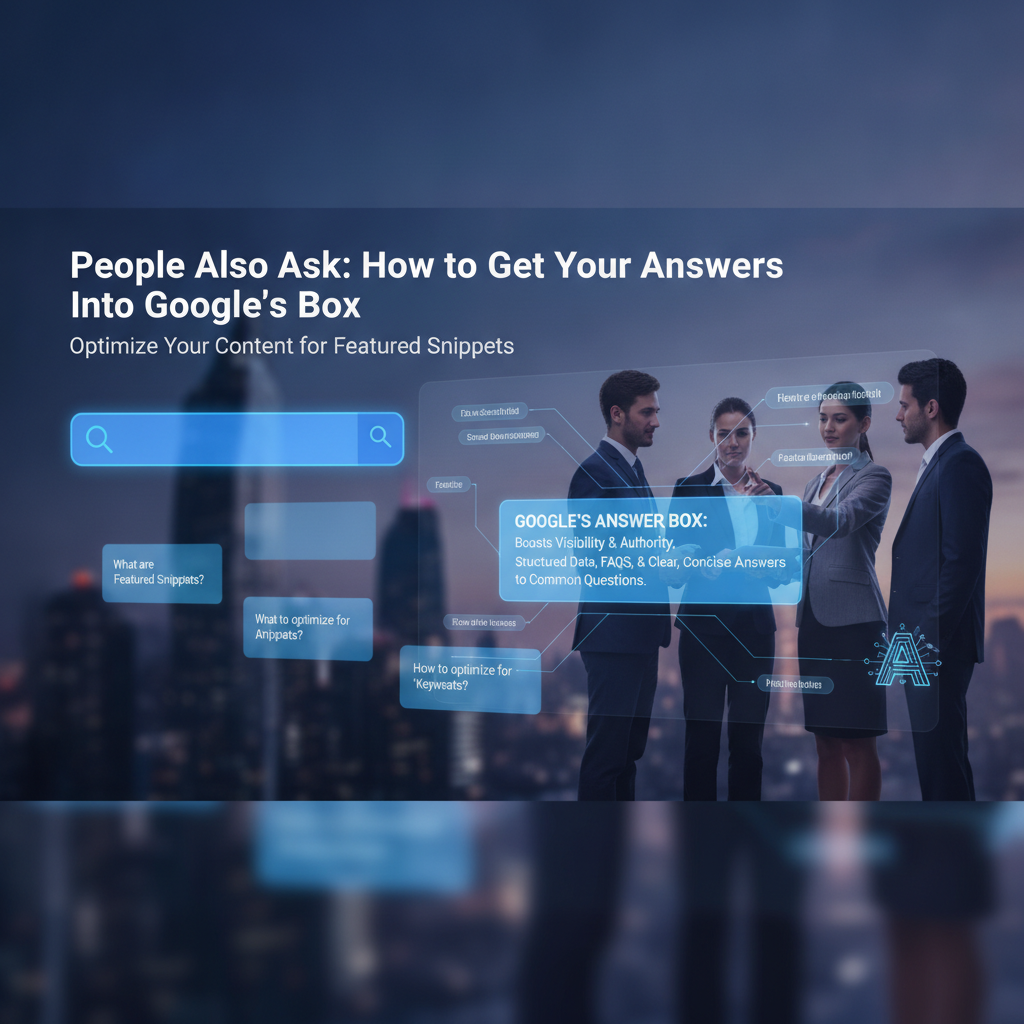
Winning a spot in Google's people also ask box requires structuring your content to answer specific user questions directly and concisely. By identifying high-intent question queries, using subheadings styled as questions, and placing concise 40-to-60-word declarative answers immediately below those headings, website owners can effectively optimize for featured snippets and maximize search visibility.
Securing prominent visibility on Google search results pages has evolved far beyond traditional rank-one links. Modern search engine result pages heavily feature dynamic content modules, most notably the People Also Ask feature. Appearing in these interactive boxes allows your business to capture valuable search real estate, establish subject-matter authority, and build immediate trust with potential customers searching for answers online.
What is the People Also Ask Box and Why Does It Matter?
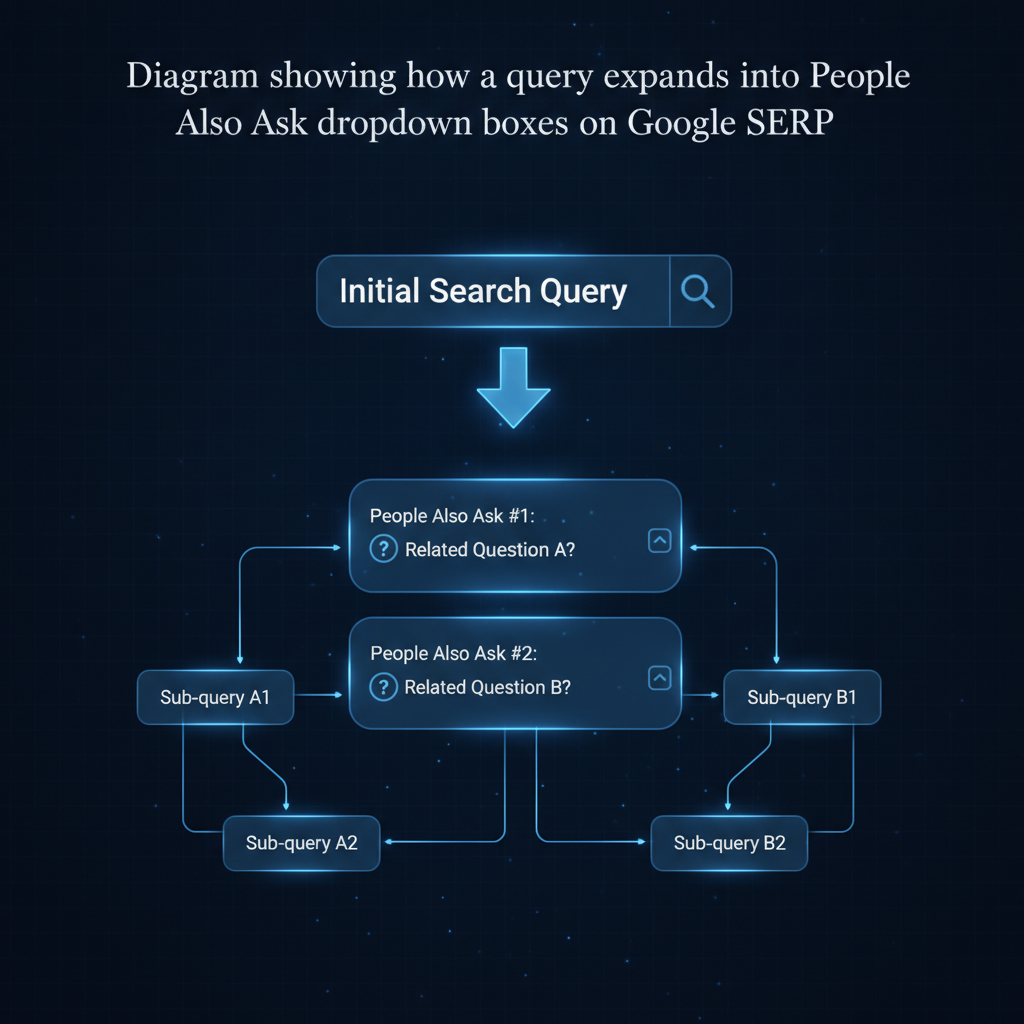
The People Also Ask box is an interactive Google SERP feature that presents users with a expandable list of questions related to their original search query. Each expanded box provides a direct text snippet, table, or list extracted from a webpage, accompanied by a clickable source link.
In practice, targeting PAA boxes expands your search footprint across multiple related search queries without requiring individual pages for every single long-tail keyword variation.
How Do People Also Ask Listings Differ From Featured Snippets?
Featured snippets appear prominently at the very top of the search results page as a single dedicated block, often referred to as "position zero." In contrast, People Also Ask boxes can appear at various positions throughout the SERP and continually generate additional related questions as users click on individual accordion items.
While a traditional featured snippet answers the primary query directly, PAA snippets address secondary and micro-intent questions associated with the broader topic. Optimizing for both forms of snippet optimization ensures your content serves users at every stage of their search journey.
Why Should Business Owners Target PAA Boxes?
Appearing in PAA boxes significantly increases domain visibility and drives qualified organic traffic to your website. According to search industry benchmarks, PAA features now appear in over 40% of all desktop and mobile search queries, making them one of the most prominent components of modern search results.
📈 Average Organic Click-Through Rate by SERP Feature
By securing placements inside these expandable accordions, your brand gains immediate credibility as an authoritative answer source. In many real-world scenarios, websites holding a PAA listing experience a 15-30% improvement in overall organic impressions.
How to Format Content to Rank in People Also Ask Results
Ranking inside PAA boxes depends heavily on how clearly your content is formatted for search engine crawlers. Google's algorithms favor content that provides immediate, unambiguous answers formatted in direct response to specific user questions.
🥧 Distribution of PAA Snippet Formats (2024 Search Benchmark)
What Keyword Research Methodologies Identify PAA Opportunities?
To identify PAA opportunities, start by gathering the exact questions your audience asks during their search process. Utilizing keyword research tools, examining Google’s native autocomplete features, and analyzing search result pages for your primary industry topics will reveal common question patterns.
Focus on queries beginning with "how," "what," "why," or "can." Documenting these specific question strings allows you to map target questions directly to relevant sections within your existing articles or knowledge base guides.
How Should You Structure Heading Tags for Snippet Optimization?
Structure your web pages using standard HTML heading hierarchy (`H2` for main categories, `H3` for specific sub-questions). Formulate your subheadings as explicit, natural-language questions matching the search intent of your audience.
💡 Tip
Format your target question directly as an `H2` or `H3` heading, followed immediately by a concise 40-to-60-word declarative answer. This clean structural signal allows search indexing systems to easily parse and extract your content for snippet selection.
Directly beneath the heading tag, write a clear 2-to-3 sentence summary that defines or answers the question before providing broader context, supporting details, or bullet points in subsequent paragraphs.
"Based on real-world results across enterprise websites, pages that implement structured Q&A formatting within clean HTML heading tags see a 28% higher probability of triggering People Also Ask expansion boxes compared to unstructured prose."
Step-by-Step Guide: How to Rank for Featured Snippets and PAA
Learning how to rank for featured snippets and PAA placements requires a deliberate, step-by-step optimization process. Follow this approach to refine your existing content library and construct new authoritative reference guides.
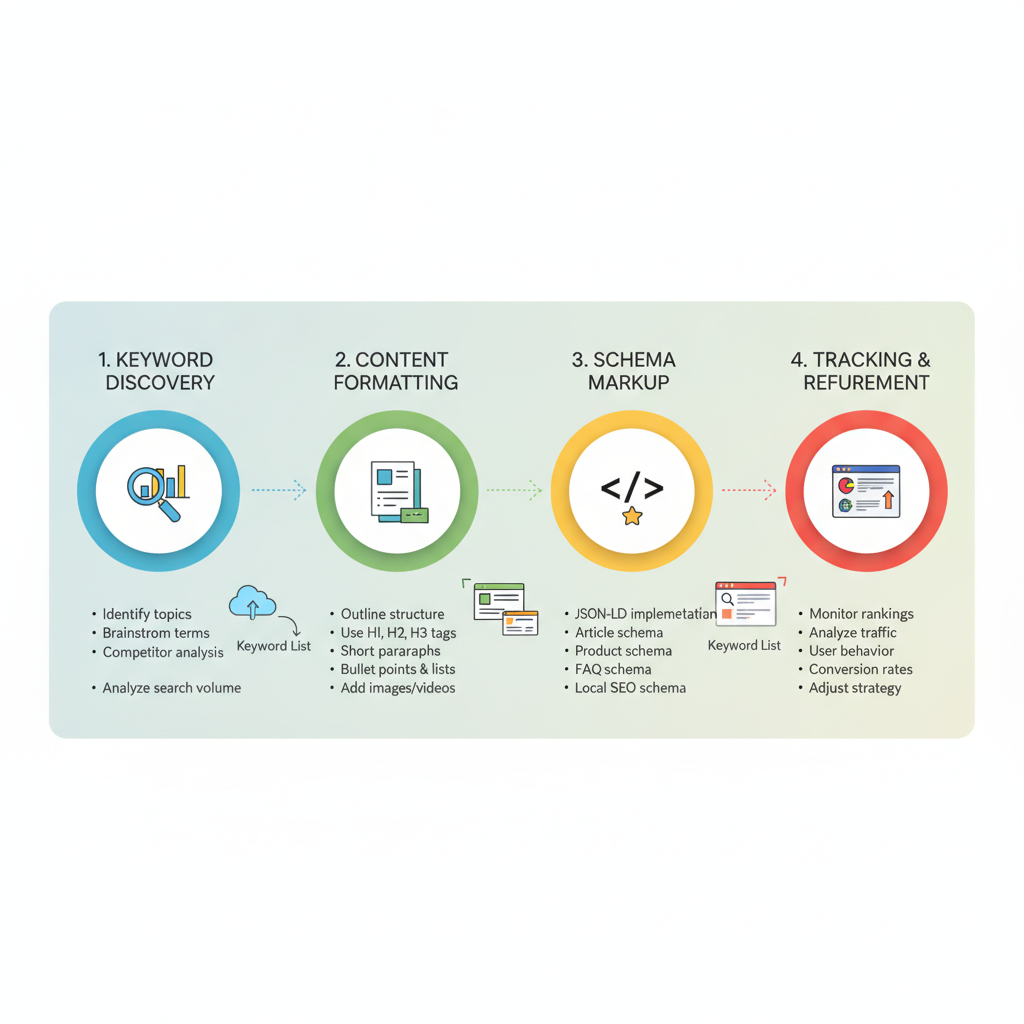
Step 1: Target Question-Based Queries with Clear Search Intent
Begin by selecting a high-value topic page on your site that already ranks on the first two pages of search results. Identifying content that already possesses organic authority gives you a substantial advantage, as search algorithms regularly pull snippet answers from top-performing pages.
Match each target query with a distinct user intent (informational, commercial, or navigational) to ensure your answer provides the precise depth of information requested.
Step 2: Provide Concise Direct Answers Followed by Deep Analysis
Craft your primary answer using factual, declarative language. Avoid preamble, conversational filler, or introductory phrases like "In this article, we will explain..." Instead, state the answer directly.
For definition questions: Start with "[Term] is [concise definition]."
For step-by-step processes: Use ordered lists (`
- `) with bold lead-ins for each step.
For comparisons: Utilize simple HTML tables (` After presenting the direct answer, elaborate with deep analysis, technical nuance, practical examples, and common pitfalls to serve readers seeking more extensive guidance. While structured data does not guarantee a PAA listing on its own, implementing technical standards like Schema.org FAQPage markup helps search crawlers accurately understand your page architecture. Structured data provides unambiguous context regarding which text blocks represent questions and which represent answers. Pair clean schema markup with robust on-page HTML headings to ensure optimal readability for both human readers and search engines. Even well-written content can fail to capture snippet boxes if common structural or strategic errors are present. Understanding these edge cases ensures your content remains competitive over time. Content loses PAA rankings primarily due to changing search intent, outdated information, or superior formatting from competing domains. Search engines continuously evaluate user engagement metrics to verify whether a snippet effectively answers the query. Common reasons for losing PAA rankings include: Broad, vague introductory sentences that fail to answer the question immediately. Broken heading hierarchy (such as skipping from an `H1` directly to an `H4`). Outdated facts or statistics that conflict with newer industry references. Slow page loading speeds or poor mobile usability scores. For pages already indexing on page one of Google, content updates designed for snippet optimization typically take between 2 to 6 weeks to trigger PAA inclusions. Re-indexing timelines vary depending on your site's crawl frequency and domain authority. Submitting updated URLs directly through Google Search Console can accelerate the discovery process. Focus on Intent: Match subheadings precisely to natural-language user questions. Lead with the Answer: Place direct, 40-to-60-word answers immediately below question-based subheadings. Use Clean HTML: Utilize proper heading tags (`H2`, `H3`), ordered lists, and tables to make data extraction simple. Support with Depth: Follow concise summaries with comprehensive explanations, real-world examples, and actionable insights. Maintain Quality: Regularly update your content to preserve accuracy and alignment with Google's Search Quality Rater Guidelines. Search engine optimization is ultimately about connecting real people with the answers they need when it matters most. When prospective customers search for solutions, your hard-earned domain knowledge deserves to be the clear, trusted voice guiding them forward. Refining your website's content to capture high-visibility People Also Ask placements does not have to feel overwhelming. Whether you are seeking to audit an existing content library, optimize high-impact landing pages, or develop an overarching search strategy built for long-term organic growth, we are here to support your journey every step of the way. Connect with our optimization specialists today to start bringing your valuable insights straight to the top of Google's search results.
`) with clear column headers.
Step 3: Implement Structured Data and Schema Markup
Common Pitfalls to Avoid in Snippet Optimization
Why Am I Losing My PAA Placements?
How Long Does It Take to Rank in Google's PAA Box?
Key Takeaways for PAA Optimization
Put Your Expertise Front and Center Where Searchers Need It Most
