
Quick Answer
Smart bidding in Google Ads uses machine learning algorithms to optimize bids for conversions or conversion value in every real-time auction. By analyzing contextual signals like user device, location, time of day, and browser, a smart bidder dynamically adjusts bids to maximize performance metrics like target ROAS or target CPA.
Smart bidding has reshaped how organizations manage digital advertising campaigns. Moving beyond traditional manual bidding, automated systems evaluate vast amounts of user contextual data in milliseconds. To get the highest return on your marketing investment, it helps to understand what these machine learning algorithms are actually prioritizing behind the scenes—and how you can guide them to align with your true business goals.
What is Smart Bidding and How Does It Work in Google Ads?
Smart bidding is a specialized subset of automated bid strategies in Google Ads that utilizes machine learning to optimize for conversions or conversion value in every single auction. This process—known as auction-time bidding—evaluates user and context signals at the exact moment a search query occurs.
Manual bidding requires account managers to adjust maximum Cost-Per-Click (CPC) rates based on historic averages. In contrast, automated strategies dynamically tailor bids to the precise likelihood of a user completing a valuable action on your website, easing the burden of manual adjustments while responding to real-time intent.
Which Contextual Signals Does a Smart Bidder Analyze?
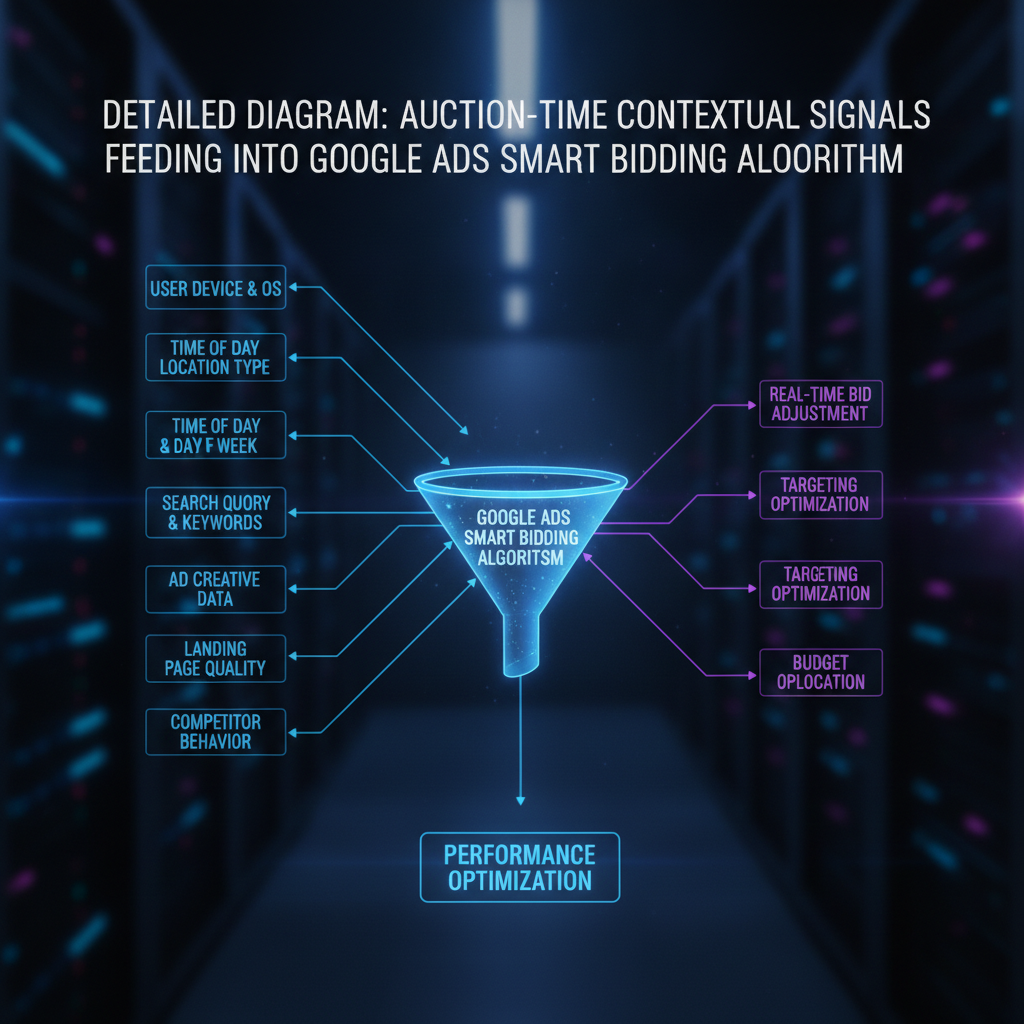
A smart bidder evaluates dozens of real-time contextual signals simultaneously during each auction. According to technical documentation from Google Search Central, auction-time bidding incorporates nuanced data combinations that manual bidding simply cannot account for:
- Device and OS: Evaluates whether the user is on mobile, desktop, or tablet, as well as their specific operating system.
- Physical Location and Location Intent: Adjusts bids based on the user's micro-location and search intent.
- Time of Day and Day of Week: Aligns bidding aggressiveness with historical conversion windows.
- Remarketing Lists: Considers how recently and frequently a user has interacted with your business online.
- Interface Language and Browser: Factor in browser settings and language preference to assess conversion probability.
📊 Conversion Efficiency Index by Bidding Strategy
What Does Smart Bidding Actually Optimize For Across Strategies?
Smart bidding algorithms do not operate on a one-size-fits-all model. Instead, they calibrate bids based on the specific campaign goal selected within your account settings, meeting your business where it is today.
How Does Target ROAS Calculate Bid Adjustments?
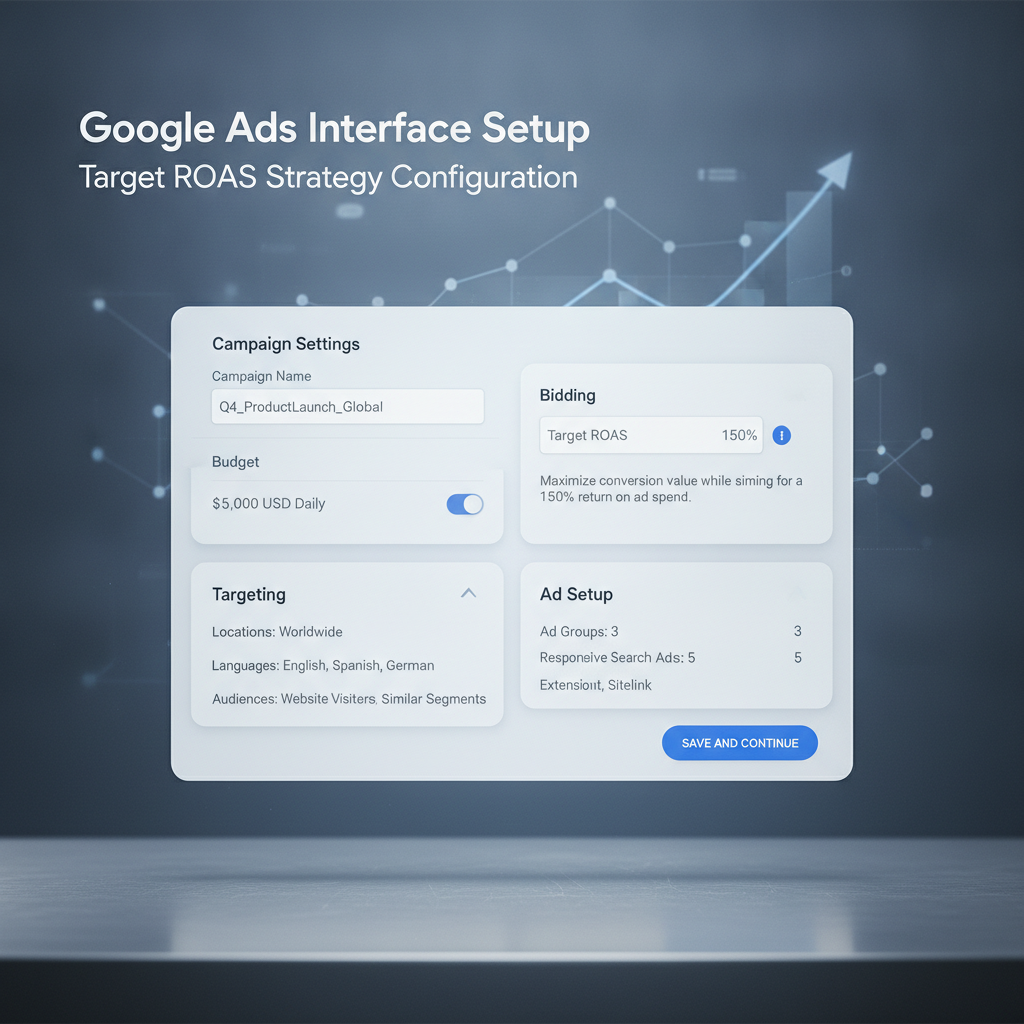
Target ROAS (Return on Ad Spend) optimizes bids to maximize total conversion value while aiming to achieve your specified average return. Rather than treating every conversion equally, a target ROAS strategy adjusts bids based on predicted transaction value.
In practice, transitioning an established e-commerce account to a target ROAS strategy typically yields a 15–25% increase in total revenue within six weeks of algorithmic calibration.
For instance, if your business sets a target ROAS of 400%, the automated system calculates three core factors during every search query:
- 1The probability of the visitor making a purchase.
- 2The estimated order value based on historic purchase behavior and basket composition.
- 3The maximum CPC permissible to maintain a $4 revenue return for every $1 spent on advertising.
How Does Target CPA Prioritize Lead Generation?
Target CPA (Cost Per Acquisition) optimizes bids to generate as many individual conversions as possible at or below your target cost per lead. Unlike target ROAS, which prioritizes basket value, target CPA focuses purely on conversion volume efficiency.
ℹ️ Info
Allow a 7 to 14-day learning period whenever activating or adjusting a smart bidder configuration. Modifying campaign budgets or conversion settings during this period resets baseline algorithmic metrics and delays optimal performance.
What Common Misconceptions Surround Smart Bidding Optimization?
A frequent misconception is that automated bidding operates as a hands-off system that eliminates the need for strategic account management. While machine learning handles bid calculations exceptionally well, the system relies entirely on human empathy, strategic direction, budget management, and quality data inputs.
Does Smart Bidding Guarantee Immediate Conversion Volume?
Smart bidding does not guarantee immediate conversion volume, as machine learning models require a minimum volume of baseline conversion data to construct accurate predictive models. In campaigns generating fewer than 30 conversions per month, automated strategies may experience initial fluctuations while establishing user patterns. Giving the algorithm room to gather insights ensures stronger long-term predictability.
📉 Target ROAS Revenue Trend During Algorithmic Adoption
"Machine learning in digital marketing is only as effective as the underlying data inputs. Providing accurate conversion values turns raw automated bidding into a consistent revenue engine."
Why Does Smart Bidding Sometimes Bid Higher Than Expected?
Automated bid strategies will intentionally raise individual CPC bids when contextual signals indicate an exceptionally high conversion probability. If a user exhibits strong buying intent—such as visiting your pricing page previously and searching for a bottom-of-funnel keyword on desktop during business hours—the system bids aggressively to capture that high-value placement.
Conversely, for searches with low conversion intent, the algorithm lowers the bid dramatically or opts out of the auction entirely, preserving your budget for meaningful customer interactions.
Key Takeaways: How to Maximize Smart Bidding Performance
- Assign Accurate Conversion Values: Pass accurate monetary values to Google Ads for different conversion actions (e.g., differentiating initial contact forms from completed high-value sales).
- Set Realistic Targets: Establish initial target ROAS and target CPA parameters based on historic 30-day performance averages rather than unverified aspirational goals.
- Consolidate Campaign Structures: Combine thin ad groups into consolidated campaign structures to increase conversion density per campaign, helping the algorithm learn faster.
- Monitor the Learning Phase: Avoid making major budget or target changes while campaigns display the "Learning" status to keep performance metrics stable.
Navigating Algorithmic Bidding with Confidence
Handing over bid decisions to automated machine learning algorithms can feel like stepping into unfamiliar territory. However, automation is at its best when paired with human insight, clear business priorities, and accurate conversion tracking. When your data and strategy work in harmony, smart bidding transforms from a complex mystery into a reliable catalyst for steady growth.
If you are looking to refine your paid search performance, eliminate budget waste, or unlock predictable revenue growth, we are here to support your journey every step of the way. Reach out today to start a conversation about tailored strategies that honor your unique business goals.
