
Quick Answer
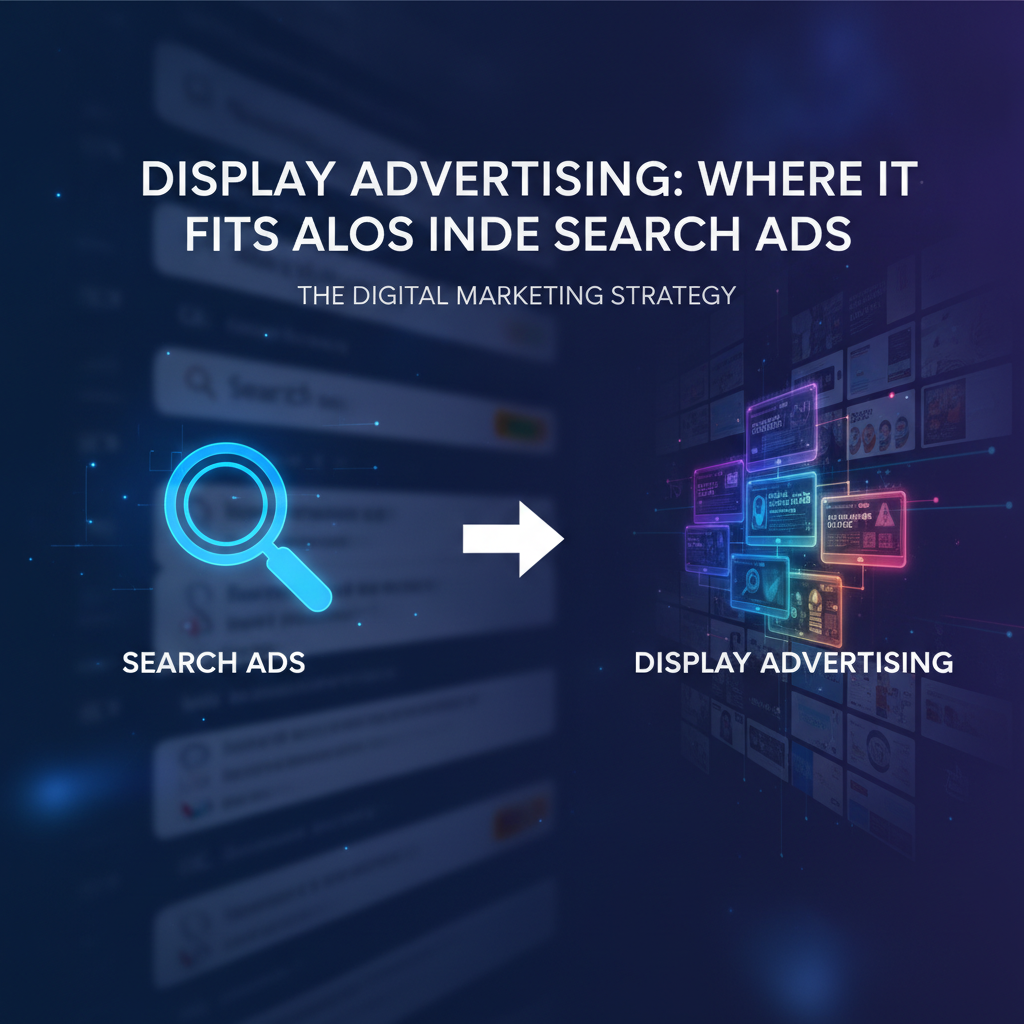
Display advertising serves as a visual, proactive marketing channel designed to build brand awareness and retarget audiences across web properties, contrasting directly with intent-driven search ads. While search ads capture active commercial intent on engine results pages, display advertising creates demand higher in the funnel by engaging users with targeted visual content while they browse partner websites and apps.
Display advertising plays a foundational role in modern digital marketing by expanding brand reach beyond active search engine queries. While search advertising targets users who are actively seeking specific solutions, display advertising places visual messaging in front of prospective audiences as they consume content across the web. Understanding where display advertising fits alongside search ads enables businesses to construct a balanced, full-funnel strategy that generates consistent brand awareness while efficiently capturing high-intent traffic.
What Is Display Advertising and How Does It Differ From Search Ads?
Display advertising refers to visual marketing assets—including advertising banners, rich media, interactive elements, and responsive display ads—published across publisher websites, mobile apps, and video platforms. Unlike search ads, which are primarily text-based and triggered by explicit queries on search engines like Google or Bing, display ads deliver visual content to targeted audiences based on demographics, broad interests, and online browsing behavior.
Understanding Intent vs. Awareness
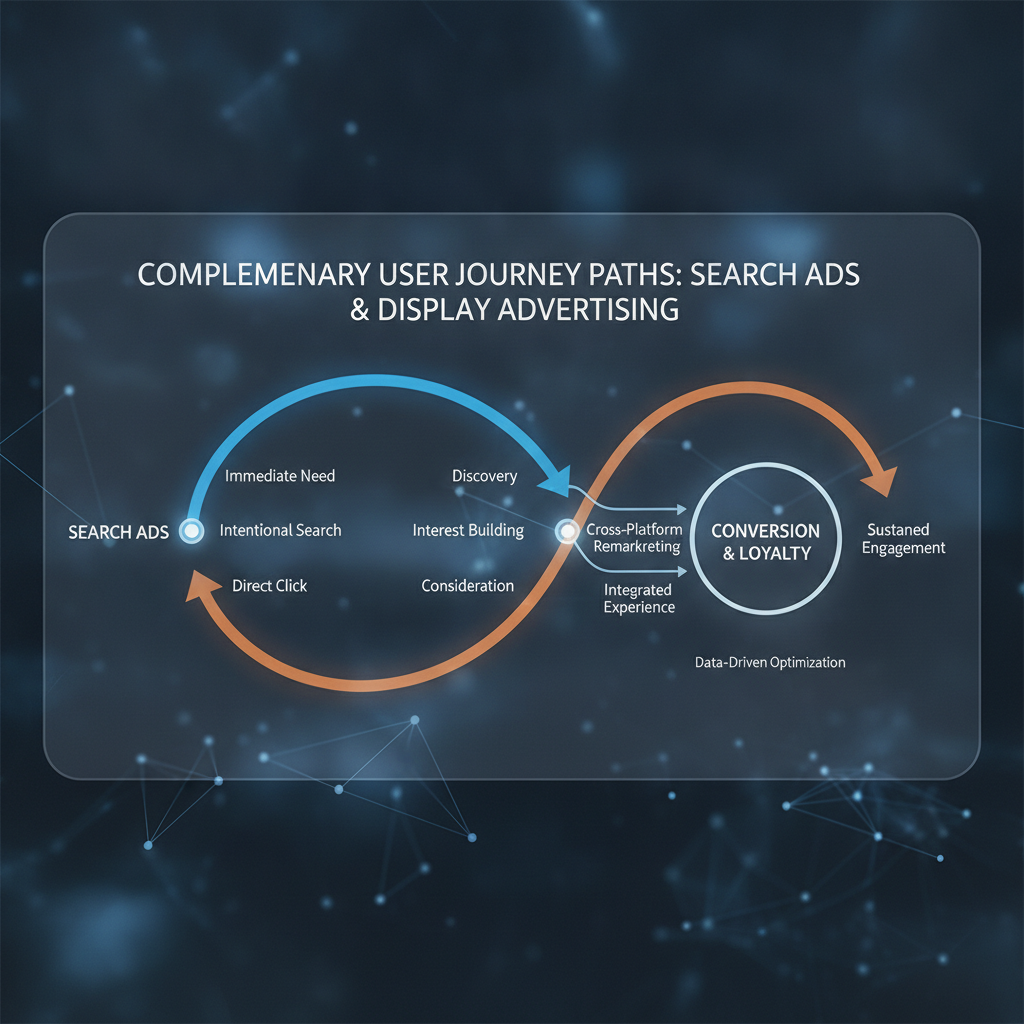
The primary distinction between display ads vs search ads lies in user intent. Search ads operate on a pull mechanism: users demonstrate active commercial intent by typing specific terms into a search bar, making them ready to evaluate or purchase immediately. In contrast, display ads operate on a push mechanism, introducing brand messaging to prospective customers while they engage with unrelated online content.
In practice, search campaigns yield higher immediate conversion rates due to this pre-existing intent. However, relying solely on search limits your addressable market to individuals who are already aware of their problem or your specific product category.
Visual Formats and Placement Dynamics
Display formats allow brands to communicate complex value propositions through visual storytelling. Google Display Ads, for example, reach over 90% of global internet users across more than 2 million websites and apps within the Google Display Network, according to Google Ads documentation.
Visual recall plays a significant role in purchasing decisions; prospective customers exposed to display advertising demonstrate a 59% higher search query rate for brand terms compared to unexposed audiences.
ℹ️ Info
Pro Tip for Ad Alignment: Ensure your display advertising banners share consistent visual branding, typography, and color schemes with your landing pages and search ad copy to reinforce immediate brand recognition across user touchpoints.
When Should You Use Display Ads vs Search Ads in Your Funnel?
Determining when to deploy display ads vs search ads depends on your marketing objectives, sales cycle length, and audience awareness level. Superior marketing performance rarely comes from choosing one format over the other; rather, it stems from aligning each ad format to its proper position within the customer acquisition funnel.
Top-of-Funnel Brand Discovery
Display advertising excels at the top of the sales funnel during the awareness phase. When entering new markets, launching innovative products, or building initial prospective audience pools, advertising banners create broad visibility at a relatively low cost per thousand impressions (CPM).
📊 Average Industry CTR Benchmarks by Ad Format
While click-through rates (CTR) for broad display ads are naturally lower than search ads, their true value lies in cost-effective impression frequency, brand familiarity, and priming prospects for future conversion.
Middle-to-Bottom Funnel Remarketing
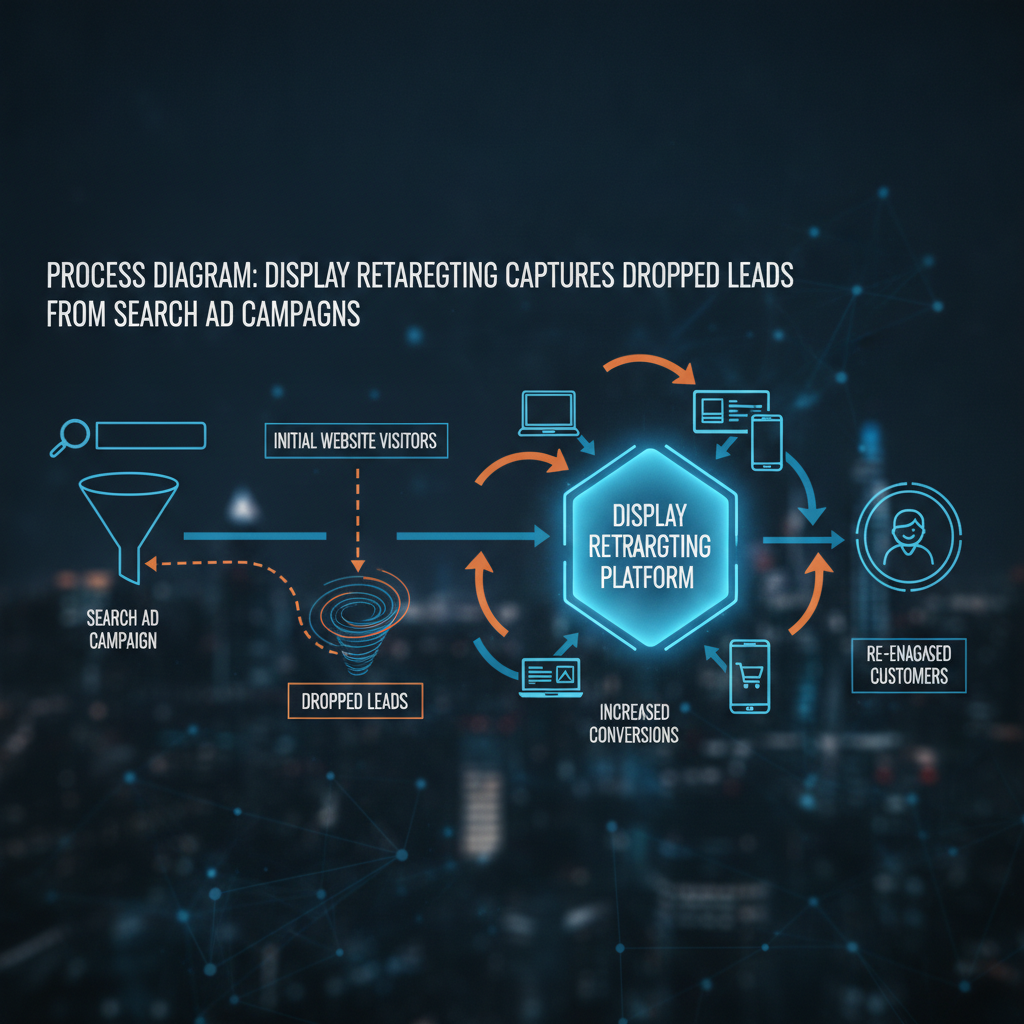
Display advertising is equally critical at the bottom of the funnel when deployed as a retargeting mechanism. When prospective customers visit your site via search ads or organic traffic but leave without converting, dynamic display ads re-engage them with targeted offers as they browse other digital properties.
Data indicates that retargeted display visitors are up to 70% more likely to convert compared to initial site visitors, making remarketing one of the highest-ROI implementations of google display advertising.
How Do Google Display Ads Work Alongside Search Campaigns?
Integrating google display ads into an established search framework creates a multiplier effect across your marketing organization. Rather than operating in isolated channels, display and search campaigns exchange data and performance signals to lower overall customer acquisition costs (CAC).
Building Cross-Channel Synergy
A cohesive cross-channel strategy typically follows a three-step sequence:
- 1Audience Generation: Display ads generate brand awareness and introduce specialized prospective segments to your offer.
- 2Intent Capture: Interested prospects, now familiar with your brand, perform direct or category searches where your high-intent search ads capture the visit.
- 3Conversion Retention: Visitors who drop off during their initial session receive tailored display remarketing banners that guide them back to complete their transaction.
Budget Allocation and Performance Benchmarks
A common challenge for growth managers is dividing budgets between display advertising and search ads. Based on standard industry benchmarks across general business sectors, a balanced initial budget structure typically allocates 60-70% of paid spend to search (capturing existing intent) and 30-40% to display advertising (generating awareness and powering remarketing).
🥧 Typical Paid Media Budget Allocation Strategy
"Integrating display advertising with search campaigns creates a continuous loop of discovery and conversion, steadily reducing customer acquisition costs over time."
Key Takeaways: Strategic Alignment for Maximum ROI
To achieve optimal return on ad spend (ROAS), treat display ads vs search ads not as competing options, but as complementary components of a unified digital strategy:
- Distinct Roles: Use search ads to capture existing demand and display ads to generate new interest and sustain brand engagement.
- Funnel Integration: Combine top-of-funnel display advertising banners with bottom-of-funnel search ads and targeted display remarketing.
- Consistent Messaging: Maintain visual and copy alignment across display banners and search landing pages to elevate user trust and conversion rates.
- Balanced Allocation: Distribute budget based on audience maturity, leveraging display advertising for scalable reach while utilizing search campaigns to capture high-intent demand.
Build a High-Performing Full-Funnel Advertising Strategy
Finding the right balance between building broad awareness and capturing high-intent search demand can feel like a delicate balancing act, especially when working to maximize every dollar of your advertising budget. You don't have to navigate complex channel dynamics or guess where your audience will engage next.
Whether you want to refine your display creative strategy, set up high-converting retargeting workflows, or build a seamless full-funnel search and display campaign, our specialists are here to guide your growth. Reach out to our team today to explore how a tailored, multi-channel strategy can meet your prospective customers exactly where they are.
