
Retargeting vs. Remarketing: How to Win Back Visitors Who Didn't Convert
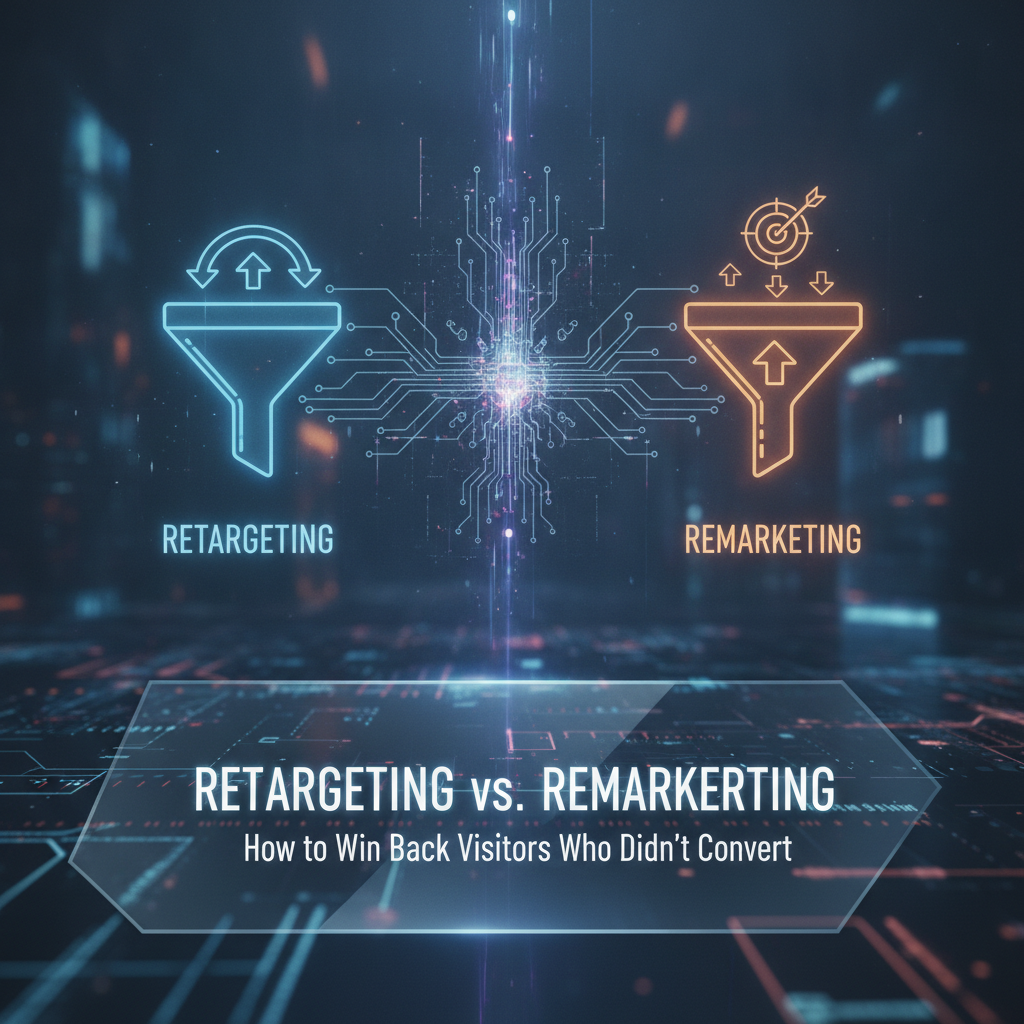
Winning back non-converting website visitors requires a structured approach to digital re-engagement. While the terms are frequently used interchangeably, retargeting primarily relies on paid ad tracking pixels to serve display and social ads to past visitors, whereas remarketing relies on direct communication channels like email to re-engage existing leads or customers. Implementing both methodologies allows businesses to capture lost intent, increase conversion rates, and lower customer acquisition costs across competitive local markets.
ℹ️ Info
Quick Comparison: Retargeting uses pixel-based tracking to display paid advertisements across third-party networks (such as Meta and Google) to anonymous website visitors. Remarketing uses first-party contact information (such as email addresses or phone numbers) to re-engage existing contacts through direct outreach workflows.
What Is the Difference Between Retargeting and Remarketing?
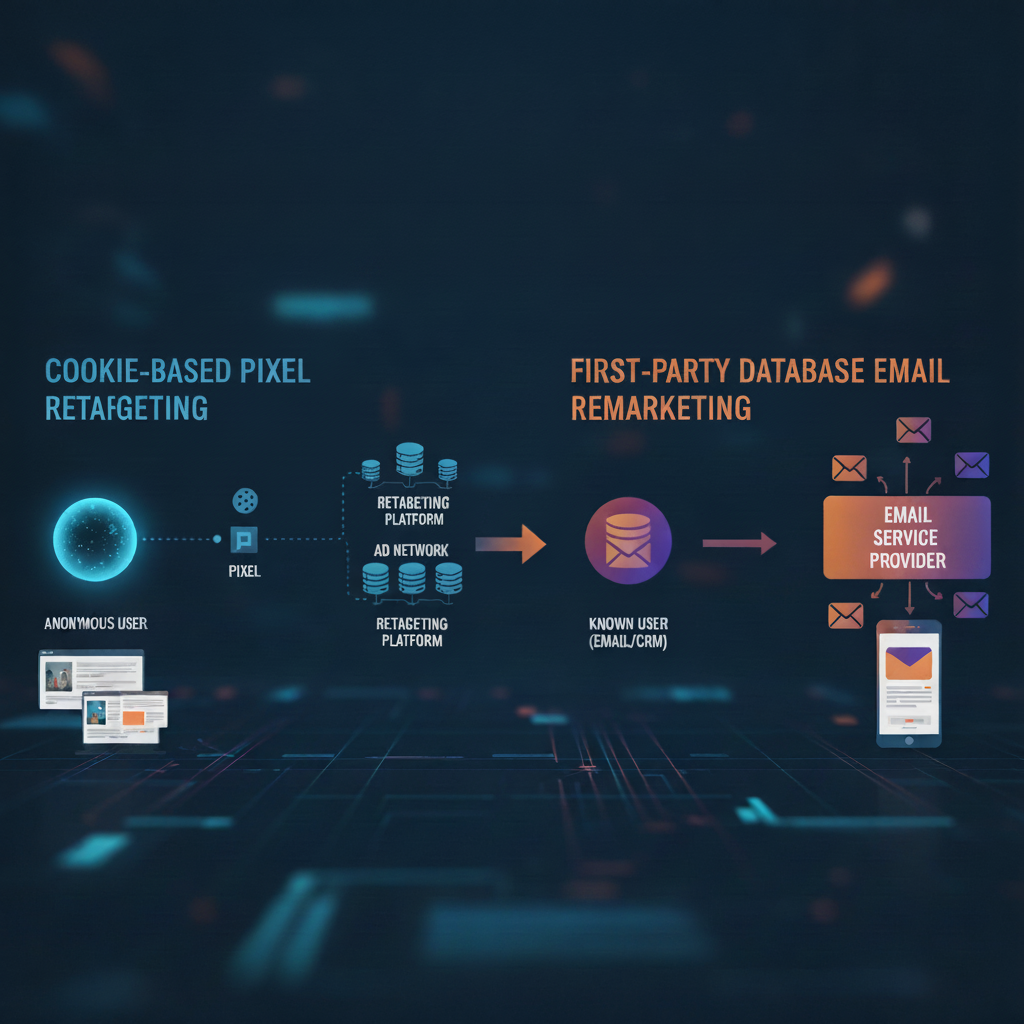
Retargeting and remarketing are distinct re-engagement strategies defined by the media channels they use and how they identify potential customers. Retargeting relies on browser-based tracking technology to serve paid advertisements to anonymous site visitors across external ad networks. In contrast, remarketing uses owned consumer data to reach known contacts directly through targeted messaging strategies.
What is Retargeting?
Retargeting is a paid digital advertising strategy designed to display targeted ads to individuals who have previously visited a website or digital property without completing a conversion action. It functions through JavaScript code snippets—commonly referred to as pixels or tags—embedded within a site's header structure. When a user browses a service page or abandons a form, the pixel records their interaction and assigns a temporary identifier or cookie to their browser.
Once tagged, advertising platforms use this data to deliver retargeting ads across external websites, search engine results pages, and social media platforms. The primary objective of retargeting is to maintain brand recall and guide high-intent traffic back to the primary conversion path.
What is Remarketing?
Remarketing is a direct engagement strategy that uses owned customer data to reconnect with prospects or current clients who have already shared their contact information. Unlike anonymous pixel tracking, remarketing relies on first-party data captured through form submissions, account creations, or previous transactions.
The most common execution of remarketing is automated email sequences, though it also encompasses SMS communications and direct mail outreach. For example, if a prospective client downloads a service guide or completes a consultation request form but fails to schedule an appointment, an automated remarketing workflow delivers tailored follow-up emails designed to address specific sales objections and encourage booking.
Key Technical Differences at a Glance
Understanding the structural differences between these two approaches helps business owners allocate marketing budgets effectively and structure cohesive sales funnels.
Identifier Type: Retargeting relies on browser cookies, mobile device IDs, and platform pixels. Remarketing relies on email addresses, phone numbers, and customer relationship management (CRM) records.
Primary Channels: Retargeting operates across the Google Display Network, social media platforms, and third-party ad exchanges. Remarketing primarily operates through email clients, SMS gateways, and CRM platforms.
Target Audience Warmth: Retargeting reaches anonymous prospects who have shown implicit interest by browsing. Remarketing reaches identified prospects who have shown explicit interest by providing contact details.
Cost Model: Retargeting involves ongoing media spend based on cost-per-click (CPC) or cost-per-thousand-impressions (CPM). Remarketing leverages fixed software subscription costs for marketing automation tools, resulting in lower incremental messaging costs.
🥧 Digital Re-engagement Budget Allocation
How Does Paid Retargeting Work Across Major Advertising Platforms?
Paid retargeting operates by syncing website event data with major ad networks to match digital footprints with platform user profiles. When configured correctly, these platforms allow businesses to deliver tailored ad creative to past visitors as they navigate third-party websites and social media feeds.
Implementing Pixel-Based Retargeting Ads
Pixel-based retargeting begins by installing platform-specific tracking scripts on a website. These scripts monitor user actions and trigger event logs based on specific behaviors, such as viewing a service page, adding an item to a cart, or spending a minimum duration on a page.
When a user triggers a tracked event, the platform adds their browser token to a designated retargeting audience list. Advertisers can then configure specific campaign rules to target these audience segments. For instance, a local professional services firm can set rules to target users who visited a consultation booking page within the last 14 days, but exclude those who reached the confirmation thank-you page.
According to industry advertising benchmarks, retargeting display campaigns regularly generate significantly higher click-through rates (CTR) than standard prospecting display campaigns because the targeted audience possesses pre-existing brand familiarity.
Leveraging Facebook Retarget Strategies for Local Audiences
A Facebook retarget campaign uses the Meta Pixel and Conversions API to match website visitors with active accounts on Facebook and Instagram. This enables granular audience segmentation based on detailed social media interaction and website behavior.
For local businesses operating in competitive urban areas like Houston, combining behavioral retargeting with geographic parameters prevents wasted ad spend. Businesses can configure Meta Custom Audiences to serve ads exclusively to past visitors located within specific ZIP codes or service radiuses. Furthermore, businesses can segment audiences by engagement depth:
- 1 Broad Engagers: Users who viewed any website page in the past 30 days.
- 2 High-Intent Prospects: Users who visited specific high-value service pages or started a contact form.
- 3 Engaged Video Viewers: Users who watched more than 50% of an embedded promotional or educational video on social media.
Utilizing Remarketing Google Ads and Display Networks
Remarketing Google Ads strategies encompass two primary ad formats: the Google Display Network (GDN) and Remarketing Lists for Search Ads (RLSA). Each format serves a distinct purpose in the buyer journey.
Google Display Network (GDN): Displays visual banner and responsive ads across millions of partner websites, mobile applications, and YouTube. GDN remarketing maintains visual brand presence while prospects browse alternative content online.
Remarketing Lists for Search Ads (RLSA): Customizes search ad campaigns for users who have previously visited a site while they actively conduct subsequent searches on Google. With RLSA, businesses can bid more aggressively on competitive keywords when the searcher is a returning visitor, or tailor search ad copy to acknowledge their existing familiarity with the brand.
To optimize quality scores and conversion performance, landing pages linked from remarketing Google Ads campaigns should adhere to strict usability and content standards, as detailed in Google Search Central.
What Are the Best Practices for Winning Back Non-Converting Website Visitors?
Converting past visitors requires strategic precision rather than aggressive repetition. Implementing structured audience segmentation, frequency caps, and tailored creative prevents ad fatigue while steadily guiding prospects toward conversion.
Establishing Frequency Caps and Ad Burnout Protection
Frequency capping restricts the maximum number of times a single user sees a specific retargeting ad within a designated timeframe. Serving advertisements excessively degrades brand perception and leads to banner blindness, where users subconsciously ignore campaign creative.
In professional marketing operations, standard frequency caps are set to 3 to 5 impressions per user per day per platform. Additionally, campaigns must incorporate automatic exclusion lists. Once a user completes the target conversion—such as submitting a contact form or completing a purchase—their identifier should immediately move from the retargeting pool to an exclusion list or a post-purchase onboarding sequence.
Segmenting Audiences Based on On-Site Behavior
Treating all website traffic identically leads to inefficient ad spend and poor conversion performance. High-performing retargeting campaigns segment audiences by purchase intent and depth of interaction.
📊 Average Conversion Lift by Retargeted Audience Segment
As demonstrated by empirical conversion data, visitors who abandon high-intent pages (such as checkout pages or pricing calculators) convert at significantly higher rates when retargeted than general homepage bounces. Marketers should allocate a higher proportion of their retargeting budget toward these high-intent segments.
Crafting Personalized Messaging for High-Intent Prospects
Ad creative must directly address the specific hesitation point associated with each stage of the conversion funnel. Generic brand awareness ads are ineffective for users who abandoned a specific booking page.
To maximize conversion velocity, match campaign creative with audience intent:
For Abandoned Pricing Page Visitors: Highlight competitive value propositions, explicit warranties, or flexible financing options to reduce financial hesitation.
For Service Page Visitors: Present social proof, customer testimonials, or detailed case studies that validate industry expertise and service reliability.
For General Content Readers: Retarget with gated educational resources, such as whitepapers or guides, to capture contact details and shift the relationship from retargeting to remarketing.

How Do You Measure the ROI of Retargeting and Remarketing Campaigns?
Accurately evaluating campaign performance requires tracking metrics that separate organic customer journeys from conversions directly generated by re-engagement efforts.
Tracking Incremental Conversions and View-Through Metrics
Evaluating campaign performance requires analyzing three primary conversion categories:
- 1 Click-Through Conversions: Conversions that occur when a user clicks directly on a retargeting ad and completes an action within a specified window (typically 7 to 30 days).
- 2 View-Through Conversions: Conversions recorded when a user views a retargeting ad, does not click it immediately, but returns to the website later and converts within a short window (typically 1 to 7 days).
- 3 Incremental Lift: The net percentage increase in conversions directly attributable to campaign exposure, calculated by comparing a retargeted audience segment against an unexposed control group.
Avoiding Common Attribution Pitfalls
Relying exclusively on single-touch attribution models introduces significant distortion when evaluating campaign value.
Last-Click Attribution Overvalues Retargeting: Last-click models assign 100% of conversion credit to the final ad touchpoint. This often inflates perceived retargeting performance while ignoring top-of-funnel campaigns that generated the initial web traffic.
Ignoring Cross-Device Tracking Limits: Privacy updates—such as Apple's App Tracking Transparency (ATT) framework and third-party cookie restrictions—have reduced the lifetime of browser cookies. Relying strictly on client-side tracking leads to underreported conversions. Implementing server-side tracking (such as the Meta Conversions API) restores tracking accuracy and data integrity.
Strategic Key Takeaways
To maximize digital re-engagement performance, integrate these core practices into your broader marketing workflow:
Define Clear Technical Boundaries: Use retargeting to drive anonymous site visitors back to your web properties using paid pixels, and use remarketing to nurture known contacts through direct channels like email.
Prioritize Intent-Based Segmentation: Allocate advertising budgets disproportionately toward visitors who displayed high intent, such as those who visited pricing or checkout pages.
Implement Ad Burnout Safeguards: Apply strict frequency caps (3-5 impressions daily) and automatically exclude converted users to protect your brand reputation.
Combine Tracking Infrastructure: Deploy server-side conversion tracking alongside browser pixels to maintain attribution accuracy in privacy-focused browsing environments.
Analyze Incremental Performance: Measure campaign success using multi-touch attribution and incremental lift tests rather than relying solely on last-click metrics.
