
Quick Answer
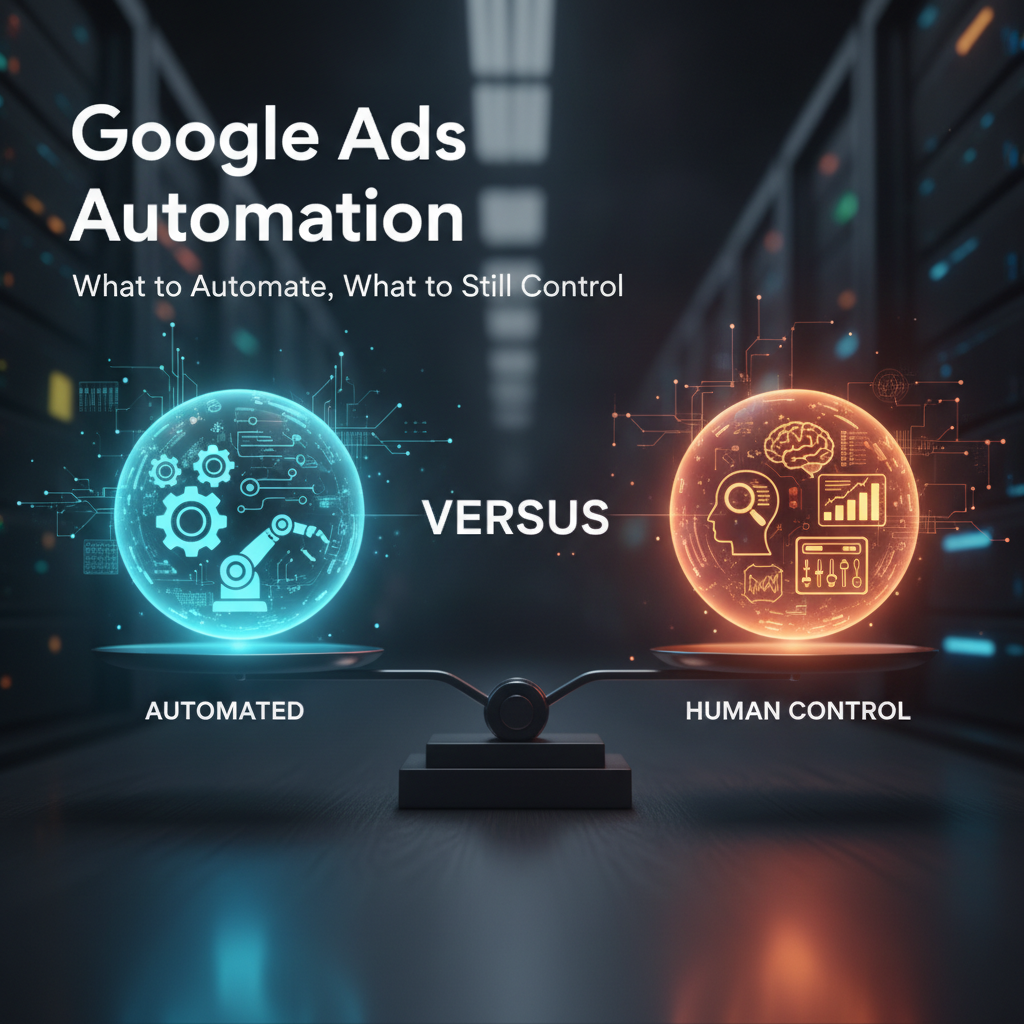
Google ads automation leverages machine learning to streamline bidding, ad creation, and targeting, but optimal performance requires strategic human oversight. While automated algorithms excel at real-time data processing and auction-level bid adjustments, human managers must retain control over messaging, conversion value calibration, and audience segmentation to prevent wasted spend and align campaigns with business goals.
Modern digital advertising relies heavily on machine learning to process billions of auction signals every second. However, fully handing over the keys to automated algorithms without proper governance often leads to misaligned budgets and lower returns. Successful advertisers approach google ads automation as a partnership between algorithmic scaling and empathetic human strategy.
How Does Google Ads Automation Work and Why Is Strategy Still Necessary?
Google Ads automation uses predictive algorithms to analyze user context—such as device, location, time of day, search history, and intent signals—to execute campaign actions automatically. While these systems excel at processing complex data at scale, they lack real-world business context, brand awareness, and strategic foresight.
What components of Google Ads work best when automated?
Auction-level bidding and ad asset combination assembly perform exceptionally well under automated systems. Machine learning algorithms analyze historical performance and context to adjust bids in real time for every individual search query, a task human managers cannot replicate manually.
According to documentation on Google Ads Help, Smart Bidding evaluates millions of signal combinations to predict the likelihood of a conversion. Tasks that benefit most from automation include:
Auction-Time Bidding: Adjusting individual bids instantly based on user likelihood to convert.
Ad Assembly: Testing multiple headline and description variations via Responsive Search Ads (RSAs) to match search intent.
Query Expansion: Identifying related search terms through broad match algorithms paired with automated bidding.
📈 Avg. Conversion Rate Lift by Bidding Strategy (2024 Benchmark)
What high-level decisions must human managers retain?
Human managers must retain complete ownership over business goals, financial targets, creative positioning, and strategic audience definitions. An algorithm optimizes strictly for the metrics and parameters defined by the user; if provided incomplete or incorrect targets, it will efficiently optimize toward unprofitable outcomes. Strategic decisions requiring human leadership include:
Setting realistic profit margins and target Return on Ad Spend (ROAS).
Structuring audiences using tools like remarketing lists for search ads to guide algorithm priorities.
Crafting compelling value propositions that resonate with human needs and buyer psychology.
Managing inventory availability, seasonal product pushes, and enterprise financial constraints.
What Elements of Google Ads Should You Automate First?
Automating repetitive execution tasks frees strategic marketers to focus on messaging, competitive positioning, and funnel optimization. Starting with low-risk, high-data elements allows machine learning models to build baseline historical accuracy safely.
How do Smart Bidding strategies optimize performance?
Smart Bidding strategies—such as Target CPA (Cost Per Acquisition), Target ROAS, and Maximize Conversions—use machine learning to set precise bids for every auction. In practice, switching from manual bidding to automated Smart Bidding typically yields a 15–20% increase in conversion volume at a stable efficiency rate, provided conversion tracking is set up accurately.
Smart Bidding strategies analyze real-time variables including:
- 1 User Environment: Operating system, browser, physical location, and device.
- 2 Temporal Factors: Day of week, time of day, and seasonal search trends.
- 3 Creative Context: Which specific ad version or creative asset is displayed.
💡 Tip
Before switching a campaign to Target ROAS (Return on Ad Spend), ensure your conversion tracking captures actual order values or assigned lead values, and allow at least 30 conversions over a 30-day window for the algorithm to learn effectively.
How does automated creative assembly improve ad relevance?
Responsive Search Ads allow Google to dynamically combine up to 15 headlines and 4 descriptions to identify the highest-performing combinations for different queries. Rather than manually testing fixed ad pairs, marketers provide strong asset variations, and automated systems determine which combination resonates best with specific user cohorts.
What Campaign Elements Should Marketers Always Control Manually?
Complete reliance on automated settings exposes accounts to budget drain, irrelevant search traffic, and misaligned brand messaging. Strategic guardrails ensure algorithms operate within strict business parameters.
"Automation processes data at scale, but business context remains a uniquely human capability. Algorithms cannot understand profit margins, inventory constraints, or shifts in brand positioning without explicit human guidance."
Why is conversion tracking and value calibration a human task?
Algorithms rely entirely on the conversion data fed into the system; inaccurate conversion data guarantees poor automated decisions. A common scenario we encounter is an algorithm bidding aggressively on low-value micro-conversions (such as PDF downloads) because they were incorrectly weighted higher than actual sales calls or qualified leads. Humans must define, audit, and assign proper economic values to conversions.
How do remarketing lists for search ads maintain strategic targeting control?
Incorporating remarketing lists for search ads (RLSA) allows advertisers to customize search campaigns based on a user's previous interactions with their website. While machine learning discovers new prospect queries, manual RLSA strategy ensures higher bids and tailored messaging are directed toward high-value past visitors, cart abandoners, or existing customers. Combining RLSA data with automated bidding provides the algorithm with critical signals regarding lead quality and customer lifetime value.
Why do negative keyword lists require regular manual oversight?
Automated query expansion and broad match algorithms frequently pull in irrelevant search traffic if left unguided. Regular manual review of search term reports and proactive maintenance of negative keyword lists are essential to prevent ad spend from wasting on out-of-scope intent.
📊 Performance Impact of Governance Practices

What Are the Common Pitfalls of Over-Automating Google Ads?
Over-automation occurs when account managers accept automated suggestions without evaluating their impact on business profitability.
How can reliance on default settings lead to wasted spend?
Google Ads defaults are designed to maximize reach and volume, which may not always align with immediate profitability goals. Automatically accepting recommendations to expand search campaigns into unvetted Display networks or opting into auto-applied bidding changes can rapidly deplete budgets on low-intent impressions.
Common settings requiring manual review include:
Auto-Apply Recommendations: Ensure recommendations for broad match expansion or budget increases are reviewed manually before implementation.
Network Selection: Keep Search and Display networks separated into distinct campaigns.
Location Options: Ensure location targeting is set to "Presence: People in or regularly in your targeted locations" rather than "Presence or Interest."
What steps prevent automated ads from bidding on irrelevant traffic?
To prevent automated systems from spending on non-converting queries, advertisers should implement structural boundaries:
- 1 Establish Robust Negative Keyword Databases: Update shared negative keyword lists across accounts weekly.
- 2 Apply Brand Exclusions: Separate branded search queries from non-branded campaigns so smart bidding doesn't misinterpret brand equity as cold prospect conversions.
- 3 Set Max Bid Limits: Use portfolio bidding strategies with upper bid limits to prevent algorithm over-bidding during volatile auction spikes.
Key Takeaways: How to Balance Automation and Strategic Control
To achieve optimal results from Google Ads, adopt a hybrid approach that leverages machine efficiency while preserving strategic oversight:
Automate Execution, Not Strategy: Let machine learning handle auction-level bidding and ad asset combinations while humans control target setting, positioning, and budget allocation.
Feed Quality Data: Calibrate offline conversion values and precision tracking to ensure smart algorithms optimize for profit rather than vanity metrics.
Guide Algorithms with Audience Data: Layer remarketing lists for search ads to help bidding models distinguish between top-of-funnel browsers and high-intent return visitors.
Maintain Governance: Perform weekly search term audits, update negative keyword lists, and carefully vet auto-applied recommendation settings.
Finding Your Campaign's Ideal Equilibrium Shouldn't Feel Like a Solo Effort
Managing paid search can often feel like walking a tightrope—trusting powerful algorithms enough to scale your reach while staying vigilant so your budget stays protected. You don't have to navigate this balancing act in isolation. Whether you are looking to recalibrate your conversion tracking, refine your audience signals, or protect your ad spend from low-intent queries, thoughtful strategic guidance makes all the difference. Reach out today for a personalized campaign review, and let's craft a clear, sustainable paid search strategy that blends algorithmic efficiency with genuine business context.
