
Quick Answer
A lookalike audience is an advanced targeting option in digital advertising that matches new prospective customers to the shared characteristics of your highest-value existing buyers. By analyzing behavioral signals across platforms like Meta, businesses can efficiently scale paid acquisition campaigns to high-converting prospects.
Scaling customer acquisition while maintaining a healthy return on ad spend is a challenge shared by many growth-focused teams. Traditional interest-based targeting often exposes your ads to broad, unconditioned demographics—spending precious ad dollars on audiences who may never engage. A lookalike audience solves this challenge by using data science to find prospective buyers who share key attributes with your existing top customers.
When implemented thoughtfully, building a lookalike audience meta framework allows marketers to transition from broad guessing to precision expansion, reaching people who are already primed to appreciate what your brand offers.
How Does a Lookalike Audience Work in Meta Ads?
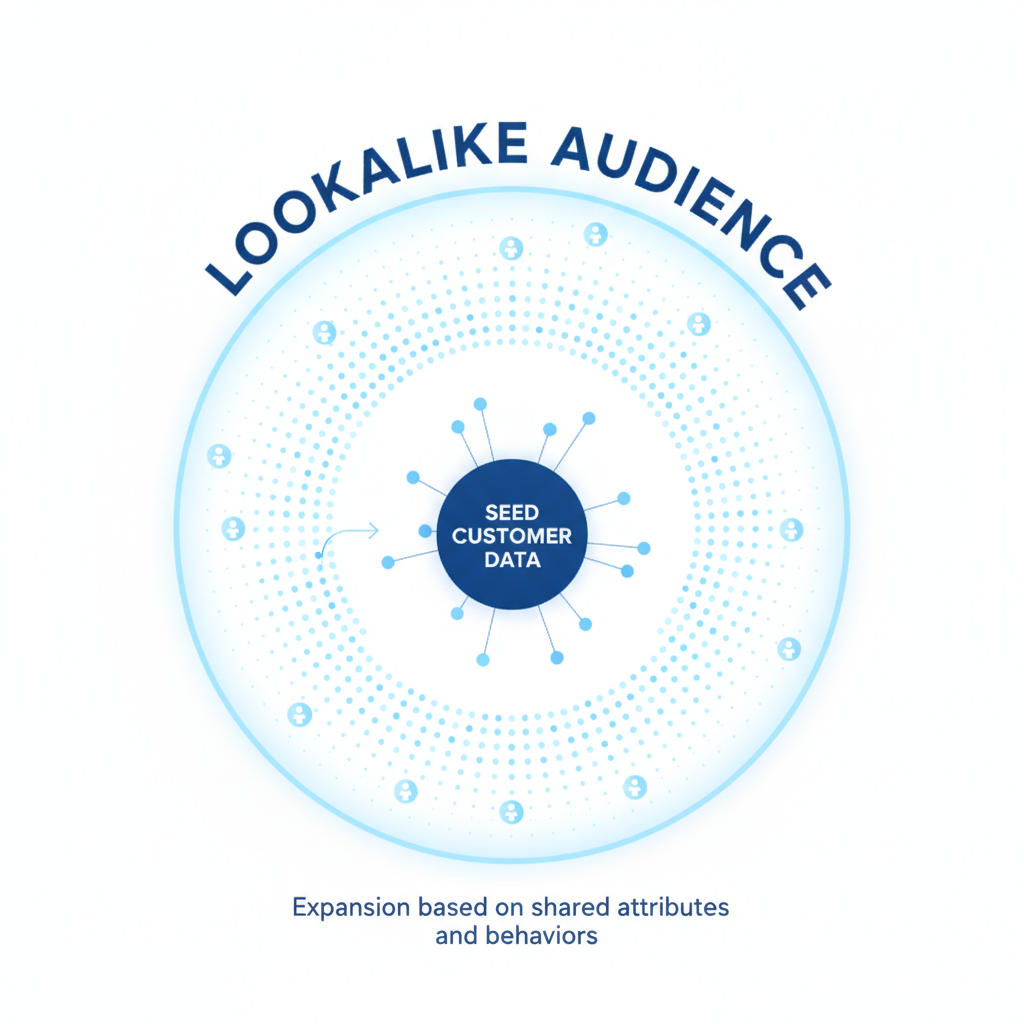
A lookalike audience meta system operates by analyzing thousands of discrete data points across an existing group of users—known as a seed list—and searching the broader platform network for people who exhibit similar online behavior, purchasing habits, and demographic profiles.
In practice, Meta's algorithm constructs a multidimensional profile of your seed list. It evaluates engagement patterns, page interactions, device usage, and transactional histories. Once the system establishes these core commonalities, it projects that pattern across the platform's multi-billion user network to identify matching prospects.
📈 Meta Lookalike Audience Relative Performance by Tier (2024 Benchmark)
What is the underlying matching technology behind Meta lookalike audiences?
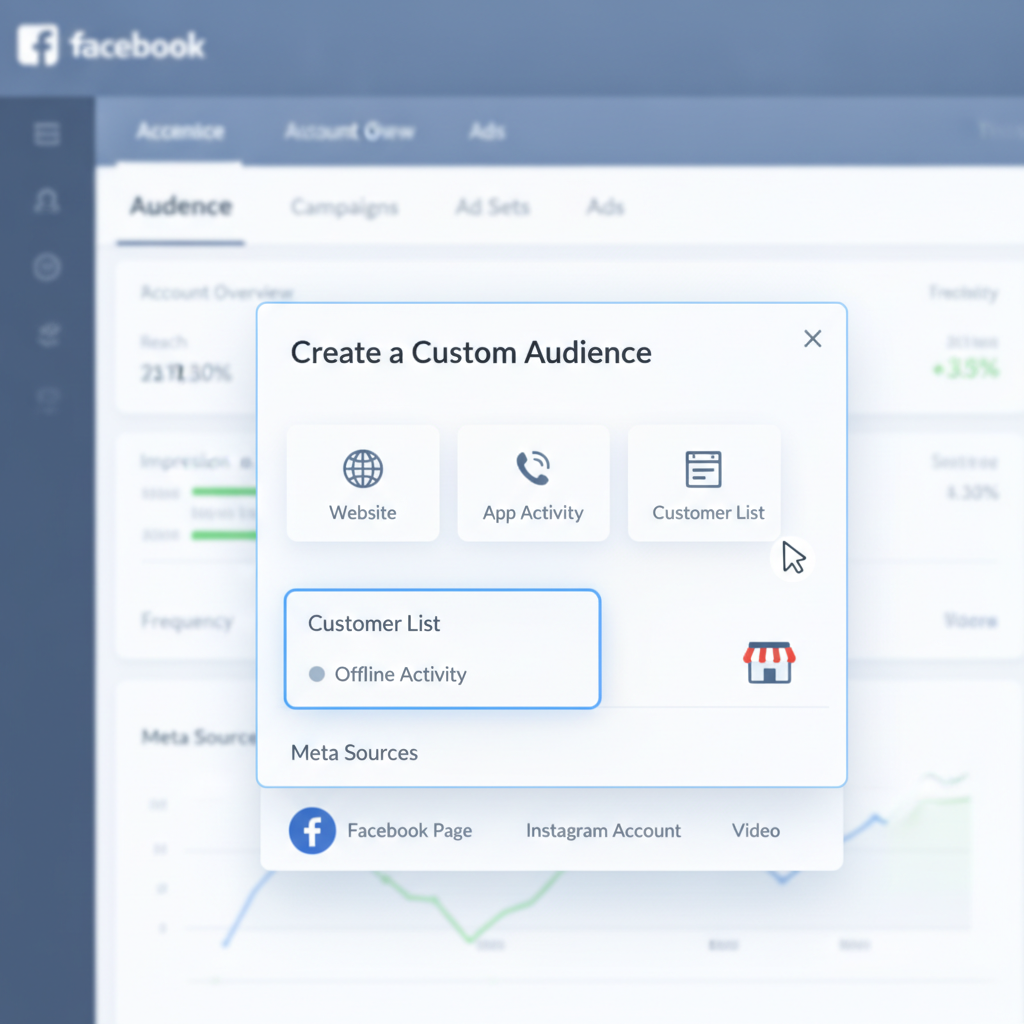
Meta relies on privacy-compliant hashing algorithms to map user attributes without compromising personal data. When you upload a customer list or connect your Meta Pixel, hashed identifiers (such as email addresses, phone numbers, and web event tokens) are matched against active profile records.
According to platform documentation from the Meta Business Help Center, the algorithm assigns weights to key attributes based on predictive value. For instance, recent high-value transaction histories carry higher weight than casual page views when compiling the algorithm's similarity index.
What source data creates the most accurate seed lists?
The accuracy of your final targeting depends directly on the quality of your source input. A seed list comprised of repeat buyers yields far higher conversion rates than a seed list populated by general newsletter subscribers or casual social media followers.
🥧 Source Data Effectiveness for Seed Lists (2024 Survey)
How Do You Build a High-Performing Meta Ads Lookalike Audience?
Building an effective facebook lookalike audience involves three distinct steps: preparing clean seed data, choosing your target audience percentage, and structuring your ad sets to prevent internal auction competition.
Step 1: Selecting high-intent customer seed data
Begin by exporting a customer segment containing between 1,000 and 5,000 of your highest-value contacts. While Meta allows seed lists as small as 100 profiles, real-world campaign testing shows that larger, highly qualified datasets provide the machine learning model with clearer signals. Include transactional values (Lifetime Value or LTV) within your export file so the platform can give preference to your biggest spenders.
Step 2: Choosing geographic parameters and audience percentages
When creating your lookalike audience meta ads target within Meta Ads Manager, select your target country or region alongside your target percentage scaling slider (from 1% to 10%).
1% Lookalike: Represents the top 1% of users in your chosen location who most closely resemble your seed list. This tier delivers the highest relevance and conversion intent.
2% to 5% Lookalike: Expands reach while maintaining moderate affinity. Ideal for scaling proven creative assets after 1% audiences reach saturation.
6% to 10% Lookalike: Provides maximum reach for broad brand awareness campaigns, though typically yields lower initial conversion rates.
💡 Tip
When launching new campaigns, test a 1% lookalike audience first. Once frequency rates rise and acquisition costs begin to climb, gradually layer in 2% and 3% tiers while maintaining creative consistency.
Step 3: Structuring ad sets for optimal delivery
To prevent your own ad sets from competing against one another in Meta's auction, utilize custom exclusions. For example, when running ads targeted at a 2% lookalike audience, explicitly exclude your 1% lookalike audience from that specific ad set. This ensures distinct delivery pools and provides clear performance attribution.
"A smaller, highly intentional seed list of 1,000 top-tier customers consistently outperforms a broad list of 20,000 disengaged leads when building predictive ad audiences."
How Do CRM Seed Lists Compare to Pixel-Based Audiences?
Choosing between first-party Customer Relationship Management (CRM) uploads and real-time pixel event data depends on your campaign objectives, data infrastructure, and browser privacy controls.
Comparing first-party data and web event signals
First-party CRM data offers long-term stability and high intentionality because it contains verified purchase histories. Pixel-based seed lists, conversely, offer real-time dynamic updating based on user actions taken on your website over a rolling 30-to-180-day window.
| Feature | CRM Customer List | Pixel / Conversions API Event |
| --- | --- | --- |
| Data Source | Offline database, POS, CRM | Web traffic, mobile app events |
| Data Freshness | Static (requires manual/API sync) | Dynamic (real-time rolling updates) |
| Signal Quality | Exceptional (verified sales) | Moderate to High (intent signals) |
| Privacy Resilience | High (first-party direct data) | Medium (subject to browser restrictions) |
How browser privacy changes impact dynamic audience modeling
Recent privacy updates—including Apple's iOS App Tracking Transparency (ATT) framework and cookie deprecation trends detailed by Google Search Central—have reduced the volume of signals captured by traditional browser pixels.
To maintain lookalike accuracy, combining first-party CRM uploads with server-side integrations like Meta's Conversions API (CAPI) provides the most reliable seed foundation.
What Common Mistakes Reduce Lookalike Audience Performance?
Even experienced digital marketing teams encounter performance drops when managing lookalike campaigns. Avoiding key operational pitfalls keeps your paid media budgets working efficiently.
- 1Using unsegmented seed data: Uploading your entire email list regardless of purchase activity dilutes behavioral signals, leading to broad, unoptimized ad delivery.
- 2Infrequent list updates: Customer behaviors change over time. Static seed lists should be updated at least quarterly, or synchronized automatically via direct API integration.
- 3Ignoring audience fatigue: Serving ads to a small 1% lookalike segment without refreshing creative assets leads to ad exhaustion, rising cost-per-click (CPC), and reduced click-through rates (CTR).
- 4Overlapping target segments: Running simultaneous ad sets targeting 1%, 2%, and 3% lookalikes without setting up proper exclusions causes your own campaigns to compete in the ad auction, inflating cost-per-acquisition (CPA).
Key Takeaways for Scaling Campaigns
Using a lookalike audience remains one of the most effective ways to find prospective buyers who share traits with your best existing customers. By focusing on seed list quality, setting structured audience percentages, and maintaining privacy-compliant data pipelines, your business can scale acquisition efforts with confidence.
Focus your seed lists on repeat buyers and high-LTV customers rather than generic web visitors.
Start scaling with a 1% lookalike tier before gradually expanding into broader percentage pools.
Always exclude smaller lookalike percentages from broader tiers to prevent auction overlap.
- Combine offline CRM records with real-time Conversions API signals to ensure maximum data accuracy.
Finding Your Next Great Customer Shouldn't Be a Guessing Game
Navigating paid social algorithms while protecting your media budget can feel overwhelming—especially as privacy updates and tracking changes continuously reshape digital advertising. You don't have to navigate these complexities alone.
By building data strategies around your genuine top performers, we help you connect with high-value prospects who are truly excited about your offer. If you'd like expert assistance auditing your customer seed data, building privacy-resilient tracking setups, or structuring paid campaigns for predictable growth, let's start a conversation. Together, we can make every ad dollar work smarter for your business.
