
Quick Answer
Word of mouth marketing is the strategic or organic encouragement of satisfied customers to share their positive experiences with a brand. It consistently outperforms paid channels because consumers inherently trust peer recommendations over corporate advertising, resulting in lower customer acquisition costs, higher customer lifetime value, and superior long-term retention rates across industries.
Paid digital advertising has grown increasingly expensive, crowded, and unpredictable. Customer acquisition costs across search and social platforms have climbed by double digits in recent years, prompting business leaders to reevaluate their reliance on paid media.
While paid ads offer immediate visibility, word of mouth marketing provides something far more valuable: genuine trust and compounding organic growth. When satisfied customers advocate for your business, they build a sustainable acquisition loop that no marketing budget can replicate.
What Is Word of Mouth Marketing and Why Does It Outperform Paid Ads?
Word of mouth marketing is an intentional or organic strategy designed to inspire customers to talk about a brand, product, or service with their networks. Unlike traditional advertising, which pushes messages onto an audience, word of mouth relies on authentic peer validation.
How Does Trust Impact Consumer Purchasing Decisions?
Peer trust remains the single most decisive factor in modern commerce. According to global research by Nielsen, 88% of consumers trust recommendations from people they know above all other forms of advertising.
In contrast, consumer trust in traditional social media and banner advertisements hovers between 35% and 45%. Paid channels suffer from increasing ad blocker adoption and widespread buyer skepticism. When a friend or colleague recommends a service, their personal credibility transfers to the brand, dramatically reducing the friction required to complete a purchase.
📊 Consumer Trust Levels by Media Channel (Nielsen Benchmark)
What Is the Financial Impact of Customer Advocacy?
Customer advocacy fundamentally changes unit economics by dramatically reducing Customer Acquisition Costs (CAC) while lifting Customer Lifetime Value (LTV). Based on real-world business outcomes, referred customers display a 16% higher lifetime value and a 37% higher retention rate compared to customers acquired through paid digital channels.
McKinsey reports that word of mouth is the primary driver behind 20% to 50% of all purchasing decisions, especially in high-involvement categories like business software, financial services, and consumer technology. Because referred leads arrive pre-vetted by their peers, sales cycles are consistently shorter and conversion rates are noticeably higher.
How Do Brand Advocates Drive Sustainable Business Growth?
Brand advocates are deeply satisfied customers who actively champion a business without requiring ongoing financial compensation. They act as an organic extension of your marketing team, sharing your message out of genuine appreciation for your product or service.
What Differentiates Organic Advocates from Referral Marketing?
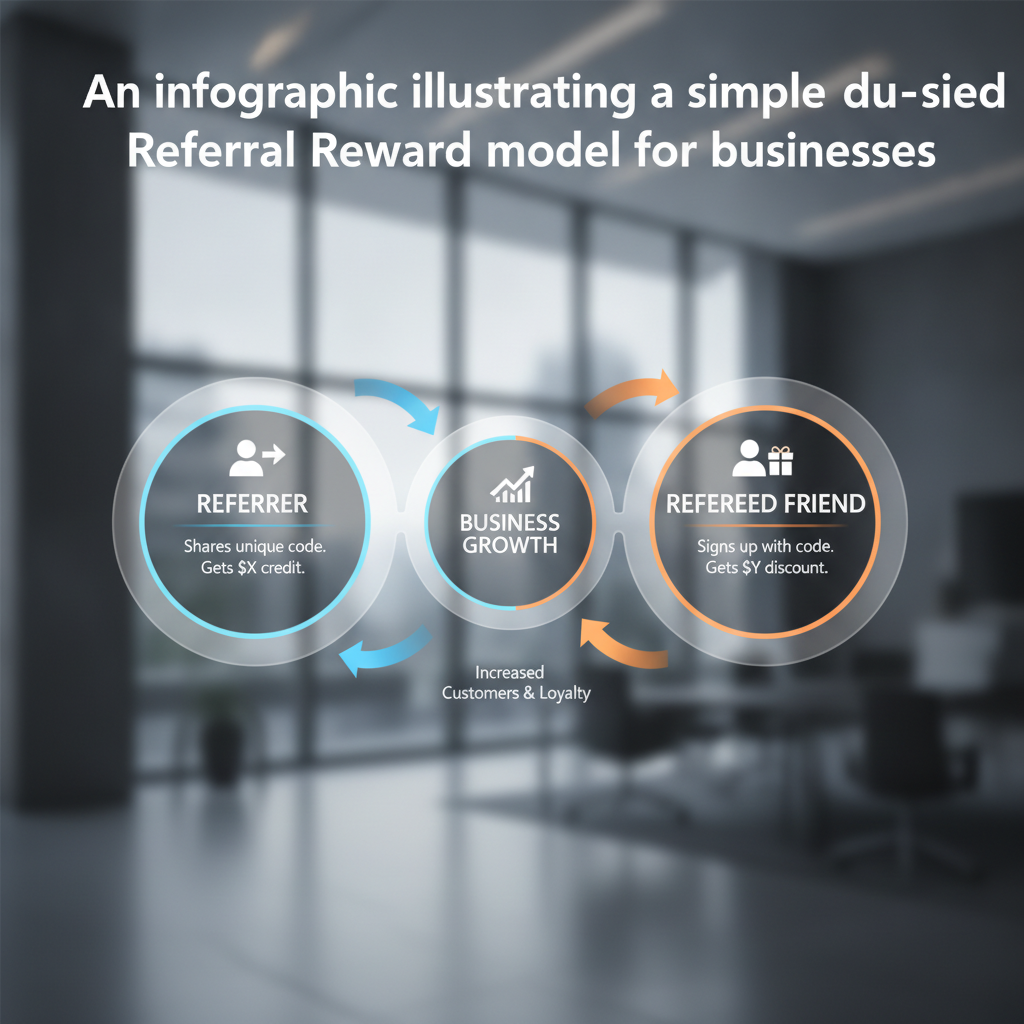
Referral marketing is a structured strategy that provides formal incentives—such as account credits, discounts, or cash rewards—to encourage existing clients to introduce new buyers. Organic word of mouth, by contrast, occurs spontaneously when a customer's experience exceeds their expectations.
| Metric / Dimension | Organic Word of Mouth | Structured Referral Marketing |
| --- | --- | --- |
| Primary Motivation | Delight, altruism, social proof | Incentives, rewards, mutual value |
| Scalability & Control | Low direct control, highly authentic | High control, easily tracked and measured |
| Conversion Rates | Exceptionally high | High to moderate |
| Implementation | Focus on product excellence & care | Dedicated software, clear reward rules |
Both mechanisms work together to amplify overall reach. Structured referral marketing creates a repeatable framework for recommendations, while organic advocacy supplies the authentic enthusiasm that builds long-term brand equity.

How Can Businesses Systematically Cultivate Brand Advocates?
Building a base of active advocates requires delivering exceptional value at every customer touchpoint. Businesses can cultivate advocacy by establishing clear operational practices:
Accelerate Time-to-Value: Ensure new users achieve their desired outcome as quickly as possible during onboarding.
Deliver Proactive Support: Identify and resolve potential friction points before the customer encounters a major issue.
Establish Feedback Loops: Regularly gather feedback using Net Promoter Score (NPS) surveys and actively act on customer input.
💡 Tip
Focus on delivering deliberate moments of unexpected care. Simple, thoughtful actions—such as a personal check-in call during onboarding or customized feature recommendations—generate significantly higher word-of-mouth activity than standard corporate communications.
What Strategies Measure and Scale Referral Marketing Effectively?
To transform organic word of mouth into a predictable growth engine, organizations need transparent tracking systems and clear operational metrics.
Which Metrics Accurately Track Word of Mouth Performance?
Measuring word of mouth performance requires looking beyond traditional ad attribution tools to focus on customer advocacy metrics:
- 1 Net Promoter Score (NPS): Measures overall loyalty by asking how likely customers are to recommend your service on a scale of 0–10. Promoters (scores 9–10) are your primary source of word of mouth.
- 2 Viral Coefficient (K-Factor): Measures how many new customers each existing user brings in. A K-factor greater than 1.0 indicates exponential organic expansion.
- 3 Referral Conversion Rate: The percentage of referred prospects who become paying clients compared to standard website visitors.
📈 Average Customer Acquisition Cost (CAC) by Channel
"When customers trust a brand, they do not just buy again; they become an extended sales force that operates continuously without taking a commission."
What Are the Common Pitfalls When Scaling Advocacy Programs?
A common pitfall is launching a referral program before establishing true product-market fit or service quality. Offering financial incentives to cover up poor support or a confusing product experience erodes brand credibility quickly.
Another mistake is making referral programs overly complex. If the sharing process requires multiple steps or the reward structure is difficult to understand, participation rates drop sharply. Keeping referral mechanisms simple, transparent, and mutually beneficial ensures consistent engagement.
Key Takeaways: Building Your Word of Mouth Engine
Word of mouth marketing remains the most reliable foundation for sustainable, cost-effective business growth. By shifting focus from continuous ad spend toward customer care and advocacy, businesses build resilient brands that thrive on peer trust.
Prioritize Customer Care: Exceptional service experiences create the foundation for organic advocacy.
Incentivize Both Sides: Structure referral marketing initiatives so both the existing customer and the new lead receive clear value.
Measure Advocate Velocity: Monitor NPS trends and referral conversion rates to continuously refine your advocacy efforts.
Let Your Happiest Customers Lead the Conversation
Behind every enthusiastic recommendation is a genuine human moment—an instance where a customer felt truly valued, understood, and supported. When your business focuses on creating those memorable experiences, growth ceases to rely on relentless ad spending and starts springing naturally from authentic trust.
Whether you want to enhance customer onboarding, build an intuitive referral program, or foster deeper brand loyalty, creating an advocate-first strategy begins with understanding your audience's needs. Connect with our team today to start a conversation about transforming customer satisfaction into your most powerful engine for long-term growth.
