
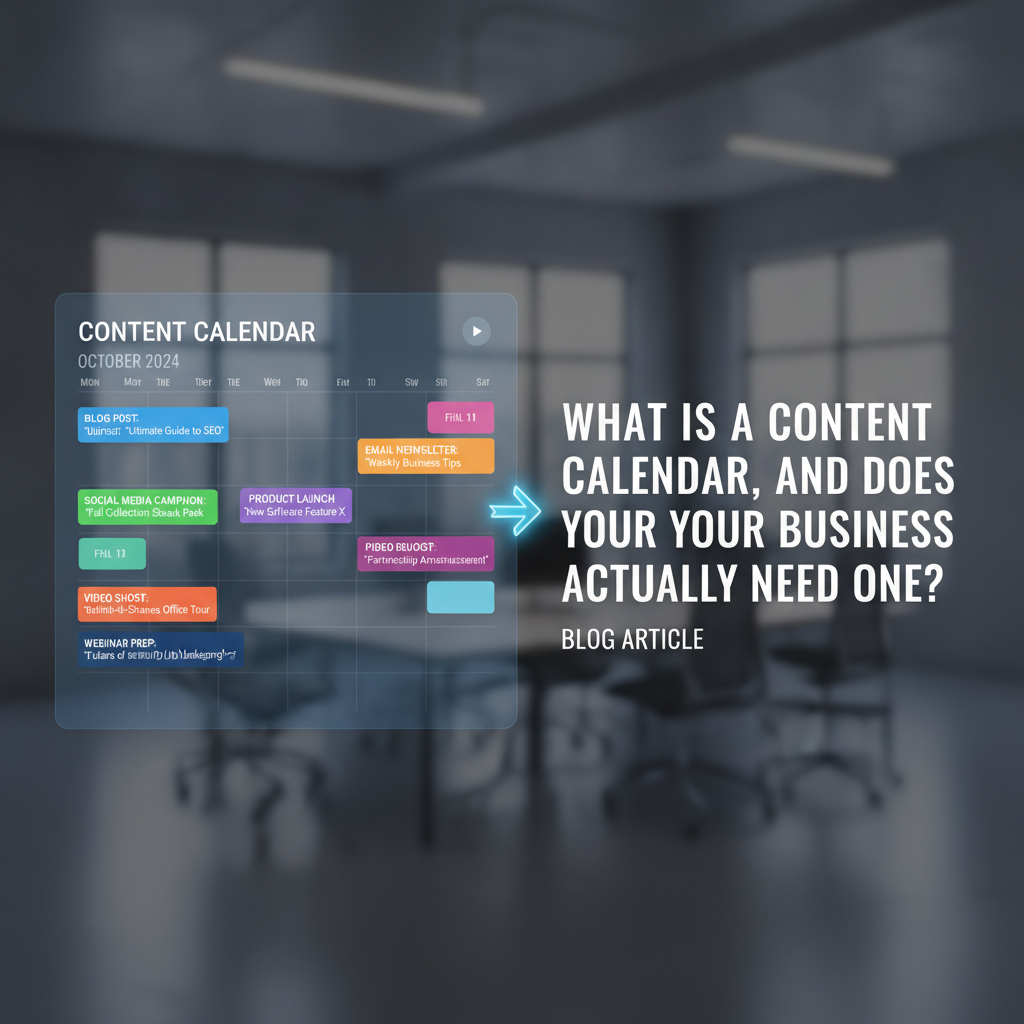
Quick Answer
A content calendar is a written schedule used by businesses to plan, organize, and track upcoming content across all publishing channels. Every growing business needs a content calendar to maintain posting consistency, align marketing efforts with sales goals, and prevent last-minute planning chaos.
Building a successful brand means staying in front of your audience consistently. But if you’ve ever sat down on a Tuesday morning staring at a blank screen wondering, "What on earth should we post today?"—you already know how exhausting spot-spontaneous marketing can be.
That is exactly why businesses use a content calendar. It takes the guesswork out of your publishing strategy and turns erratic posting into a reliable system. Let’s dive into what a content calendar actually looks like, how it works in practice, and whether your business needs one right now.
What Is a Content Calendar and How Does It Work?
A content calendar is a strategic framework that maps out what content you will create, where you will publish it, and when it will go live. It serves as a single source of truth for your entire marketing workflow, covering blog posts, email newsletters, whitepapers, and your social media content calendar.
In practice, a content calendar transforms reactive posting into proactive strategy. Instead of scrambling for ideas at the last minute, your team works weeks or months ahead. This allows you to produce higher-quality assets, align content with seasonal promotions, and maintain a consistent brand voice across every touchpoint.
🥧 Content Calendar Asset Mix Distribution (2024 Benchmark)
What key details belong in a content calendar?
A functional content calendar includes specific operational tracking fields for every piece of content. At a minimum, every entry in your calendar should contain:
Publishing Date and Time: Exactly when the piece goes live.
Target Channel: The specific platform (e.g., LinkedIn, Instagram, company blog, or email list).
Topic and Working Title: The core subject matter and primary keyword focus.
Content Format: Video, carousel, long-form article, graphic, or text-only update.
Production Status: Draft, under review, approved, scheduled, or published.
Assigned Owner: The specific team member responsible for creation and publishing.
Links and Visual Assets: Google Drive or Dropbox links to copy, images, and video files.
Does Your Business Actually Need a Content Calendar?
Yes, virtually every business that markets online needs a content calendar to scale efficiently. Without a structured schedule, content production usually becomes inconsistent, team accountability breaks down, and key business milestones—like product launches or holiday promotions—get overlooked.
"Businesses that publish content on a structured, consistent schedule generate up to 3.5 times more organic traffic than companies with irregular publishing habits."
If you are a solo entrepreneur posting once a week on a single platform, you might manage with mental notes for a short while. However, the moment you manage multiple channels or work with contractors and team members, a content calendar becomes non-negotiable.
Key signs your business needs a content calendar immediately
You miss marketing deadlines: Promotional content goes live after a sale or event has already started.
Your posting cadence is erratic: You post three times in one day, then go silent for three weeks.
Quality is inconsistent: Last-minute rushing leads to typos, broken links, and off-brand visuals.
You repeat yourself: Without a visual record of past posts, you accidentally repeat topics or neglect core product benefits.
💡 Tip
You do not need expensive software to build your first calendar. A simple cloud-based spreadsheet or Kanban board with clear columns for status, platform, copy, and date is more than enough to establish a smooth workflow before investing in dedicated tools.
How Do You Build a Social Media Content Calendar Step-by-Step?
Building an effective social media content calendar involves defining your content strategy, choosing a manageable hub, setting a realistic workflow, and tracking performance over time.
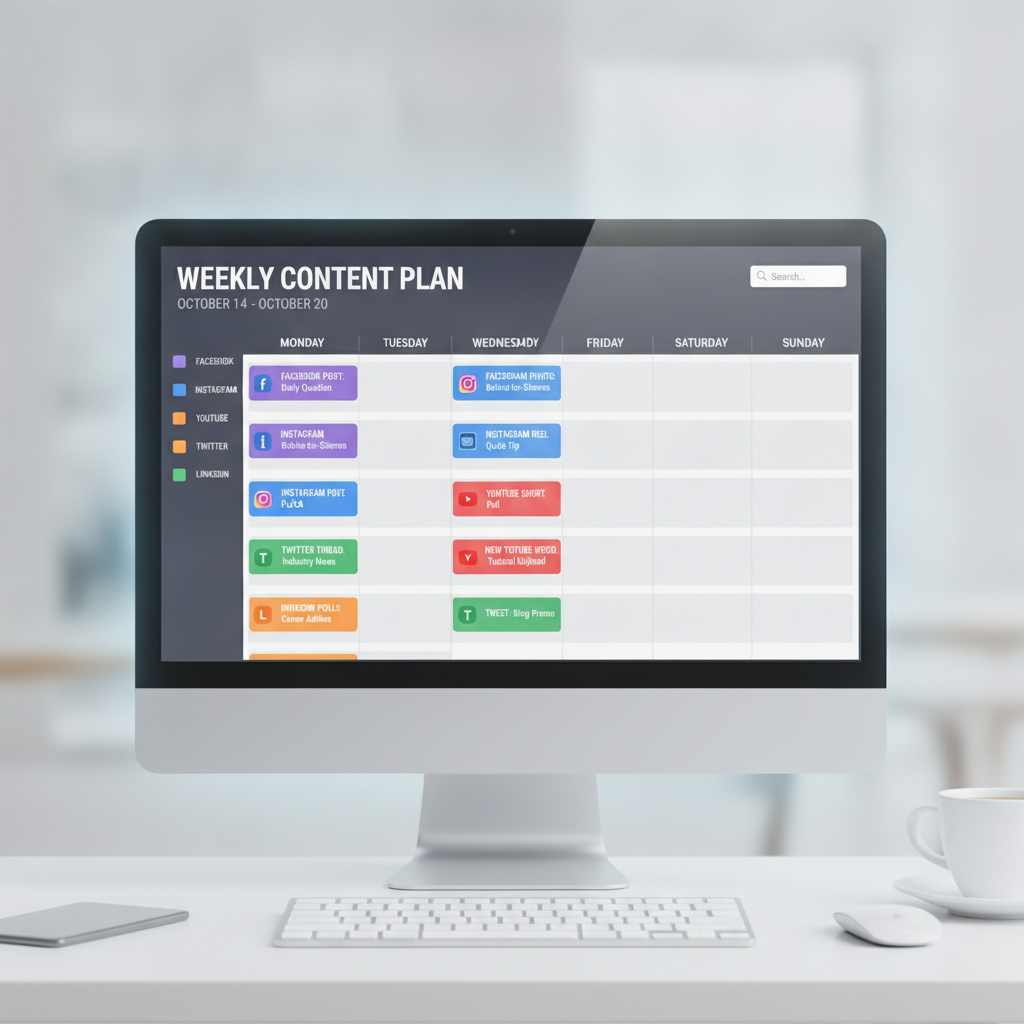
Based on real-world results across growing marketing teams, following a structured setup process prevents operational bottlenecks down the road.
Step 1: Establish your core content pillars
Content pillars are 3 to 5 foundational topics your brand talks about regularly. For example, a software company might focus on industry news, quick tutorial tips, customer success stories, and behind-the-scenes culture. Having clear pillars means you never run out of ideas when filling in your monthly calendar view.
Step 2: Set your ideal publishing cadence
Determine how frequently you can realistically produce quality content without burning out your team. It is far better to publish high-value posts twice a week consistently than to commit to daily posts and quit after two weeks.
Step 3: Map out content slots and assign roles
Block out your publishing dates for the upcoming month on your grid or project board. Assign specific drafting, visual design, and final approval responsibilities to team members with clear advance deadlines.
📊 Performance Gains Reported After Implementing a Content Calendar
What Are the Most Common Content Calendar Pitfalls to Avoid?
The most common mistake teams make with content calendars is treating them as rigid rules rather than adaptable guides. A successful content schedule provides structure, but it must remain flexible enough to accommodate trending industry news or sudden company updates.
Over-scheduling without buffer room
Filling every single slot months in advance leaves no room for timely updates, breaking news, or spontaneous social trends. Aim to schedule 70–80% of your calendar in advance, keeping the remaining space open for real-time engagement.
Treating every platform identically
Cross-posting the exact same caption and image across LinkedIn, Instagram, and X (Twitter) rarely yields high engagement. Each social platform has unique formatting norms, audience expectations, and algorithm preferences. Customize your copy and creative assets for each channel listed on your social media content calendar.
Neglecting regular performance reviews
A calendar isn't just an execution tool; it's a data collection system. Review your performance monthly to identify which topics, formats, and posting times drive real business results, then adjust your upcoming calendar accordingly.
Key Takeaways: Why Your Content Calendar Is Your Secret Weapon
Consistency drives growth: A content calendar ensures your brand stays visible to your audience without silent gaps.
Eliminates stress: Planning 30 days ahead removes the daily panic of finding something to publish.
Improves asset quality: Extra lead time leads to better graphics, polished copy, and thoughtful messaging.
- Aligns team members: Clear owners, deadlines, and visual statuses keep everyone accountable and organized.
