
What Is a Marketing Retainer, and How Do You Know If You’re Getting Your Money’s Worth?

Quick Answer
A marketing retainer is a recurring agreement where a business pays a fixed fee for continuous marketing services and strategic support. Unlike one-off projects, a monthly retainer guarantees dedicated expert access, predictable budgeting, and consistent execution focused on driving long-term revenue growth.
Hiring a marketing partner is a major step for any growing business. When you start exploring your options, you will quickly find that most growth-oriented agencies and specialists prefer working on a retainer basis rather than taking on single, isolated projects.
While paying a recurring fee might feel like a big commitment at first, a well-structured retainer is often the most cost-effective way to scale your digital presence. However, paying a recurring invoice only makes sense if you can clearly see the return on your investment.
Let's break down exactly what a marketing retainer is, how different pricing models work, and how you can be 100% sure you're getting full value for your hard-earned dollars.

What Is a Marketing Retainer and How Does It Work?
A marketing retainer is a contract-based relationship where a business pays an upfront fee—usually billed monthly—to secure a set block of time, deliverables, or strategic resources from a marketing team. Rather than buying a single logo or one website redesign, you are essentially embedding an experienced marketing team directly into your business.
In practice, this model creates a proactive partnership. Instead of constantly starting and stopping new contracts for every individual campaign, your team and your agency work together on an ongoing basis to optimize funnel performance, publish content, manage ad spend, and build long-term brand equity.
What is the difference between a monthly retainer and project-based work?
Project-based work focuses on completing a specific set of deliverables with a fixed end date, whereas a monthly retainer provides ongoing strategic execution and continuous optimization.
Projects (like building a website or producing a single promotional video) are ideal for clear, one-time needs. However, digital marketing channels require continuous care. Search engine optimization (SEO), pay-per-click (PPC) advertising, and social media management are not "set-it-and-forget-it" tasks. A retainer ensures that your strategies adapt based on performance data and changing market conditions.
"One-off projects fix immediate problems, but monthly retainers build repeatable growth systems that compound in value over time."
What services are typically included in a marketing retainer?
A monthly retainer can be customized to cover specialized channel management or full-service digital execution. Common service offerings included in retainer scope are:
Search Engine Optimization (SEO): Keyword research, technical site audits, content creation, and link-building.
Paid Media Management: Campaign setup, audience targeting, ad creative design, and bid optimization across Google Ads or social platforms.
Content Marketing: Blog articles, case studies, whitepapers, and email newsletters.
Conversion Rate Optimization (CRO): A/B testing, landing page updates, and user journey mapping.
Reporting & Strategy: Monthly performance analysis, executive dashboards, and quarterly business reviews.
How Do Marketing Retainer Pricing Models Function?
Marketing retainer agreements generally fall into three distinct structures: time-based (hours), deliverable-based (scope), or value-based (performance). Understanding how your provider structures their fees is the first step toward evaluating whether you are getting a fair deal.
🥧 Common Marketing Retainer Billing Structures
Are retainers billed by hours, deliverables, or performance?
Deliverable-based retainers are the most common structure in modern digital marketing, accounting for roughly 48% of agency contracts. Under this structure, you agree on specific monthly outputs—such as four blog posts, two ad campaign refreshes, and weekly email blasts—regardless of how many hours the work takes.
Hour-based retainers trade monthly execution for a reserved block of labor (e.g., 40 hours per month at $150/hour). While flexible, this model can sometimes align agency incentives with time spent rather than business results achieved.
Value-based or performance retainers tie fees directly to business milestones, such as lead volume or revenue growth. While attractive to business owners, these models often come with higher baseline fees or strict operational requirements.
💡 Tip
Pro Tip: Look for scope flexibility in your agreement. A great monthly retainer allows you to reallocate unused hours or points from low-priority tasks to high-priority initiatives when market opportunities pop up.
How Do You Measure ROI on a Monthly Marketing Retainer?
You know you are getting your money’s worth from a marketing retainer when the profit generated from new leads, direct sales, or increased brand equity consistently exceeds the cost of the retainer itself.
To evaluate value accurately, you must separate vanity metrics (like social impressions or raw site visits) from true business metrics (like cost per acquisition, customer lifetime value, and qualified lead volume).
What key performance indicators (KPIs) should you track?
To judge retainer performance objectively, focus on metrics that align directly with your revenue pipeline:
- 1 Customer Acquisition Cost (CAC): The total marketing spend divided by the number of new customers acquired.
- 2 Return on Ad Spend (ROAS): The direct revenue generated for every dollar spent on paid advertising channels.
- 3 Marketing Qualified Leads (MQLs): The total volume of prospects who fit your target buyer profile and demonstrate high purchase intent.
- 4 Organic Search Visibility: Keyword rank positions and high-intent traffic growth over a 3-to-6-month window.
📊 Client Satisfaction Scores by Metric Tracking Rigor
How quickly should you expect to see results?
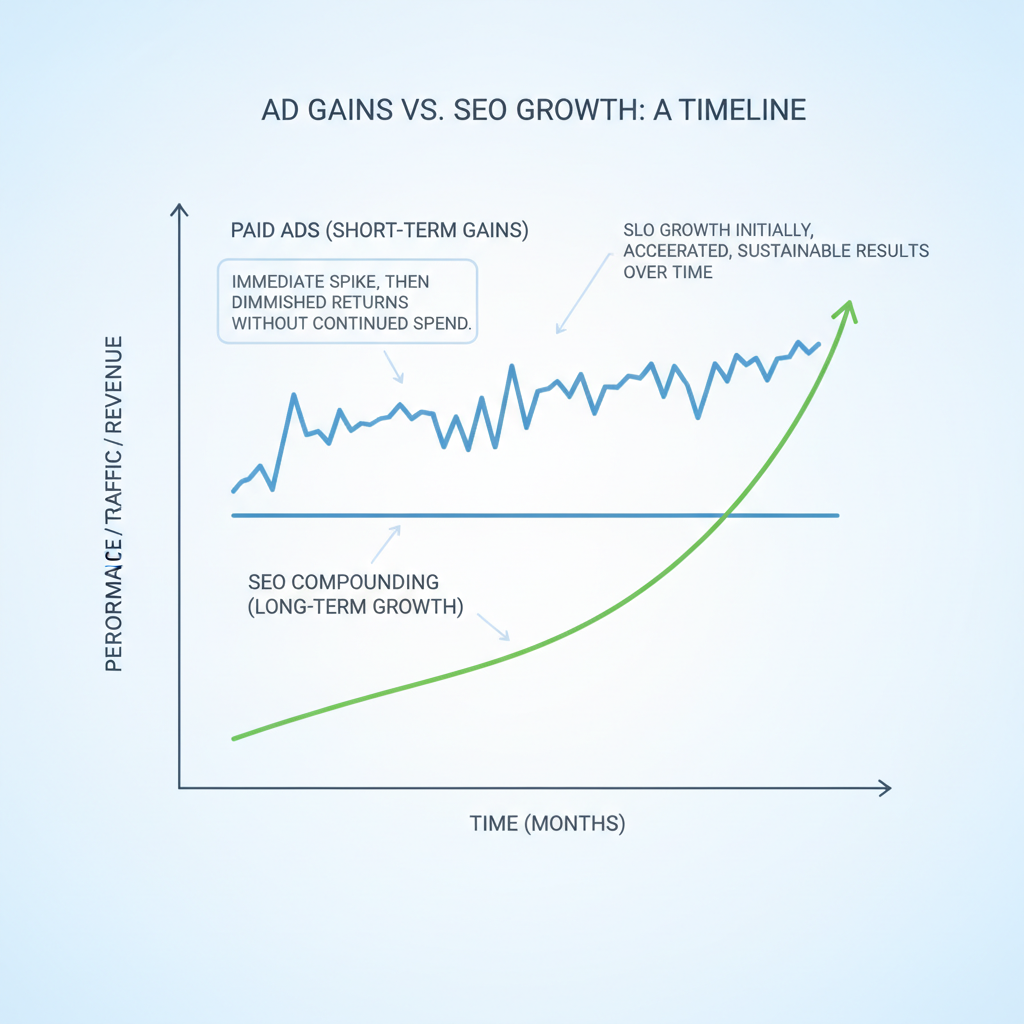
Immediate results are realistic for paid ad management, but organic channels like SEO and content marketing typically require 90 to 180 days to demonstrate meaningful return on investment.
Based on real-world search and content performance standards documented across industry resources like Google Search Central, initial technical fixes and content indexing yield visible rank movements within 30 to 60 days, while compound traffic and lead growth materialize between months 3 and 6.
What Are the Red Flags That You're Overpaying for a Retainer?
A poor retainer experience usually stems from a lack of transparency, vague scope definitions, or alignment failures rather than outright incompetence. Recognizing warning signs early helps you realign expectations or terminate an underperforming agreement.
"If your monthly retainer report only highlights vanity traffic increases while sales remain flat, you aren't paying for marketing—you're paying for reporting."
How do you address lack of transparency or missed goals?
If you suspect you aren't getting your money's worth, run your provider through this brief evaluation checklist:
Vague Monthly Reporting: Reports focus on clicks and impressions rather than conversions, pipeline value, or revenue.
Unused Deliverables: You consistently receive fewer assets or strategy hours than outlined in your monthly scope.
Lack of Proactive Strategy: Your agency only executes what you ask them to do, offering no new ideas, market insights, or strategic testing proposals.
Radio Silence on Bad News: When ad costs rise or rankings dip, your team ignores the trend instead of proposing immediate test fixes.
When addressing these issues, request a quarterly strategy review. Clear, open dialogue about expectation gaps gives high-quality teams the chance to course-correct before the relationship sours.
How to Get Maximum Value from Your Retainer Agreement
A successful marketing retainer is a two-way street. The businesses that get the highest return on their monthly investments treat their agency as a strategic operational partner rather than an outsourced vendor.
What best practices ensure a successful long-term partnership?
Share First-Party Sales Data: Feed closed-deal metrics and pipeline revenue data back to your marketing team so they can double down on campaigns that actually close.
Establish a Fast Feedback Loop: Delayed approvals on ad copy, designs, or blog posts kill momentum and inflate wasted retainer time.
Maintain Clear Scope Boundaries: Avoid changing priorities mid-month without adjusting deliverables; scope creep eats up strategic planning budget.
- Set Clear Quarterly OKRs: Focus every 90-day cycle on two or three core business objectives rather than spreading budget thin across a dozen initiatives.
Key Takeaways
- 1 Define Scope Clearly: Choose between deliverable, hourly, or performance models based on your internal team's bandwidth.
- 2 Focus on Bottom-Line KPIs: Measure success by CAC, lead quality, and revenue—not just site visits or likes.
- 3 Allow Strategic Time to Compound: Give organic channels 3 to 6 months to mature while utilizing paid ads for short-term lead volume.
- 4 Demand Proactive Communication: Your marketing partner should bring strategy and optimization ideas to you, not just wait for orders.
