
Quick Answer
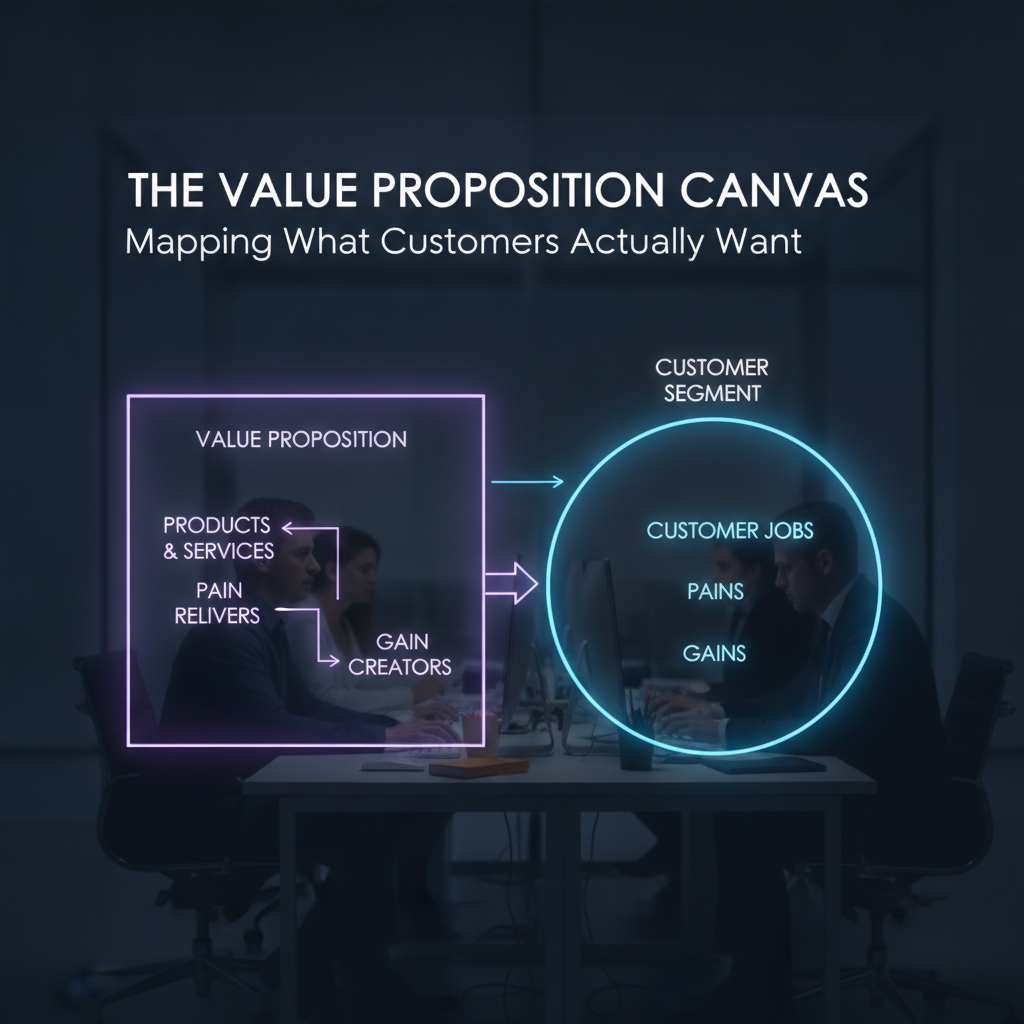
The value proposition canvas is a strategic management tool designed to ensure product-market fit by visually mapping the relationship between customer needs and product features. Developed by Dr. Alexander Osterwalder, it pairs a detailed customer profile with a value map to help businesses align products with actual market demand.
Understanding what buyers truly care about is one of the most critical responsibilities in modern business. Companies often spend considerable time and capital developing products or services, only to find that their offering misses the mark in the marketplace. The value proposition canvas bridges this gap by providing a structured framework to map customer motivations directly to business features.
By applying this methodology alongside established research tools, organizations can systematically reduce risk, refine marketing strategies, and build offerings that genuinely resonate.
What Is the Value Proposition Canvas and How Does It Work?
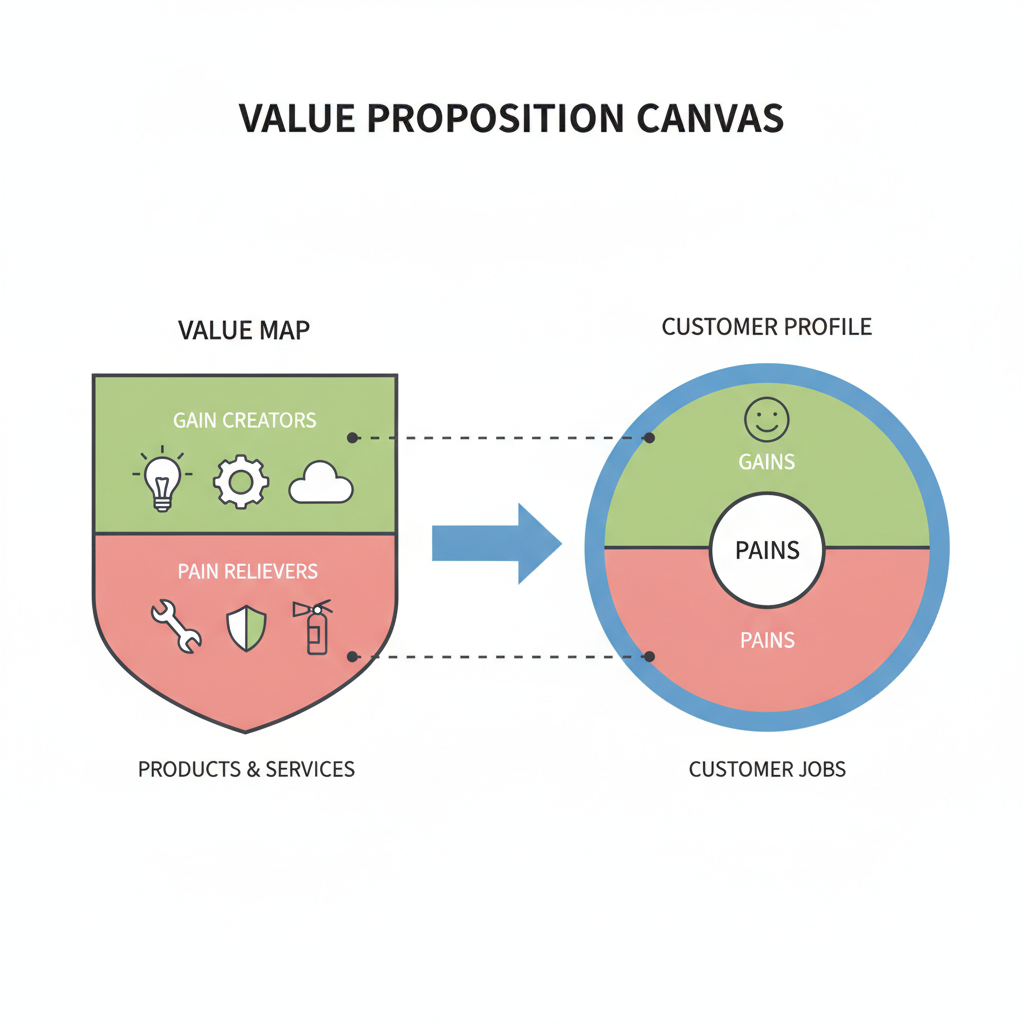
The value proposition canvas is a two-part framework that evaluates the connection between why customers buy and what a product provides. Grounded in business model design research published by Strategyzer, the framework splits your focus into two balanced halves: the Customer Profile on the right and the Value Map on the left. Achieve alignment between these two sides, and you reach what strategy experts call "fit."
"True product alignment happens when your customer's most pressing pains and desired gains are directly addressed by your core product features."
Defining the Customer Profile
The Customer Profile breaks down the human element of your target audience into three distinct categories:
Customer Jobs: The underlying operational, social, or emotional tasks your target market is trying to perform in their work or personal lives.
Customer Pains: The frustrations, obstacles, hidden risks, and negative outcomes customers experience before, during, or after attempting a job.
Customer Gains: The positive outcomes, concrete benefits, and unexpected delights customers hope to achieve.
Mapping the Value Map
The Value Map documents how your specific offering addresses those customer characteristics through three corresponding elements:
Products and Services: A list of the specific tangible items, digital tools, or professional services you supply.
Pain Relievers: Precise descriptions of how your products reduce or eliminate the negative obstacles your customers face.
Gain Creators: Explicit details on how your features produce the positive outcomes and value your audience expects.
How Does the Value Proposition Canvas Integrate with the Jobs to Be Done Framework?
Integrating the value proposition canvas with the jobs to be done framework creates a complete view of real customer purchasing triggers. Popularized by Harvard Business School professor Clayton Christensen, the Jobs to Be Done methodology posits that buyers do not simply purchase products; they "hire" them to accomplish specific progress in their lives.
🥧 Distribution of Customer Job Categories in B2B Decision Making
Identifying Functional, Social, and Emotional Jobs
Customer motivations rarely stop at practical execution. In real-world scenarios, a purchase decision balances three structural job types:
- 1 Functional Jobs: Practical tasks, such as automating invoice processing or scheduling client meetings.
- 2 Social Jobs: Desires regarding how a customer wants to be perceived by peers, colleagues, or industry superiors.
- 3 Emotional Jobs: Personal feelings of security, confidence, or reduced stress associated with solving a problem.
In practice, a business leader seeking strategic advisory services is not just buying hours of consulting (a functional job); they are also seeking peace of mind (an emotional job) and internal credibility among board members (a social job).
Aligning Customer Avatars with Value Propositions
Developing a detailed customer avatar involves gathering demographic, psychographic, and behavioral data to represent your ideal buyer. When you apply your customer avatar directly to the canvas, you move past basic traits like age or job title. Instead, you map actual daily struggles and goals, ensuring your marketing channels speak directly to practical needs rather than broad assumptions.
💡 Tip
Actionable Insight: When mapping your customer avatar, focus heavily on the top 20% of pains that cause 80% of your audience's daily friction. Relieving one acute pain point builds far more brand trust than offering several minor conveniences.
How Do You Step-by-Step Complete a Value Proposition Canvas?
Completing a value proposition canvas requires an iterative, step-by-step approach that moves from customer observation to value design. Based on real-world implementation across various business sectors, starting on the customer side yields far cleaner results than working backward from your product.
📊 Impact of Systematic Value Mapping on Development Metrics
Step 1: Documenting Customer Jobs, Pains, and Gains
Begin by capturing the current reality of your target audience through direct customer interviews, support logs, and market research.
- 1 List all functional, emotional, and social tasks your buyers attempt daily.
- 2 Identify pain points by asking what keeps your customers up at night, what wastes their time, or what current solutions lack.
- 3 Document gains by measuring required, expected, and desired outcomes.
Step 2: Designing Products, Pain Relievers, and Gain Creators
Shift your focus to the left side of the canvas to clarify how your offer interacts with the customer reality you just mapped.
- 1 Itemize every core component of your product or service bundle.
- 2 Write down explicit statements showing how specific features alleviate the identified customer pains.
- 3 Detail how your features create the exact gains your customer profile prioritizes.
Step 3: Verifying Fit and Eliminating Assumptions
Fit occurs when the items on your Value Map directly match the high-priority items on your Customer Profile.
"Mapping a value proposition is an experiment, not a static document. Every connection between a pain and a pain reliever represents a hypothesis that must be tested in the market."
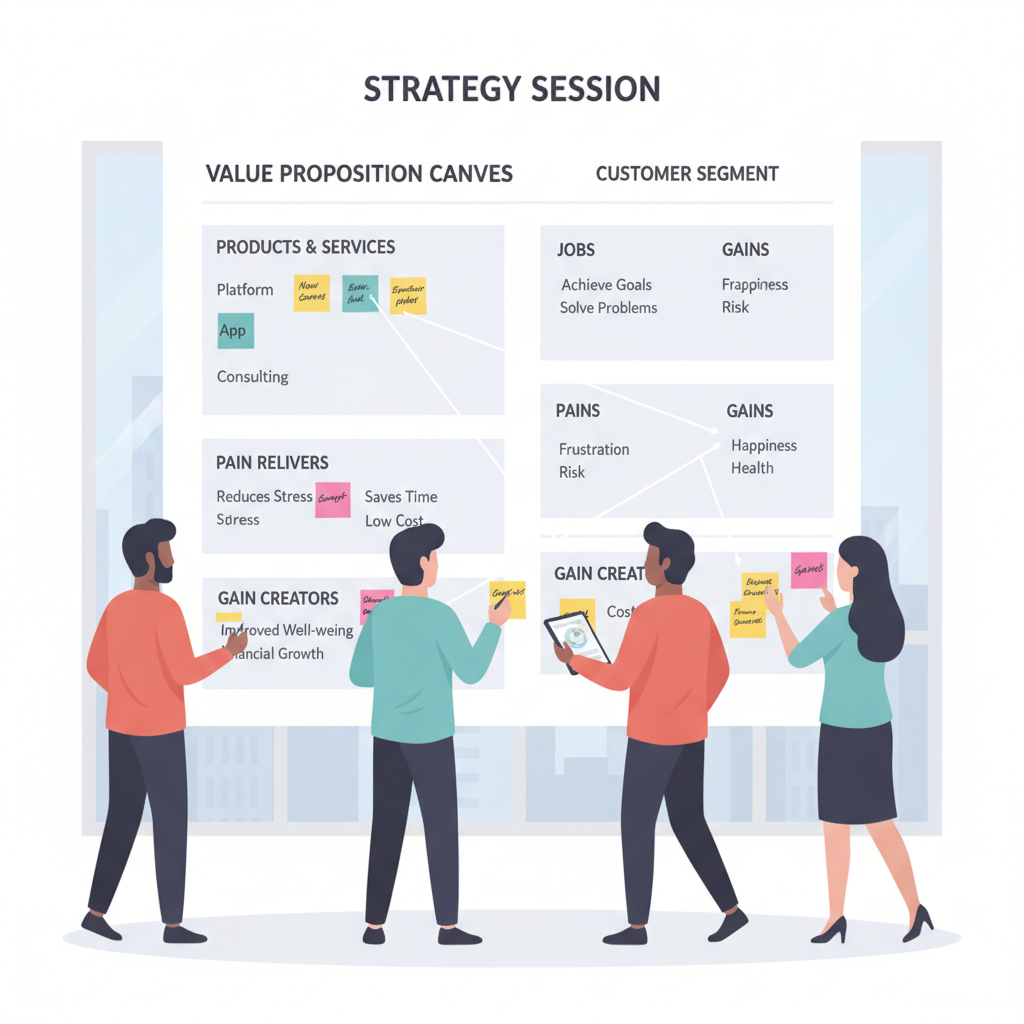
Review your completed canvas line by line. Draw direct connection lines from individual pain relievers to documented customer pains. If key pains remain unaddressed, adjust your product development priorities accordingly.
What Are the Most Common Pitfalls to Avoid When Mapping Customer Needs?
The most frequent pitfall when using the value proposition canvas is completing the exercise from an internal, product-centric perspective rather than an objective, customer-centric view.
Conflating Product Features with Customer Benefits
A common error occurs when teams list product specifications inside the customer profile section. For example, stating that a customer "needs an automated dashboard" assumes a solution before defining the actual problem. The underlying job might simply be "reporting weekly progress to leadership accurately." Keeping features separate from user objectives maintains strategic clarity.
Isolating the Canvas from Real-World Customer Validation
A value proposition canvas completed inside a conference room is merely a list of internal hypotheses. Organizations frequently fall into the trap of assuming their internal knowledge is sufficient. To build genuine credibility and market traction, validate every section of your canvas using real qualitative interviews, buyer feedback loops, and live campaign analytics.
Key Takeaways for Sustainable Growth
Start with the customer: Always build the right side (Customer Profile) before designing the left side (Value Map).
Uncover all job types: Evaluate functional, social, and emotional jobs to understand full purchasing context using the jobs to be done framework.
Prioritize acute pains: Focus on solving high-severity customer problems before adding optional features.
Test and iterate: Treat your canvas as a living strategic asset that updates as buyer behaviors and market conditions evolve.
Giving Your Customers a Voice in Every Product You Build
Creating products that people truly rely on begins with empathy—stepping into your buyers' shoes to understand the challenges they face and the achievements they celebrate. When your value proposition aligns seamlessly with your audience’s lived experience, strategic clarity replaces guesswork, and long-term brand advocacy naturally follows.
Whether you are launching a new offering or re-aligning an established brand strategy, taking the time to map real customer motivations is the most powerful investment you can make. Reach out to our strategy team today to explore how we can help you turn deep audience insights into meaningful market impact.
