
Quick Answer
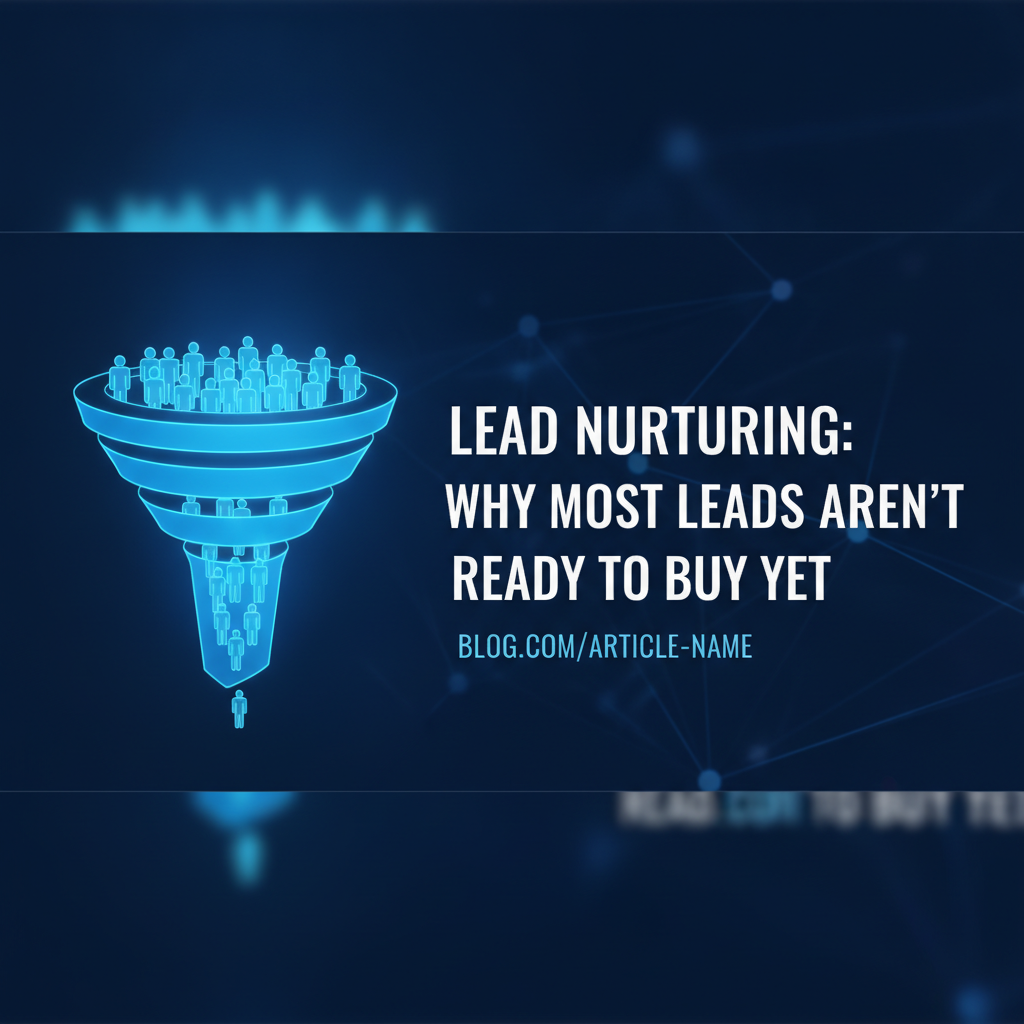
Lead nurturing is the process of developing relationships with prospects at every stage of the sales funnel by delivering relevant, educational content. Research shows that up to 96% of website visitors are not ready to buy immediately. Effective lead nurturing campaigns bridge this gap, converting initial interest into revenue by guiding prospects toward becoming a marketing qualified lead.
Most business leaders naturally assume that when a prospective buyer fills out a form, downloads a whitepaper, or signs up for a newsletter, they are asking to speak with a sales representative immediately. In reality, the vast majority of new inquiries are simply researching their options or taking their first steps toward understanding a complex challenge.
Understanding why prospects require time, space, and genuine support before making a purchasing decision is fundamental to building a sustainable growth engine. By implementing thoughtful, structured lead nurturing strategies, businesses can meet prospects where they truly are, build lasting trust, and dramatically increase long-term customer acquisition efficiency.
Why Are Most Leads Unready to Buy Immediately?
A common scenario in digital marketing is a surge in website leads accompanied by disappointment from sales teams who report that those leads "aren't ready." Based on real-world results across B2B and consumer sectors, this gap exists because lead generation and purchase readiness happen on entirely different timelines.
What percentage of new leads are actually ready to purchase?
Industry benchmarks consistently show that only about 10% to 15% of initial inbound inquiries represent immediate sales opportunities. According to research from Gartner, modern buyers spend only 17% of their total purchase journey meeting with potential vendors. The remaining 83% of their time is spent conducting independent research, comparing solutions, and building internal consensus.
🥧 Lead Readiness Breakdown upon Initial Contact (Industry Benchmarks)
When someone first engages with your digital content, they are usually in the problem-identification or solution-exploration phase. Attempting to close a transaction during this phase often creates friction and alienates potential clients who simply want to learn.
"Treating every new lead as an immediate sales opportunity often alienates prospects before they have even clearly identified their underlying business challenge."
How has the modern buyer’s journey evolved?
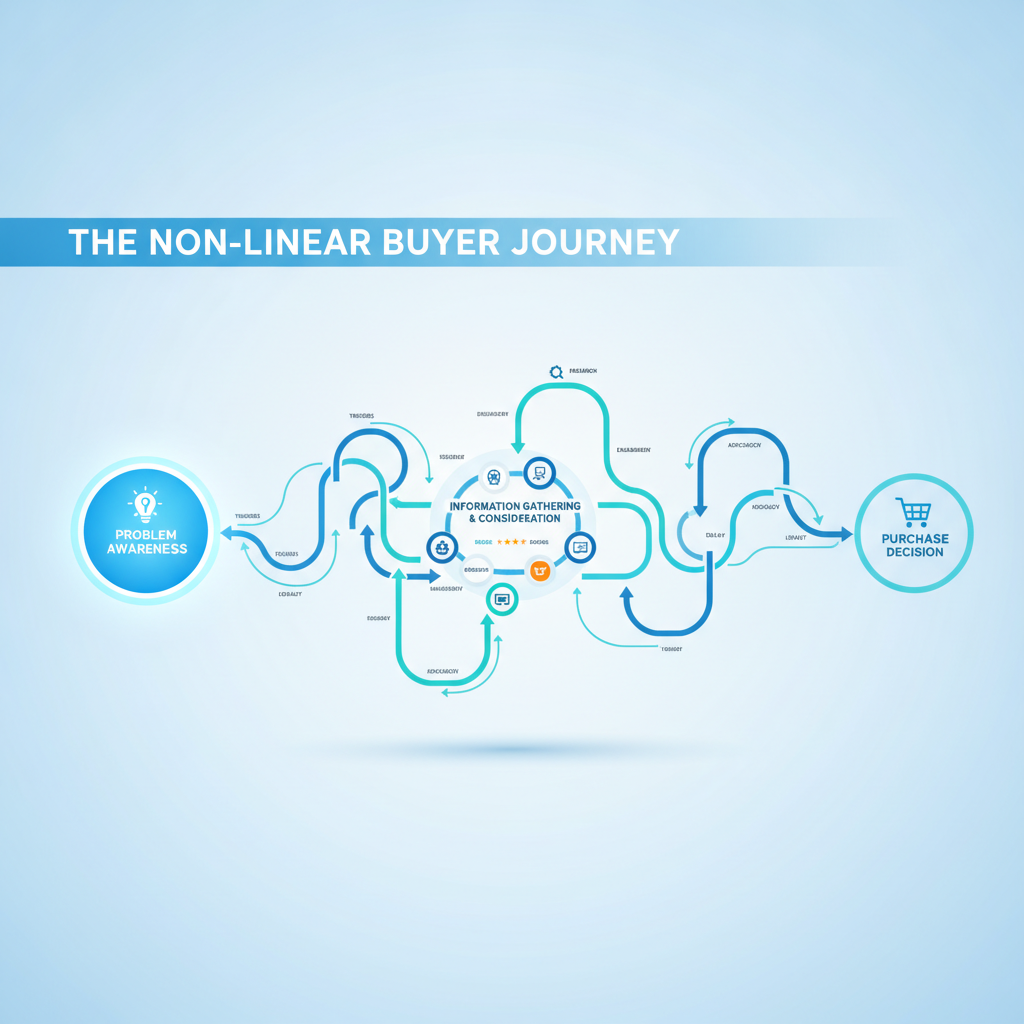
The buyer's journey is no longer a linear pathway from awareness to purchase. Prospective customers interact with your website, social channels, industry publications, and third-party review sites across multiple sessions before taking a decisive action. Because buyers have access to endless online information, they naturally prefer to self-educate at their own comfortable pace.
In practice, this means your brand must remain top-of-mind with helpful, credible information throughout their self-guided evaluation process, ensuring that when they are ready to make a decision, your company is their preferred choice.
What Is Lead Nurturing and How Does It Work?
Lead nurturing is the systematic, empathetic practice of engaging prospective customers by delivering helpful, contextually relevant content tailored to their specific stage in the buying process. Instead of delivering generic promotional pitches, successful lead nurturing campaigns provide practical insights that help prospects solve real, everyday challenges.
What is the definition of a marketing qualified lead (MQL)?
A marketing qualified lead (MQL) is a prospective customer who has demonstrated deliberate engagement with your brand content and matches your predefined ideal customer profile. Unlike a raw contact entry, an MQL has expressed clear purchase intent signals—such as downloading product comparisons, attending webinars, or viewing pricing pages—indicating they are ready for direct sales outreach.
Setting clear criteria for what constitutes an MQL prevents friction between marketing and sales teams. When marketing passes only genuinely qualified prospects to sales, conversion rates rise and sales cycles become smoother for everyone involved.
💡 Tip
Pro Tip: Avoid passing leads directly to your sales team the moment they download a top-of-funnel guide. Instead, implement an automated scoring model that assigns points for engagement activities, automatically elevating a prospect to an MQL only after they reach a specific engagement threshold.
Why are structured lead nurturing campaigns essential for growth?
Implementing automated email sequences and targeted content workflows allows businesses to maintain warm, authentic relationships at scale. Research published by HubSpot indicates that organizations with effective lead nurturing processes generate 50% more sales-ready leads at a 33% lower cost than those relying solely on direct sales outreach.
Key benefits of structured nurturing include:
Higher Conversion Rates: Educated prospects buy more frequently and make decisions with greater confidence once they enter the sales dialogue.
Shorter Sales Cycles: Pre-addressing common questions and objections through thoughtful content streamlines the final sales conversations.
Increased Average Order Value: Well-informed customers better understand the value of higher-tier features or comprehensive service packages.
How to Build an Effective Lead Nurturing Campaign Step-by-Step
Creating an impactful nurture strategy requires a careful balance of empathy, data segmentation, and timely execution. Here is a proven framework for developing campaigns that move prospective buyers naturally toward a purchasing decision.

Step 1: Segment leads by persona and buyer intent
Not all leads share the same goals or pain points. Effective lead nurturing campaigns segment contacts based on two primary dimensions: demographic profile (job role, company size, industry) and behavioral intent (pages visited, assets downloaded, email opens). Segmented campaign workflows routinely achieve 14% higher open rates and over 100% higher click-through rates compared to unsegmented broadcasts.
Step 2: Map relevant content to each funnel stage
Match your communication to the user's current mindset across three main stages:
- 1Top of Funnel (Awareness): Educational blog posts, industry benchmarks, and basic checklists that define the problem.
- 2Middle of Funnel (Consideration): Detailed buying guides, expert webinars, and template kits that compare solution methodologies.
- 3Bottom of Funnel (Decision): Specific case studies, ROI calculators, free trials, and customized live demonstrations.
📉 Average Cumulative Lead Conversion Rate Across Nurture Touchpoints
Step 3: Establish lead scoring and handoff triggers
To identify when a contact becomes a marketing qualified lead, establish an automated lead scoring framework. Assign positive point values to high-intent actions (e.g., viewing pricing pages = +15 points; requesting a case study = +10 points) and subtract points for inactivity. When a lead reaches a set threshold (e.g., 50 points), the automated workflow immediately routes the prospect to your sales team for personalized consultation.
What Common Lead Nurturing Pitfalls Should You Avoid?
Even well-funded digital marketing initiatives can stumble if they fall into common operational traps. Avoiding these frequent mistakes ensures your prospective customers feel supported rather than pressured.
Premature Aggressive Selling: Sending direct sales requests immediately after a user downloads an introductory resource damages trust before it is established.
Irrelevant Content Broadcasts: Sending generalized company news announcements to technical decision-makers reduces email open rates and increases unsubscribe metrics.
Ignoring Lead Decay: Failing to re-engage dormant contacts or clean unengaged leads from active databases inflates costs and harms overall sender domain reputation.
- Lack of Marketing and Sales Alignment: Disagreements regarding what defines a marketing qualified lead create gaps where promising leads drop off uncontacted.
Summary: Transforming Cold Inquiries into Loyal Customers
Most leads are not ready to buy today, but that does not mean they will not buy tomorrow. By recognizing that prospective buyers require context, education, and trust-building time, organizations can turn initial curiosity into predictable revenue.
Investing in robust lead nurturing campaigns, establishing clear standards for every marketing qualified lead, and aligning content with real buyer needs establishes a scalable competitive advantage that yields compounding return on investment over time.
Meet Your Buyers Where They Truly Are
Building lasting customer relationships takes patience, empathy, and the right message delivered at just the right moment. If you are exploring ways to design nurture sequences that respect your buyers' timelines while continuing to build trust and brand preference, we are here to support your team. Reach out to start a conversation about crafting thoughtful, data-guided nurturing campaigns tailored to your audience's unique journey.
