
Quick Answer
A customer referral program relies on frictionless sharing, clear incentives, and automated tracking to turn existing buyers into active brand advocates. To build a referral program customers actually use, offer double-sided rewards, simplify the user experience using modern referral program software, and strategically promote your program across post-purchase touchpoints.
Building a sustainable acquisition engine starts with your happiest customers. When satisfied buyers share your brand with their personal networks, they transfer existing trust directly to your company, resulting in shorter sales cycles and significantly higher customer lifetime values. However, launching a referral program that drives consistent, long-term participation requires thoughtful planning, clear incentives, and seamless technology integration.
In practice, many businesses establish referral initiatives only to see minimal customer engagement. The key to overcoming low adoption is removing sharing friction and choosing an incentive structure that feels genuinely rewarding for both parties.
What Makes a Customer Referral Program Successful?
A successful customer referral program aligns customer motivation with brand growth by providing immediate, meaningful value to both the referrer and the referee. Programs fail when the sharing process requires too many steps or when the incentive does not match the customer's perceived effort.
To maximize participation, your program must establish social alignment. When advocates feel confident that introducing a friend offers real value—rather than feeling like they are making a commercial sales pitch—sharing rates increase dramatically.
According to research by Nielsen, consumers are four times more likely to purchase when referred by a friend, making peer recommendations one of the highest-converting acquisition channels available.
What Incentives Drive the Highest Participation?
Double-sided incentives—where both the advocate and the new customer receive a reward—generate significantly higher participation rates than single-sided rewards. Providing mutual value removes the social hesitation of sharing, framing the invitation as a helpful gift rather than a self-serving gesture.
🥧 Most Effective Referral Incentive Types (2024 Industry Benchmark)
How Do Two-Sided Rewards Boost Referral Rates?
Two-sided rewards boost referral rates by providing equal motivation on both sides of the transaction. For instance, offering $20 off to the friend and $20 in account credit to the referrer creates a balanced win-win dynamic. In subscription and e-commerce business models, this structure yields an estimated 20% to 30% higher conversion rate compared to rewarding only the referrer.
How Do You Design a Referral Program Step-by-Step?
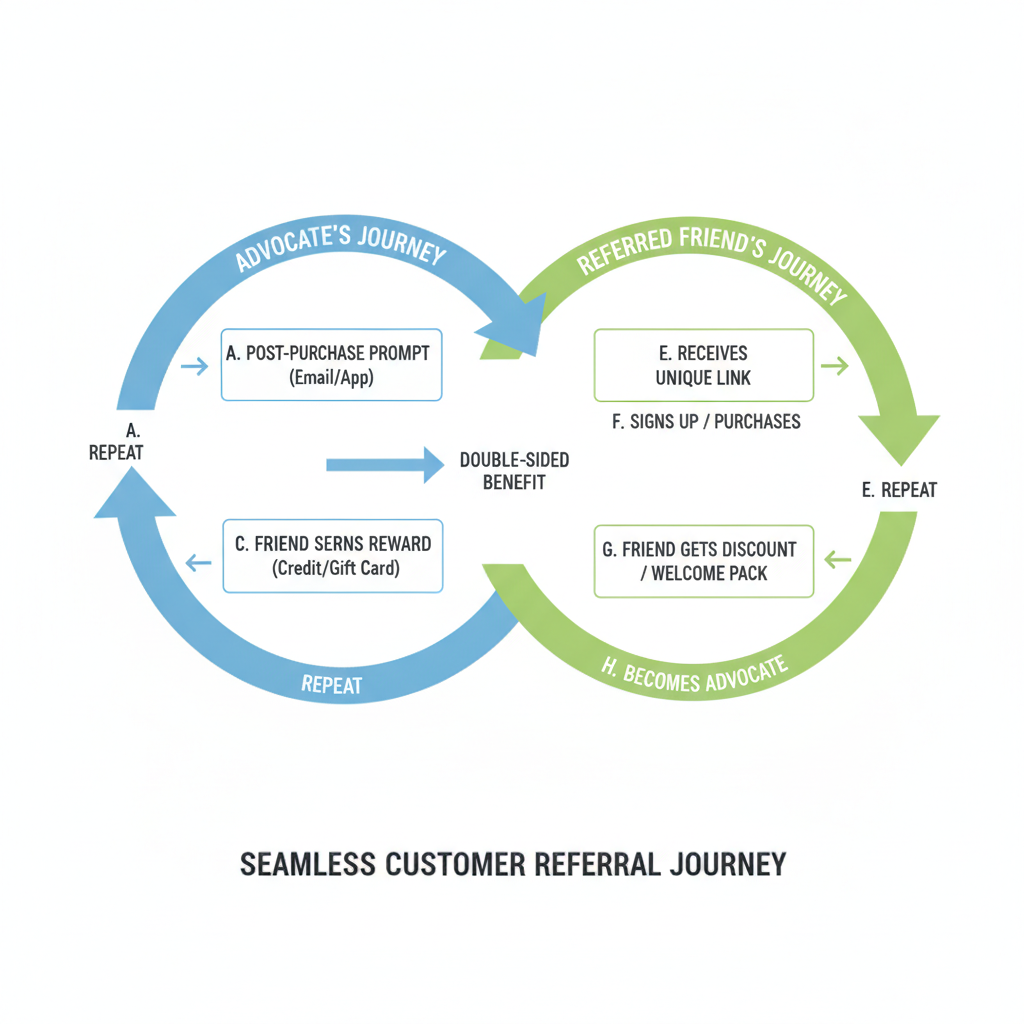
Designing an effective referral program requires setting measurable acquisition goals, configuring reward structures, selecting appropriate software, and integrating prompts into existing customer journeys.
Step 1: Define Clear Goals and Reward Metrics
Before choosing technology, establish clear baseline performance indicators. Track your current customer acquisition cost (CAC) and customer lifetime value (LTV) to determine how much you can afford to pay for a successful referral.
Key metrics to monitor include:
Referral Rate: The percentage of total customers who share their unique link (aim for 7% to 10%).
Referral Conversion Rate: The percentage of referred leads who complete a purchase (aim for 10% to 15%).
Viral Coefficient (K-Factor): The number of new customers generated by each existing customer (a K-factor above 1.0 signals exponential growth).
Step 2: Select the Right Referral Program Software
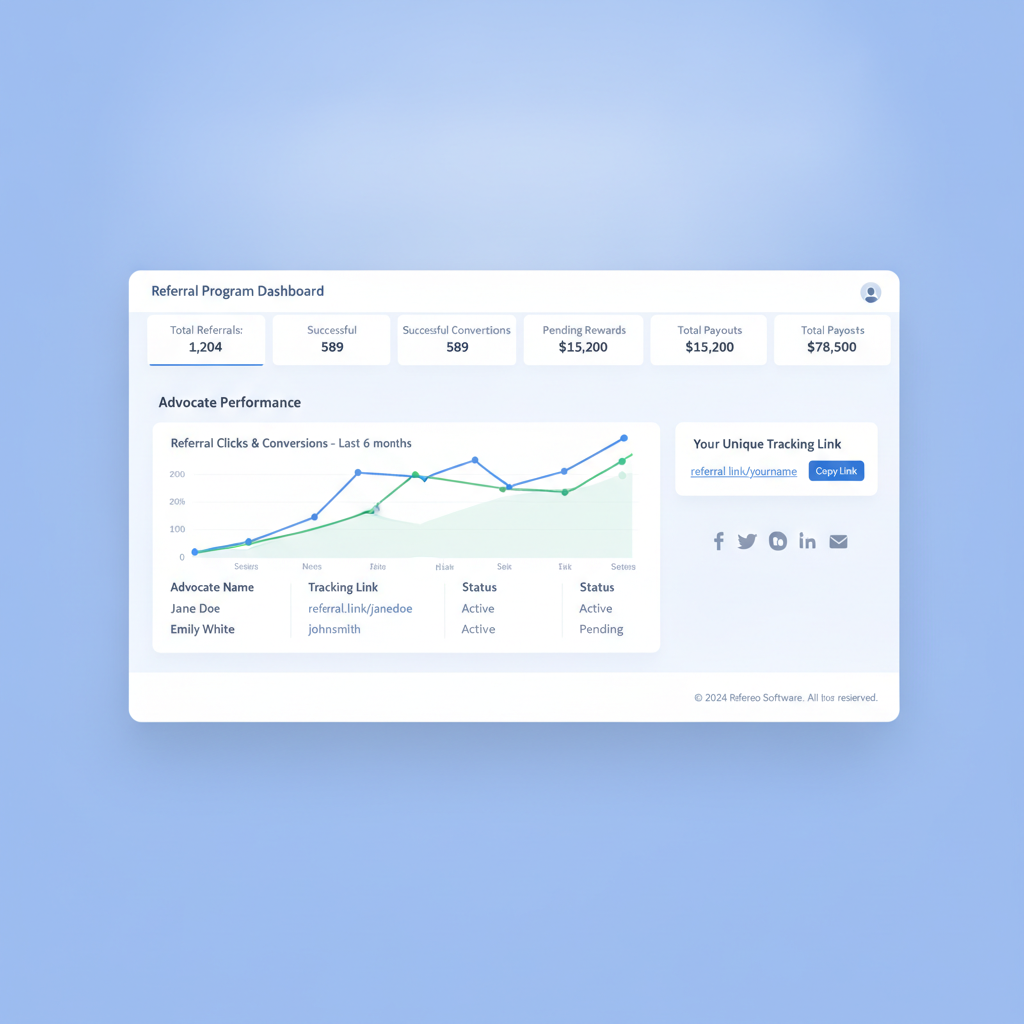
Selecting robust referral program software automates link generation, reward delivery, and fraud prevention. Modern software solutions integrate directly with your website platform, CRM, and email software to manage tracking without manual intervention.
If you are just launching or testing customer advocacy, starting with a lightweight or free referral program tool allows you to validate incentive structures before scaling into enterprise-grade software.
Step 3: Promote Your Referral Program Across Touchpoints
Even the most generous incentives will fail if customers do not know the program exists. Introduce your program at moments when customer satisfaction is highest, such as immediately after a successful checkout, inside order confirmation emails, or after a positive customer support interaction.
💡 Tip
Keep your referral link sharing as friction-free as possible. Allowing customers to copy a short link or share directly via messaging apps with a single tap increases conversion rates by up to 35%.
What Are the Most Effective Customer Referral Program Ideas?
The most effective customer referral program ideas leverage existing buying habits through tiered rewards, instant account credits, and gamified milestones that encourage repeated sharing.
📈 Average Referral Conversion Rate by Sharing Channel
Tiered Rewards and Milestone Gamification
Gamification encourages advocates to move beyond a single referral. By introducing milestone tiers—such as unlocking exclusive perks or larger bonuses after 3, 5, or 10 successful referrals—you motivate top advocates to continuously share your brand.
For example, a business might offer:
- 1 1 Referral: $15 Store Credit
- 2 3 Referrals: $50 Store Credit + Free Shipping for a Year
- 3 5 Referrals: Exclusive Access to New Product Releases + VIP Status
Based on real-world results across digital services, milestone structures increase repeat sharing behavior among top advocates by up to 40%.
Double-Sided Discounts and Account Credits
For subscription platforms and software providers, offering recurring account credits is often more attractive than one-off cash payouts. Giving advocates $10 off their monthly subscription fee for every active subscriber they refer reduces churn while acquiring high-intent users.
For physical e-commerce stores, pairing a percentage discount (e.g., "Give 20%, Get 20%") with a minimum order threshold protects profit margins while maintaining an attractive offer.
Key Takeaways for Building a High-Converting Referral Program
Prioritize Frictionless Sharing: Eliminate login barriers by generating unique sharing links automatically for every registered customer.
Offer Balanced Incentives: Use double-sided rewards so both the advocate and the recipient benefit equally from the referral.
Automate Tracking and Payouts: Leverage specialized referral program software to track clicks, verify purchases, and distribute rewards instantly.
- Promote Post-Purchase: Introduce the referral offer at peak satisfaction touchpoints, such as checkout confirmation screens and product delivery follow-ups.
Give Your Best Customers a Reason to Celebrate Together
Every customer interaction is an opportunity to cultivate a lasting relationship based on mutual trust and shared appreciation. When you design a referral program that truly honors your customers' support, word-of-mouth growth feels less like marketing and more like a natural celebration of community.
If you are looking to turn customer loyalty into your most reliable growth engine, explore how a custom referral strategy can work for your brand. Connect with our team today to build a seamless advocacy experience that your buyers will love to share.
