
Quick Answer
A drip email campaign is an automated series of pre-written emails sent to specific segments of your audience based on predefined triggers or a set schedule. This strategic sequence nurtures leads, educates customers, and drives conversions by delivering timely, relevant messages automatically, making it a cornerstone of effective digital marketing.
In today's dynamic business landscape, connecting with your audience at the right moment with the right message is paramount. This is precisely where a well-crafted drip email campaign shines. By automating personalized communication, businesses can effectively nurture leads, onboard new customers, and re-engage existing ones, transforming casual interest into loyal advocacy. We believe in harnessing innovative strategies that build trust and deliver tangible results, and drip marketing is a prime example of how thoughtful automation enhances customer relationships and boosts overall success.
What is a Drip Email Campaign?
A drip email campaign is a pre-written set of automated emails sent to individuals over a specific period, triggered by a particular action or event. Unlike a broadcast email, which is a one-off message sent to an entire list, a drip campaign is a targeted, sequential communication designed to guide the recipient through a specific journey, whether that's learning about a product, completing a purchase, or becoming a more engaged user.
Defining Automated Email Sequences
Automated email sequences are the backbone of any effective drip email campaign. These sequences are carefully planned series of messages that deploy automatically based on user behavior (like signing up for a newsletter or abandoning a cart) or a set schedule (such as a welcome series for new customers). The core idea is to deliver relevant content at precisely the right time, fostering a sense of personalized interaction without requiring manual intervention for each email. For instance, when a new user signs up for a trial, an automated sequence might send an introductory email, followed by a tip-of-the-day, then a feature highlight, and finally a call to action for upgrading.
The Core Principles of Drip Marketing
Effective drip marketing hinges on three core principles: relevance, timeliness, and automation. Relevance means each email's content directly addresses the recipient's current stage or action. Timeliness ensures messages arrive when they are most impactful, like a follow-up email sent an hour after a product download. Automation brings it all together, allowing businesses to set up these complex sequences once and have them run continuously, scaling their engagement efforts effortlessly. This approach not only saves valuable time but also ensures consistency in communication, building trust with your audience over time.
Why Are Drip Email Campaigns Essential for Conversion?
Drip email campaigns are essential for conversion because they systematically guide prospects through the sales funnel, nurturing relationships and addressing potential objections at each stage. By providing valuable, timely information, these campaigns keep your brand top-of-mind and incrementally build confidence, leading directly to improved email conversion rates.
Boosting Engagement and Nurturing Leads
Drip campaigns are exceptionally effective at boosting engagement and nurturing leads by providing consistent, valuable interaction points. Instead of relying on a single marketing touchpoint, an automated email sequence allows you to deliver a series of carefully crafted messages that educate, inform, and build rapport. This sustained engagement keeps your brand relevant and ensures that leads receive the necessary information to move them closer to a purchasing decision. In practice, businesses often see significantly higher open and click-through rates with well-segmented drip campaigns compared to generic broadcasts because the content feels more personal and purposeful.
📈 Email Marketing Conversion Rates: Drip vs. Broadcast (Estimated)
Improving Email Conversion Rates
Implementing a strategic drip email campaign directly translates to significantly improved email conversion rates. By segmenting your audience and tailoring your messages, you reduce friction in the customer journey and provide clear paths to conversion. For example, an abandoned cart email series can recover lost sales by reminding customers of their items and offering incentives. Similarly, a well-designed lead nurturing sequence can turn curious prospects into paying customers by gradually showcasing product benefits and addressing pain points.
"Businesses that implement automated drip campaigns can see an average increase of 20% in sales opportunities compared to those that don't, driven by consistent lead nurturing." - Source: Industry Benchmarks
How Do You Plan and Build an Effective Drip Sequence?
Building an effective drip email campaign requires thoughtful planning, engaging content, and continuous optimization. It starts with understanding your audience and defining clear objectives, then moves into crafting messages that resonate and tracking their performance.
Defining Your Audience and Goals
The first step in building any successful drip email campaign is clearly defining your target audience and the specific goals you aim to achieve. Are you targeting new subscribers, inactive customers, or leads who downloaded a specific resource? Each segment will require a unique approach. Your goals should be SMART: Specific, Measurable, Achievable, Relevant, and Time-bound. For instance, a goal might be to "increase free trial to paid conversion by 10% within three months" or "reduce customer churn by 5% through a post-purchase education series." Understanding these elements will inform the content, cadence, and calls to action for your automated email sequence.
Crafting Compelling Content and Cadence
With your audience and goals in mind, the next critical step is crafting compelling content and establishing an optimal sending cadence. Each email in your drip marketing sequence should deliver value, moving the recipient closer to your desired action. Use clear, concise language, engaging visuals, and a strong, singular call to action per email. The cadence—how often emails are sent—is equally important. Too frequent, and you risk annoyance; too infrequent, and you lose momentum. A common scenario for a welcome series might involve emails sent on day 0, day 2, day 5, and day 9. Test different subject lines, body copy, and CTAs to see what resonates best with your audience.
Optimizing and Testing Your Automated Email Sequence
Even the most thoughtfully designed drip email campaign benefits from continuous optimization and testing. This process is crucial for maximizing your email marketing conversion rates. Utilize A/B testing for subject lines, content, calls to action, and even sending times to determine what performs best. Track key metrics such as open rates, click-through rates, unsubscribe rates, and ultimately, conversion rates. Based on these insights, iterate and refine your sequences. For example, if a particular email has a low click-through rate, consider revising its content or placement within the sequence.
💡 Tip
Always include a clear, single call-to-action (CTA) in each email of your drip campaign. Overloading recipients with choices can lead to decision paralysis, diminishing your conversion rates. Focus on one primary goal per email.
What Are Common Drip Email Campaign Examples?
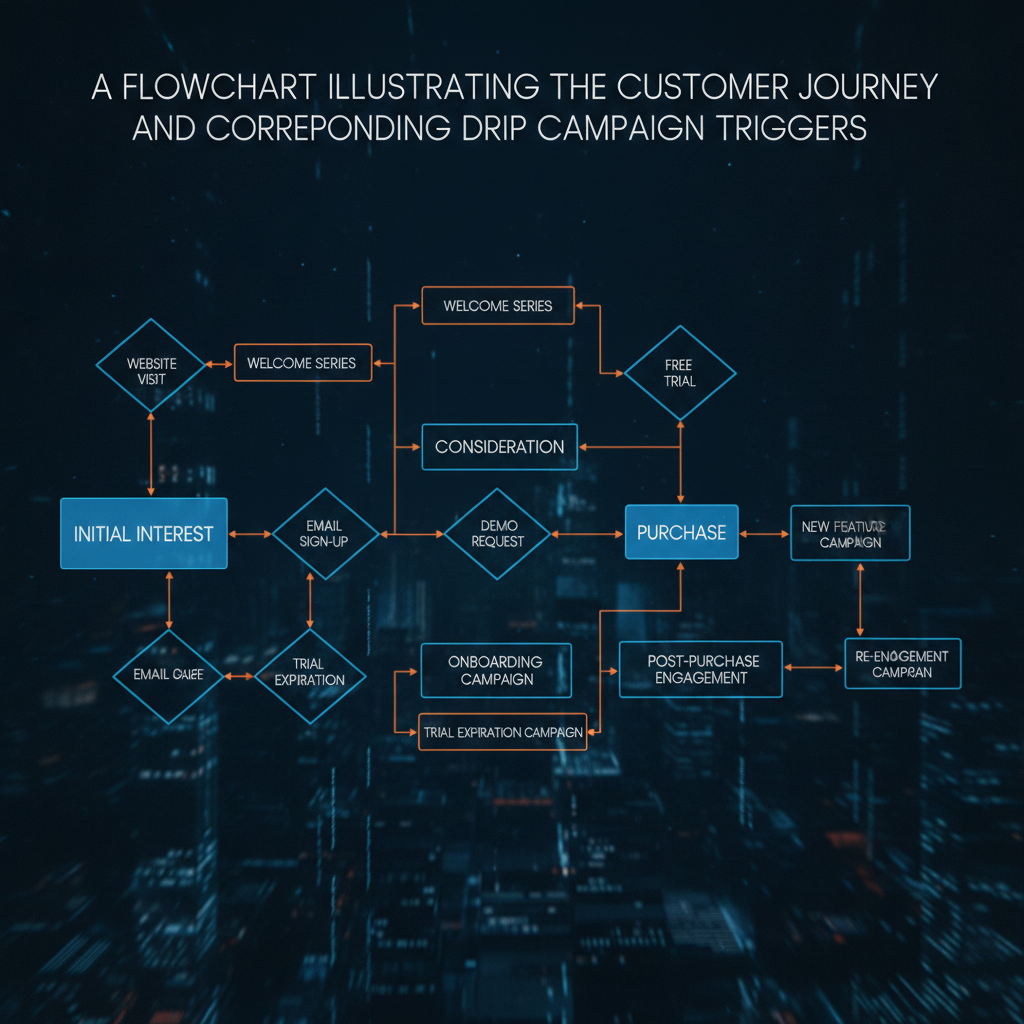
Drip email campaign examples are diverse, catering to various stages of the customer lifecycle, from initial interest to post-purchase engagement. Understanding these common types can help businesses tailor their own effective sequences.
Onboarding and Welcome Series
An onboarding or welcome series is one of the most common and effective types of drip email campaigns. This sequence is triggered immediately after a user signs up for a service, makes a first purchase, or subscribes to a newsletter. Its purpose is to introduce your brand, explain key features, offer valuable tips, and guide new users towards their first success. Typically, this series will include 3-5 emails over 1-2 weeks, welcoming them, showcasing benefits, and encouraging initial engagement.
📊 Customer Retention Rate Improvement with Onboarding Drips (Estimated)
Abandoned Cart Reminders
Abandoned cart reminders are a highly profitable type of drip email campaign for e-commerce businesses. These emails are automatically sent when a customer adds items to their shopping cart but leaves the website without completing the purchase. A typical sequence might involve:
- 1 Email 1 (1 hour after abandonment): A friendly reminder of items in their cart.
- 2 Email 2 (24 hours after abandonment): A reminder, perhaps highlighting benefits or popular items.
- 3 Email 3 (48-72 hours after abandonment): A final reminder, often including a small incentive like free shipping or a discount code.
This sequence is designed to gently nudge customers back to complete their purchase, significantly impacting email conversion rates.
Educational and Lead Nurturing Campaigns
Educational and lead nurturing campaigns are crucial for businesses with longer sales cycles or complex products. These drip marketing sequences focus on providing value, positioning your brand as an expert, and building trust over time. They might include industry insights, how-to guides, case studies, or invitations to webinars. The goal is not immediate conversion but to educate prospects, address their pain points, and move them deeper into the sales funnel until they are ready to engage with a sales representative or make a purchase. This approach builds a strong foundation for future sales, transforming cold leads into warm opportunities.
Which Tools Support Successful Drip Marketing?
Successful drip marketing relies heavily on robust drip campaign software that can automate sequences, segment audiences, and provide analytics. The right tools empower businesses to execute sophisticated campaigns efficiently.
Key Features to Look for in Drip Campaign Software
When selecting drip campaign software or email drip campaign tools, several key features are non-negotiable for success. Look for platforms that offer:
Intuitive Automation Workflows: Drag-and-drop builders for creating complex email sequences based on triggers.
Robust Segmentation: The ability to finely segment your audience based on demographics, behavior, and engagement.
Personalization Capabilities: Dynamic content insertion to tailor emails with recipient-specific information.
A/B Testing: Tools to test different elements of your emails (subject lines, CTAs, content) to optimize performance.
Comprehensive Analytics and Reporting: Insights into open rates, click-through rates, conversions, and unsubscribe rates to measure campaign effectiveness.
CRM Integration: Seamless connection with your customer relationship management system for a unified view of your customer data.
Popular Email Drip Campaign Tools
The market offers a wide array of email drip campaign tools, each with unique strengths. Popular choices that excel in functionality and user-friendliness include:
Mailchimp: Known for its user-friendly interface and comprehensive features, especially for small to medium-sized businesses, offering robust automation for automated email sequence creation.
ActiveCampaign: A powerful platform that combines email marketing, marketing automation, and CRM features, ideal for sophisticated drip marketing strategies and advanced segmentation.
ConvertKit: Favored by creators and bloggers for its focus on audience growth and user-friendly automation, making it easy to build drip email campaigns for educational content.
HubSpot: An all-in-one inbound marketing, sales, and service platform that includes powerful drip campaign software integrated with CRM for comprehensive lead nurturing.
Choosing the right tool depends on your specific business needs, budget, and the complexity of your desired drip email campaign strategies.
Spark Meaningful Connections, One Email at a Time
Crafting automated sequences shouldn't feel mechanical or transactional. At its heart, a successful email drip campaign is about listening to your audience, understanding where they are in their unique journey, and meeting them there with empathy and value. When automation is driven by genuine helpfulness, every message becomes an opportunity to build trust, solve real challenges, and cultivate long-term advocacy.
Whether you are looking to design your very first welcome series or elevate existing workflows to maximize engagement, thoughtful strategy makes all the difference. Connect with our marketing team today to start building drip campaigns that truly convert, elevate your customer experience, and move your business forward with purpose.
