
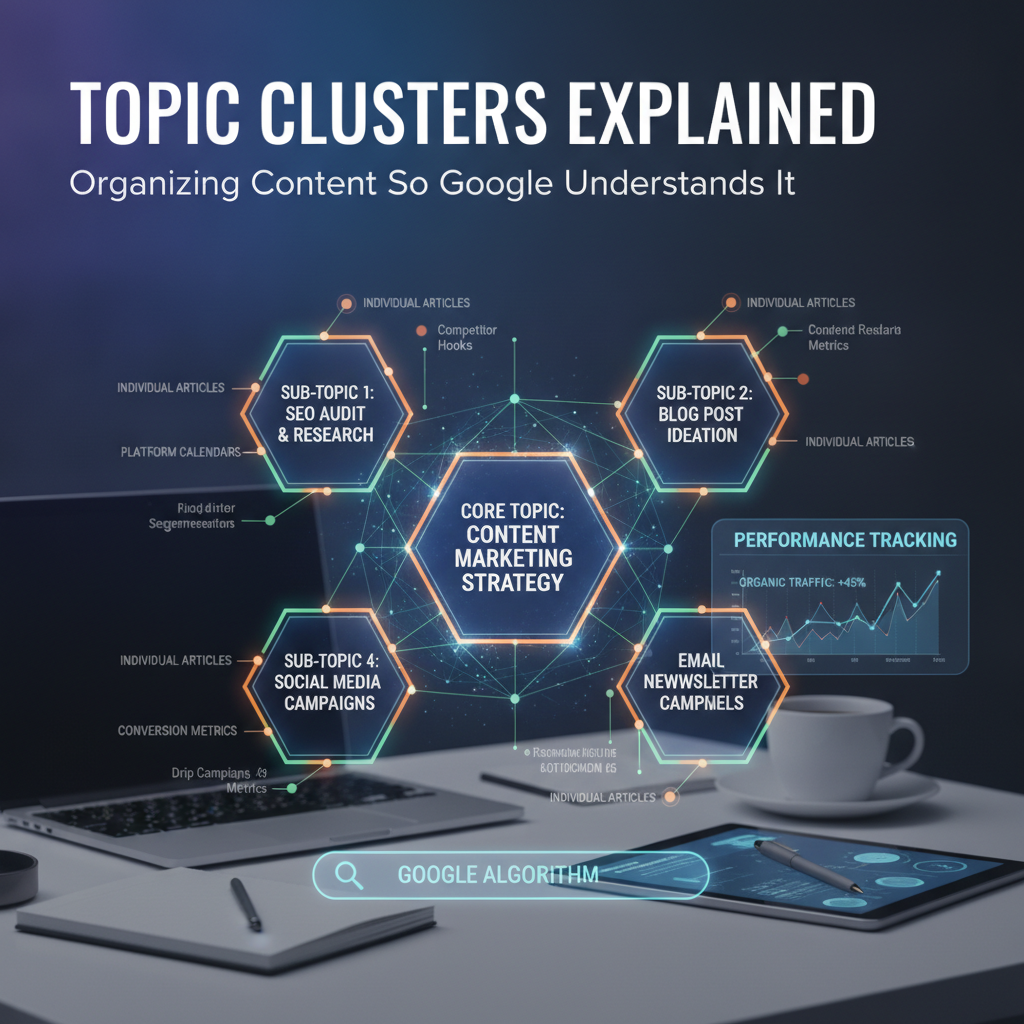
Topic clusters are an SEO strategy that groups related web pages together around a single main subject page, known as a pillar page. By connecting these subtopics with clear internal links, topic clusters tell search engines like Google that your website has deep authority on a subject. Implementing strong pillar page seo helps your website rank higher for competitive search terms while making it simple for visitors to find the answers they need.
What Are Topic Clusters and How Do They Work?
Topic clusters are organized groups of web pages designed to cover a main subject thoroughly. Instead of creating individual blog posts that compete against each other for isolated search terms, you create one central page that provides a complete overview and several smaller pages that dive into specific details.
In practice, topic clusters replace disorganized content creation with a clean, hub-and-spoke model. This structure makes your website much easier for search engines to index and for human readers to navigate effortlessly, turning fragmented posts into an inviting library of knowledge.
The Three Core Components of Content Architecture
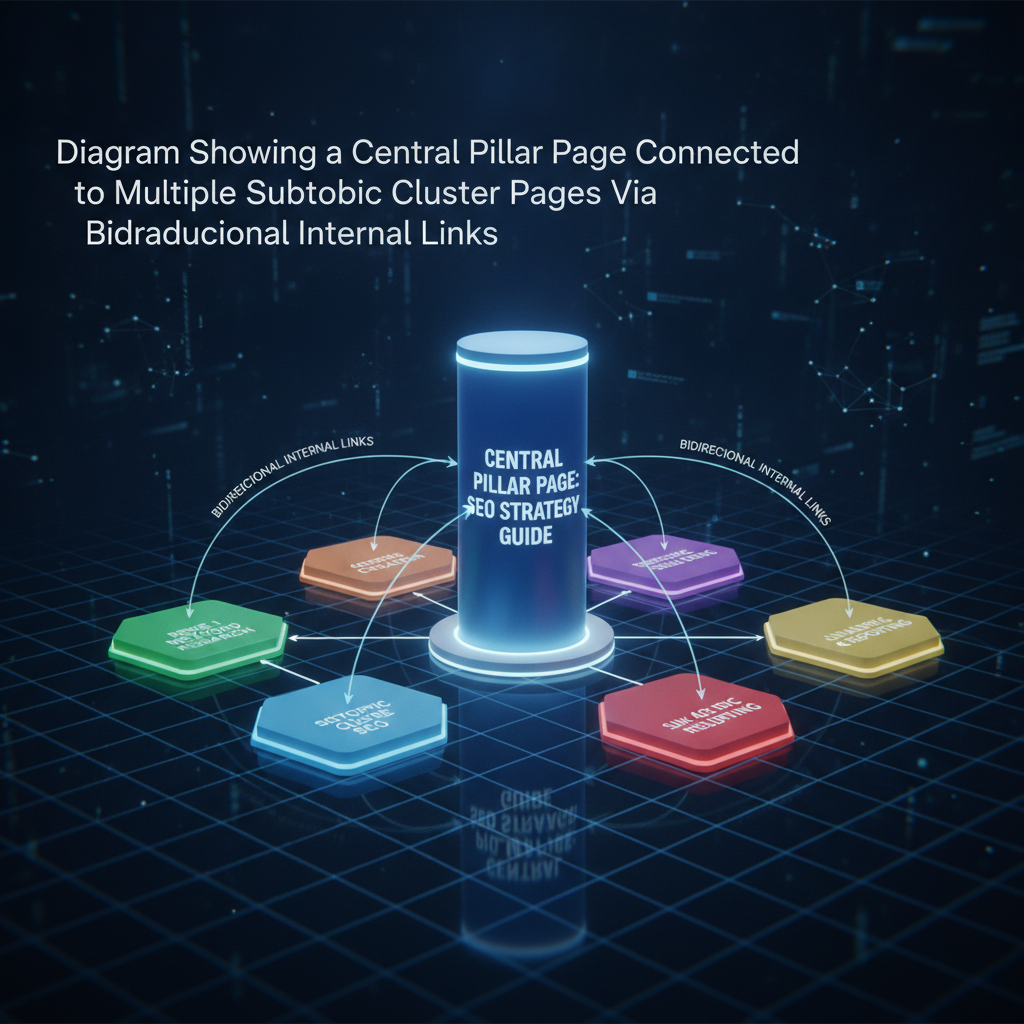
A successful topic cluster relies on three main parts working together:
- 1The Pillar Page: A comprehensive main page covering a broad topic at a high level.
- 2Cluster Pages: Detailed articles that unpack specific subtopics introduced on the pillar page.
- 3Hyperlinks: Two-way links connecting every cluster page back to the main pillar page and to related subtopics.
When these three elements are connected, search engine bots can easily follow the links to see how your articles relate to one another, while your readers gain a seamless learning path.
Why Does Google Prefer Topic Clusters Over Single Keywords?
Google prefers topic clusters because modern search algorithms rely on context and semantic relationships rather than simple keyword counting. According to Google Search Central, search systems focus on understanding human concepts and how ideas fit together naturally.
When you organize your site into clear groups of content, search engine crawlers can evaluate your domain authority faster and recognize your business as a trusted, empathetic resource that cares about answering user questions completely.
"Organizing content around broad topics rather than isolated keywords helps modern search algorithms recognize your business as an industry authority."
📈 Organic Visibility Boost by Content Architecture Type
Semantic Search and Entity Recognition Explained
Semantic search is the ability of search engines to understand the true intent behind a user's search query. Based on real-world results, websites that use topic clusters provide context naturally, meeting readers right where they are in their search journey.
For example, a common scenario we encounter is a business writing about "commercial plumbing." If that main page links directly to subpages about "pipe repair," "water heater installation," and "drain cleaning," search engines quickly recognize that your site covers the full context of plumbing services. This shared context helps all connected pages rank better together while providing a welcoming, helpful experience for site visitors.
How to Build a Topic Cluster Model Step-by-Step
Building effective topic clusters requires thoughtful planning, clear organization, and accurate internal linking that puts your readers' questions first.
💡 Tip
Always use descriptive text when adding internal links. Instead of writing "click here," use clear phrases like "read our complete guide to small business accounting" to help both readers and search engines understand where the link leads.
Identifying Your Broad Core Topic
To start, choose a primary topic that matters to your business and is broad enough to support several related articles. Successful pillar page seo begins by identifying topics that have steady search interest and align directly with your customer's genuine needs and pain points. A good core topic should easily break down into 5 to 10 subtopic articles.
Mapping Subtopics and Link Strategy
Once your main topic is selected, conduct keyword research to identify specific questions your audience asks. Each subtopic becomes its own article that links directly back to your pillar page.
🥧 Content Cluster Search Intent Breakdown
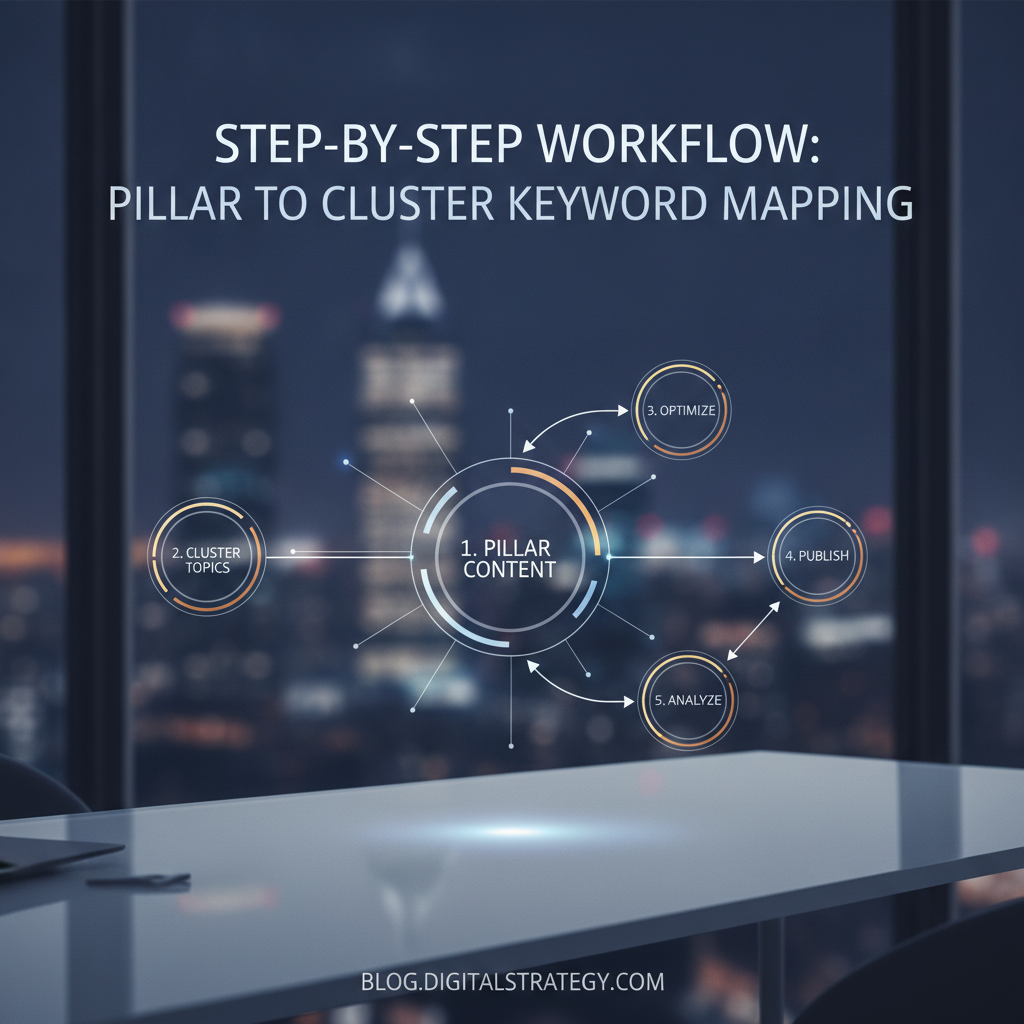
When linking your pages, follow these three simple rules:
- Link every cluster page to your main pillar page.
- Link your main pillar page to every cluster page.
- Link related cluster pages to each other when it naturally helps the reader expand their understanding.
Measuring the Success of Your Pillar Page SEO Strategy
Tracking the performance of your content clusters ensures your efforts produce meaningful business growth while creating real value for your audience. Based on real-world results, websites transitioning from standalone posts to structured topic clusters typically experience a 20% to 45% increase in organic search traffic within three to six months.
Key Performance Indicators to Track
To measure your success, keep an eye on these key metrics:
- Organic Traffic Growth: Track total visitor counts across both the main pillar page and connected cluster articles.
- Keyword Rankings: Monitor how many related keywords your pillar page begins ranking for over time.
- Session Duration: Check whether visitors are staying on your site longer to read multiple articles in the cluster.
- Internal Link Click-Through Rate: Measure how often readers click links to explore related subtopics.
Conclusion and Next Steps for Your Content
Organizing your website with topic clusters is one of the most reliable ways to build online authority, improve search rankings, and support your readers. By creating focused pillar pages and linking them to detailed subtopic content, you create a clear map that helps search engines understand your expertise while offering a reassuring, intuitive experience for your audience.
If you are looking to refine your site structure, start by reviewing your existing content today. Group related posts together, identify missing subtopics your readers are searching for, and add clear internal links to help your content reach its full potential.
Give Your Content Structure the Care and Attention It Deserves
Creating helpful content takes genuine dedication, and your hard work deserves to be discovered by the people who need it most. If organizing your website into structured topic clusters feels like a complex puzzle, you do not have to map it out alone. Connect with our team today to explore how a tailored pillar page seo strategy can bring clarity to your site, elevate your search visibility, and build lasting trust with your audience.
