
Quick Answer
Achieving a top google maps ranking depends primarily on three core factors defined by Google: relevance, distance, and prominence. Businesses that optimize their Google Business Profile, maintain consistent online business listings, and systematically collect customer reviews naturally secure higher placement in local map pack search results.
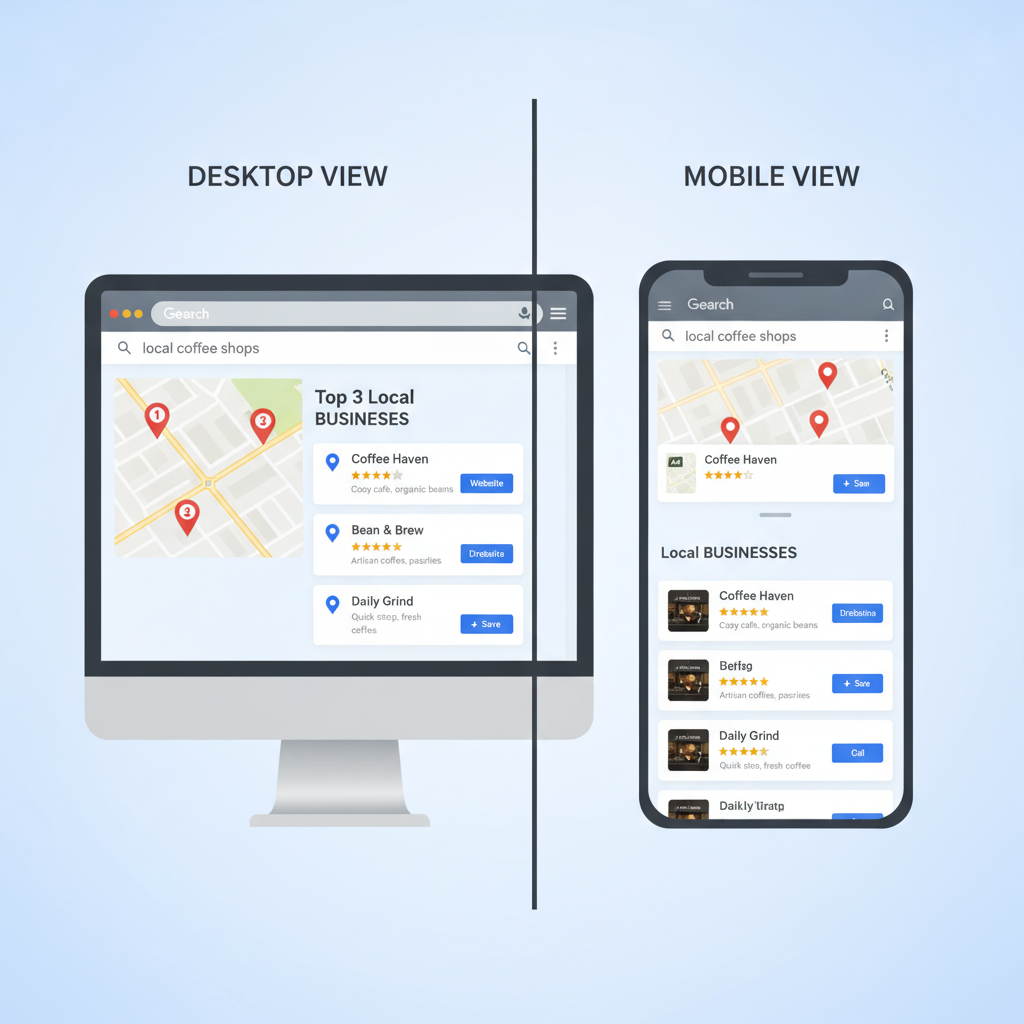
Securing a prominent position in Google Maps results is often the single most impactful driver of phone calls, foot traffic, and service inquiries for local businesses. When potential customers search for services in their immediate area, the Google Maps "Local 3-Pack" appears above traditional organic web search results. Understanding why certain businesses consistently appear in these top three slots—while others remain hidden on secondary pages—requires a clear look into how local search algorithms evaluate business listings.
What key factors determine your Google Maps ranking?
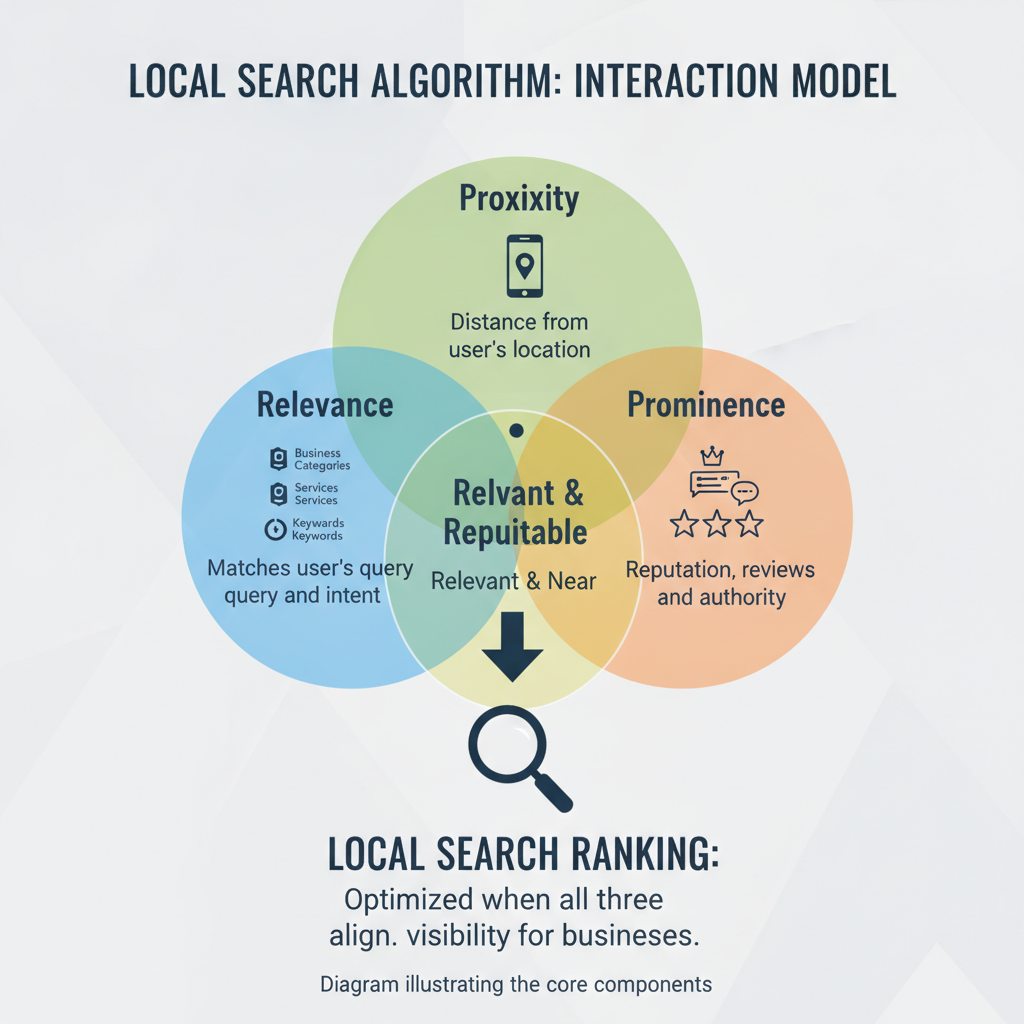
Google determines local map rankings using three foundational signals: relevance, distance, and prominence. These criteria work together to provide users with the most helpful, accurate local solutions for their immediate intent.
How do relevance, distance, and prominence impact local visibility?
Relevance measures how closely a local Google Business Profile matches the specific intent of a user's search query. For example, if a user searches for "24-hour emergency plumber," Google evaluates whether your listing specifically highlights emergency plumbing services in its categories, description, and service menus.
Distance refers to the physical proximity of your business location relative to the searcher or the explicit geographic location included in the search query. While distance is a strong signal that you cannot directly change, maximizing your relevance and prominence helps expand the geographic radius in which your business ranks effectively.
Prominence reflects how well-known and trustworthy a business appears to Google's search algorithms based on information collected across the web. According to official guidelines detailed on Google Search Central, prominence is determined by your web footprint, including articles, directory citations, backlink profiles, and ongoing customer feedback.
What role do customer reviews and ratings play?
Customer review volume, star ratings, and review velocity directly affect your prominence score within local search algorithms. In practice, businesses that actively request feedback and maintain a steady influx of positive reviews consistently outperform competitors with stagnant profiles.
"A steady stream of recent, detailed customer reviews carries significantly more weight in local algorithms than a high review score established years ago with no recent activity."
Search engines analyze not only the aggregate rating, but also the frequency of new reviews and the specific keywords customers include in their feedback. Encouraging clients to mention the specific services provided or products purchased helps strengthen your relevance for those specific local search queries.
🥧 Primary Local Map Pack Ranking Factors (Whitespark Benchmark Data)
How can businesses optimize their Google Business Profile for higher placement?
Complete and accurate profile optimization forms the foundation of any effective google maps seo strategy. Unoptimized or incomplete profiles leave valuable ranking signals on the table, giving competitors an unnecessary advantage.
Which profile fields have the greatest impact on ranking?
Your primary business category is the single most influential field in determining map placement. Selecting the most accurate primary category directly informs Google's index about your core business offering.
Primary Category: Choose the specific primary classification that best matches your main revenue-generating service (e.g., "Commercial Real Estate Agency" rather than simply "Real Estate Agency").
Secondary Categories: Utilize relevant secondary categories to capture related search queries without diluting your primary focus.
Business Description: Craft a clear, informative overview highlighting your services, service area, and unique value proposition using natural language.
Services & Products List: Itemize every service you offer, adding detailed descriptions to broaden your profile's thematic relevance.
💡 Tip
Category Optimization Strategy: Review your top-ranking local competitors using a local search audit tool to identify which primary category they utilize. Aligning your primary category with industry leaders eliminates categorical mismatches that can hold your profile back.
How does consistent NAP information across the web affect rankings?
Name, Address, and Phone number (NAP) consistency across external directories builds algorithmic confidence in your business location. When business information matches exactly across platforms like Google Business Profile, Yelp, Apple Maps, Bing Places, and industry-specific directories, search engines feel confident displaying your business to local searchers.
Inconsistent addresses, outdated phone numbers, or subtle variations in business naming can confuse search algorithms, diluting your prominence score and leading to dropped rankings.
What advanced Google Maps SEO strategies drive local map pack success?
Advanced local optimization connects on-page website authority with profile signal management to maintain long-term ranking stability across your entire service area.
Is using a Google Maps ranking tool or service worth the investment?
Utilizing a specialized google maps ranking tool or engaging a professional google maps ranking service accelerates local discovery through automated geo-grid tracking and structured data deployment. Geo-grid tracking tools measure your ranking performance across a precise geographic grid, showing exactly where your visibility drops off as distance from your physical location increases.
📈 Click Share by Google Maps Search Position
Tracking your business via geo-grid mapping helps identify specific neighborhoods or zip codes where targeted local content or citation building can yield the highest return on investment.
How do localized website signals enhance map rankings?
Your main website's organic search strength directly influences your Google Maps placement. Google links your profile to your designated website URL, analyzing the site's local relevance and backlink profile to help validate map placement.
- 1 Embed Google Maps on Your Contact Page: Help algorithms cross-reference your exact physical location by embedding your official Google Maps listing onto your website.
- 2 Deploy Local Business Schema Markup: Add structured data code (Schema.org) to your website's header to explicitly state your business name, address, phone number, operating hours, and service regions in a format built for machines.
- 3 Build Dedicated Location Pages: If your business serves multiple cities or neighborhoods, create distinct, high-quality location pages featuring local client stories, project highlights, and tailored regional copy.
Key Takeaways for Dominating Local Search
Prioritize Relevance, Distance, and Prominence: Ensure your profile details directly address local search intent, while continually building brand reputation across the web.
Refine Your Categories: Select the precise primary category that reflects your core offering, using secondary categories to cover complementary services.
Maintain NAP Consistency: Verify that your Name, Address, and Phone number match identically across all third-party directories and web platforms.
Cultivate Authentic Reviews: Establish a routine process to collect customer feedback regularly, responding to all reviews promptly to signal active profile management.
- Strengthen On-Page Local SEO: Support your profile with structured local business schema, embedded maps, and dedicated geographic landing pages on your primary website.
Every Search Begins with a Local Neighbor Looking for Help
Standing out in local map results is ultimately about making sure the people in your community who need your expertise can find you when it matters most. Building search prominence takes care, consistency, and a clear strategy, but you do not have to navigate the shifting search landscape alone. Whether you want to audit your existing Google Business Profile, resolve listing inconsistencies, or develop a complete local SEO roadmap, partnering with dedicated local optimization specialists can turn search map coordinates into meaningful, lasting customer relationships.
