
Quick Answer
Optimized alt text for images provides critical contextual data to search engine crawlers while delivering essential accessibility for screen reader users. Implementing alt text best practices SEO improves visual search discoverability, enhances content relevance, and captures high-intent organic search traffic. Websites with fully optimized alt image text consistently experience superior indexing efficiency across major search engines.
Alt text—short for alternative text—was originally created as an accessibility feature to describe images to visually impaired users relying on screen readers. While web accessibility remains a crucial ethical and legal foundation for digital publishing, writing effective alternative text accomplishes far more for your business than fulfilling compliance standards.
In modern web development, image SEO relies heavily on descriptive metadata to help search engines index visual content accurately. When implemented strategically, alt image text bridges the gap between human user experience and search engine understanding, driving meaningful organic traffic to your website.
How Does Image SEO Impact Overall Search Rankings?
Image SEO directly influences a website's overall search ranking by giving web crawlers essential context about a page's topic and visual assets. Search engines utilize computer vision and text analysis simultaneously, but structured textual descriptors remain the primary signal for index classification.
Why is alt text essential for search engine indexing?
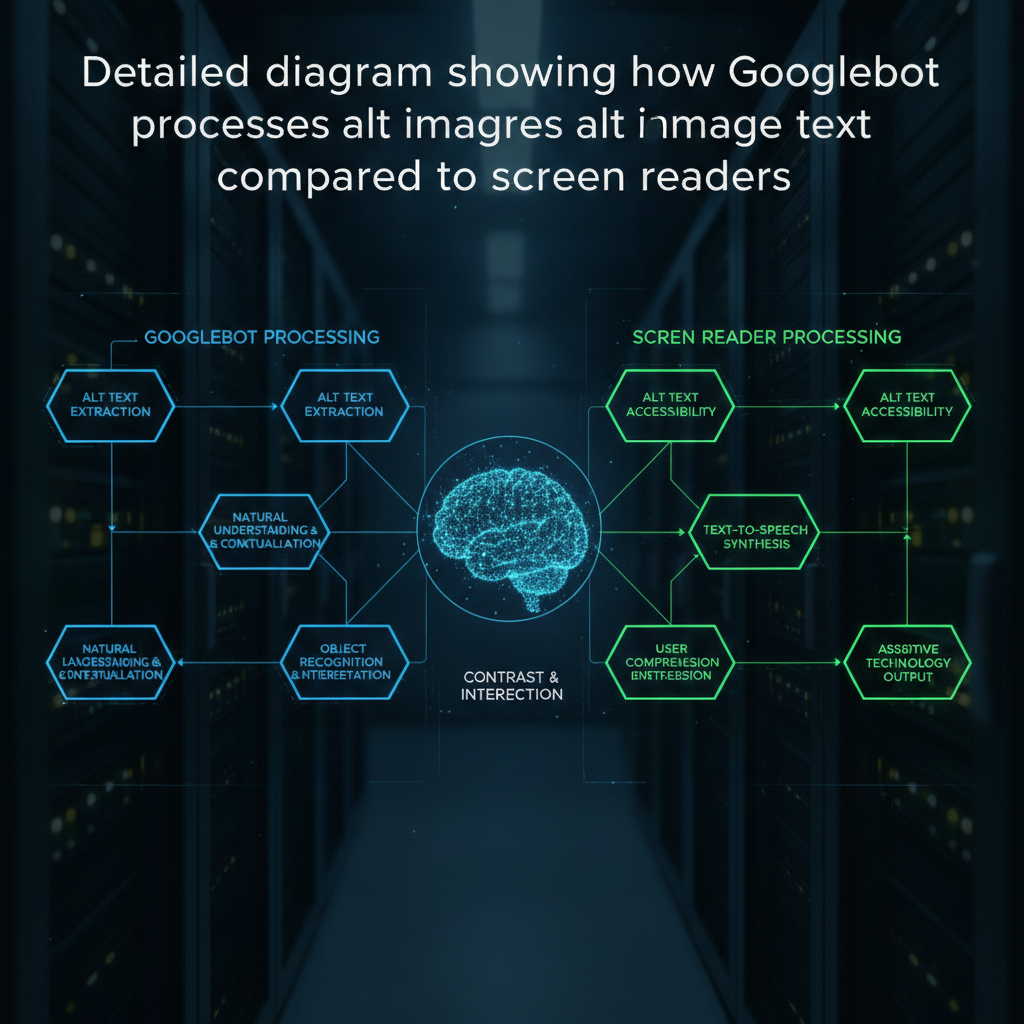
Alt text is essential for search engine indexing because search engine bots cannot "see" images in the way humans do. While computer vision algorithms have advanced significantly, search engines still depend on textual signals—specifically alt text, image file names, surrounding text, and captions—to determine the precise subject matter of a visual element.
When a search engine spider crawls a webpage, it parses the HTML code for an `` tag. If the tag contains rich, descriptive `alt` attributes, the crawler immediately understands the image's function, topic, and context. According to Google Search Central documentation, descriptive alt text provides Google with critical information regarding the subject matter of the image, which is used to determine the best image to return for a user's query.
How does visual search leverage alt image text?
Visual search engines leverage alt image text to categorize and match images with relevant user search queries in image search verticals like Google Images and Bing Images. Organic image search represents a massive source of high-intent web traffic, particularly in industries such as e-commerce, real estate, hospitality, and visual marketing.
In practice, a significant percentage of consumer visual searches lead directly to product pages or informative blog posts. Without descriptive alt text, your images are essentially invisible to search engines during visual query matching, causing your brand to miss out on valuable organic impressions and qualified referral traffic.
📊 Impact of Image Optimization Components on Search Visibility (2024 Benchmark)
What Are the Key Non-Accessibility Benefits of Alt Text?
Beyond web accessibility compliance, alt text provides critical structural, contextual, and usability benefits that enhance overall site performance. It strengthens topical relevance across entire web pages while ensuring seamless user experience when media delivery encounters technical disruptions.
How does alt image text improve contextual content relevance?
Alt image text improves contextual content relevance by reinforcing the semantic associations between visual assets and the surrounding text on a page. Search algorithms evaluate a webpage holistically, assessing how images, headings, body copy, and metadata align around core topical themes.
When your alt text incorporates relevant vocabulary and contextual terms that naturally align with your page content, it signals to search engines that the page provides a comprehensive, well-supported resource on that topic.
"Search engines do not possess human vision; they rely on structural metadata like alt text to understand the subject matter, context, and intent behind visual content."
For example, an article about business financial planning that includes infographics with detailed alt descriptions gives search engines additional confirmation of the page’s depth and semantic relevance. This cohesive alignment helps search engines rank the page higher for primary and secondary search terms.
What role does alt text play when image loading fails?
Alt text acts as a functional visual backup when an image fails to load due to slow network connections, broken image URLs, or browser rendering errors. If an image file cannot be retrieved, the web browser displays the alt text inside the missing image container instead.
A common scenario we encounter involves mobile users accessing websites under low-bandwidth network conditions. If your media elements fail to load, high-quality alternative text ensures the user still understands the information or function the image was meant to convey. This prevents high bounce rates and preserves the user's comprehension of your content.
📉 Global Visual Search Market Adoption 2021-2025
What Are Alt Text Best Practices SEO Practitioners Follow?
Following alt text best practices SEO guidelines involves writing clear, descriptive, and contextually accurate sentences that describe the image content accurately while incorporating target keywords naturally. Effective implementation requires balancing user accessibility with search engine optimization requirements.
How long should descriptive alt text for images be?
Descriptive alt text for images should typically be between 80 and 125 characters long. Most popular screen readers stop reading alternative text around the 125-character mark, making concise, front-loaded descriptions most effective for both accessibility and search engine readability.
When writing alt text, focus on describing the key visual elements and action taking place within the image:
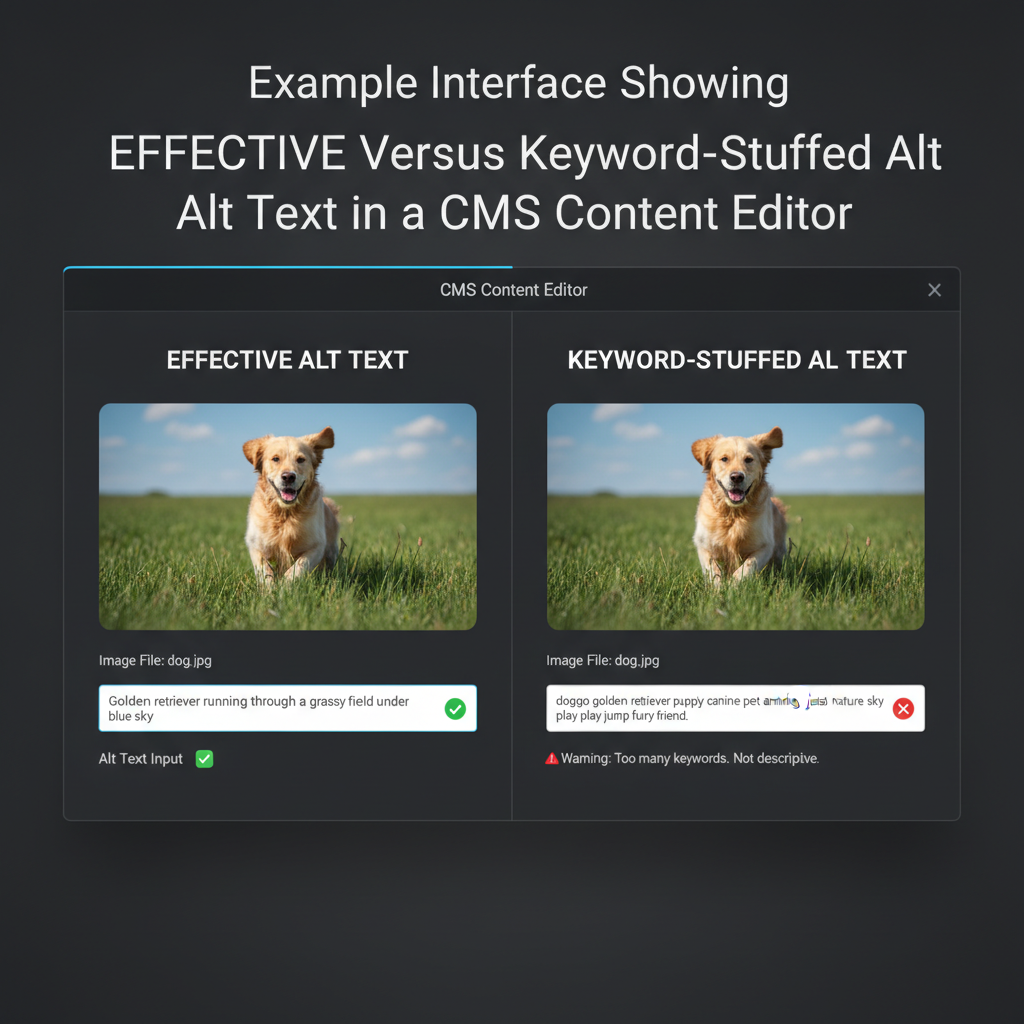
Weak Alt Text: "Chart." (Too vague, provides zero contextual value)
Keyword-Stuffed Alt Text: "Best business software business tool software growth revenue top business software." (Spammy, penalizes user experience)
Optimal Alt Text: "Bar chart showing quarterly revenue growth for enterprise business software in 2024." (Descriptive, natural, highly citable)
💡 Tip
Avoid starting alt text with phrases like "Image of" or "Picture showing." Search engines and screen readers already recognize the HTML element as an image, allowing you to use those precious character counts for meaningful descriptive detail.
How can you naturally integrate keywords without keyword stuffing?
Integrating keywords into alt image text naturally requires describing the specific context of the image as it relates to your page topic, rather than inserting isolated keyword phrases. The target keyword should feel like a natural part of the descriptive sentence.
Based on real-world results, search algorithms penalize pages that engage in aggressive keyword stuffing within image attributes. To maintain trustworthiness and authority:
- 1 Focus on Specificity: Describe what is actually visible in the image rather than repeating main target keywords across every image file.
- 2 Vary Descriptions: Use unique alt text for every image on the page, highlighting different details or aspects of the topic.
- 3 Treat Decorative Images Correctly: For purely decorative elements like background patterns, geometric shapes, or structural lines, use an empty `alt=""` attribute so screen readers and search crawlers ignore them entirely.
Key Takeaways for Mastering Image SEO
Mastering image SEO requires treating alt text as a vital component of your overall digital strategy rather than an afterthought. To maximize your website's search visibility and accessibility, keep these core principles in mind:
Dual Functionality: Alt text serves both screen reader accessibility and search engine indexing; optimizing for one naturally benefits the other.
Search Discoverability: Rich alt image text directly drives organic traffic through image search engines and visual search tools.
Contextual Alignment: Align your alt text with surrounding page content to strengthen overall topical relevance and search rankings.
Concise Writing: Keep alt text focused, informative, and under 125 characters, avoiding redundant phrases like "image of."
Natural Keyword Use: Incorporate primary and secondary keywords only where they authentically describe the image content.
Bringing Clarity, Accessibility, and Reach to Your Visual Content
Creating a web presence that feels genuinely welcoming to every user while driving organic growth shouldn't feel like a compromise. When you invest thought and care into your visual metadata, you honor your audience's needs and help search engines recognize the true value of your work. Whether you are reviewing an existing media library or building a comprehensive digital strategy from the ground up, small refinements in alt text can make a powerful difference. Connect with our team today to explore how thoughtful optimization can open new doors for your content.
