

Quick Answer
Geofencing marketing is a location-based digital advertising strategy that creates a virtual geographic boundary around a physical location to trigger targeted mobile ads to users within that area. For local businesses, digital geofencing delivers exceptional value by reaching active local shoppers, driving store foot traffic, and maximizing return on ad spend through hyper-localized consumer targeting.
Location-based technology has transformed how local businesses connect with nearby customers. By bridging the gap between digital interaction and real-world foot traffic, location-aware promotion allows business owners to deliver timely messages to shoppers at the precise moment they are ready to buy.
Below, we break down how digital geofencing operates, evaluate its return on investment for small to medium-sized businesses, and outline actionable steps to launch a successful campaign.
What Is Geofencing Advertising and How Does It Work?
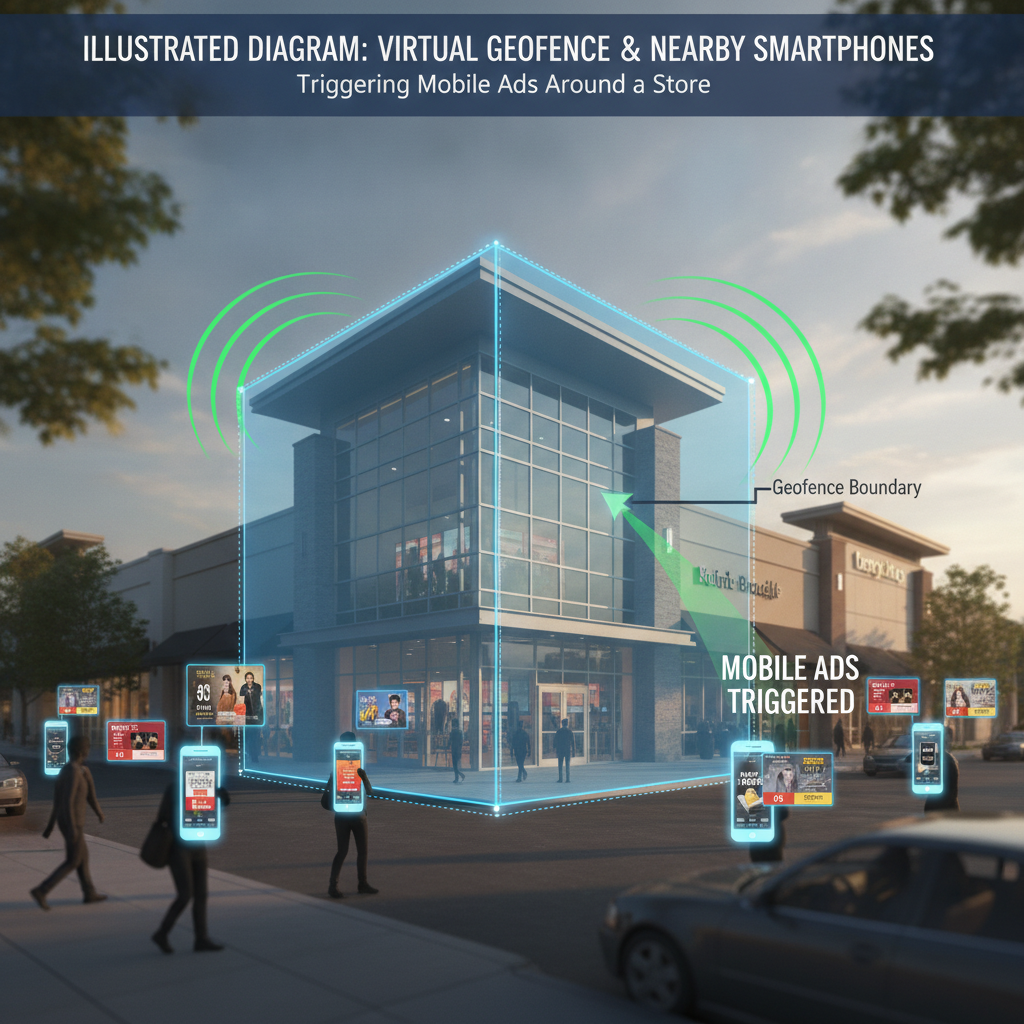
Geofencing advertising is a location-based technology that uses real-time location data to display digital ads to mobile devices within a specified perimeter. When a smartphone user enters, stays in, or leaves a custom-mapped virtual boundary, their device becomes eligible to receive targeted display ads across mobile applications and web browsers.
How does digital geofencing technology track mobile locations?
Digital marketing geofencing relies on a combination of location signals, including Global Positioning System (GPS) data, Wi-Fi connectivity, cellular tower triangulation, and Bluetooth beacons.
When a smartphone owner opens an app that uses location services, the app communicates the device's latitude and longitude to mobile ad exchanges. If those coordinates fall inside an active virtual perimeter set by an advertiser, an instant micro-auction occurs. Winning ads are rendered on the user's screen within seconds. Modern location platforms can establish boundaries down to a radius of 1 to 5 meters, ensuring exceptional precision around individual buildings or property lines.
What is the difference between geofencing marketing and traditional radius targeting?
Traditional radius targeting draws a broad circle—often 5 to 10 miles—around a zip code or municipality. While helpful for broad awareness, broad radius targeting frequently wastes ad spend on consumers who live outside a business's primary service area or who have no immediate intent to visit.
In contrast, geofencing marketing allows marketers to draw custom, multi-point polygon shapes around exact structures, such as a competitor's store, an event venue, or a specific shopping center. This high-precision approach ensures your ad impressions are served exclusively to high-intent individuals who are physically located in strategically relevant areas.
📈 Ad Effectiveness Lift by Location Precision
Is Geofencing Advertising Worth the Investment for Local Businesses?
Geofencing advertising is worth the investment for local businesses with a physical storefront or defined service area because it eliminates ad spend wasted on out-of-market consumers. By focusing budgets solely on individuals who actively visit relevant physical locations, local businesses achieve higher engagement rates and lower cost-per-acquisition compared to broad digital campaigns.
What return on ad spend can small to medium businesses expect?
In practice, local businesses implementing digital geofencing typically experience a 15% to 30% increase in measurable foot traffic within 30 to 60 days of campaign deployment. Standard click-through rates (CTR) for geofenced mobile ads often range between 0.25% and 0.45%, significantly outperforming the standard display ad average of 0.09%.
"Precision location data transforms digital ads from passive announcements into timely invitations, connecting with consumers at the exact moment buying intent is highest."
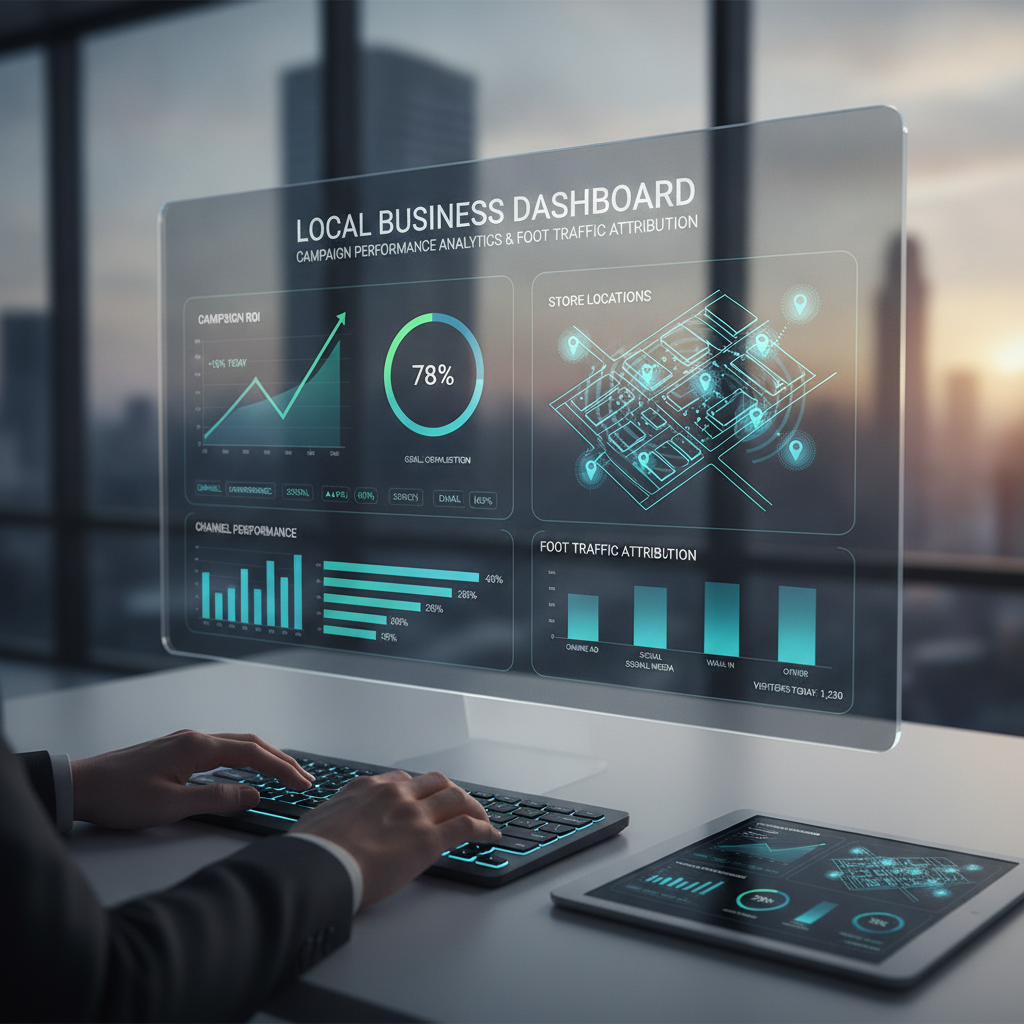
Furthermore, modern attribution tools can track "Cost Per Visit" (CPV) by matching anonymized mobile advertising IDs (MAIDs) that viewed an ad inside a geofence with devices that subsequently walk into your physical storefront. This direct offline attribution provides clear clarity on campaign return on investment (ROI).
ℹ️ Info
Competitive Conquesting Tip: By placing a virtual geofence around your direct competitors' store locations, you can deliver targeted promotions to prospective customers at the exact moment they are actively evaluating products or services in your category.
Which business types benefit most from digital geofencing?
While digital marketing geofencing works across many sectors, business models reliant on physical visitation or urgent local service yield the strongest results:
Retail Stores & Boutiques: Capture shoppers visiting nearby shopping centers or rival storefronts.
Restaurants & Bars: Reach nearby office workers during lunch hours or evening commuters.
Automotive Dealerships: Geofence competing car lots to deliver competitive financing or trade-in offers.
Home & Professional Services: Target trade shows, home improvement stores, or newly developed neighborhoods.
Medical & Dental Practices: Engage visitors attending community wellness events or nearby health centers.
📊 Average Store Foot Traffic Lift by Sector
How to Implement a High-Performing Geofencing Marketing Strategy
To execute a successful location-based campaign, local marketers must combine clear campaign parameters with compelling creative assets and diligent performance tracking.
How do you choose the right locations for virtual parameters?
Selecting the proper locations for your geofences depends entirely on customer behavior and buying intent. Consider mapping three distinct types of locations:
- 1 Your Own Location: Build a perimeter around your store to encourage impulse buys, upsells, or loyalty sign-ups from nearby foot traffic.
- 2 Competitor Locations: Map direct competitors within a 3- to 5-mile radius to present alternative offers to consumers who are actively shopping in your space.
- 3 Contextual Points of Interest: Target locations where your prospective customers naturally gather, such as convention centers, sports arenas, or complementary non-competing businesses.
What common pitfalls should local marketers avoid?
Even well-funded campaigns can underperform if basic strategic principles are overlooked. Common mistakes include:
Making boundaries too large: Geofencing an entire neighborhood dilutes precision. Keep boundaries limited to precise property footprints.
Generic ad copy: Serving a generic brand awareness ad yields low engagement. Creative must directly reference the local context or offer an immediate incentive.
Ignoring audience retargeting: Devices captured within a geofence should be placed into a retargeting pool so ads can continue reaching those prospects for 15 to 30 days after they leave the physical location.
Neglecting landing page optimization: Mobile ads must direct users to mobile-friendly, fast-loading landing pages with clear calls to action, telephone numbers, and directions.
"A geofence is only as effective as the message it triggers. Tailoring your offer to the consumer's immediate physical context is what drives real-world conversion."
Key Takeaways: Evaluating Geofencing for Your Local Business
Digital geofencing provides local businesses with an efficient, data-driven methodology for connecting online advertising directly to offline sales.
Hyper-Targeted Precision: Virtual boundaries ensure ad spend is concentrated on individuals physically visiting relevant areas.
Measurable Foot-Traffic Attribution: Mobile location data enables direct measurement of physical store visits resulting from ad views.
Higher Engagement: Relevant, context-aware offers served to nearby consumers drive higher click-through and conversion rates than broad geographic targeting.
- Strategic Conquesting: Mapping competitor locations allows local brands to capture market share during active decision-making windows.
By combining accurate geographic mapping, compelling creative messaging, and continuous optimization, local businesses can leverage location technology to build sustainable foot-traffic growth and maximize ad performance.
