
Quick Answer
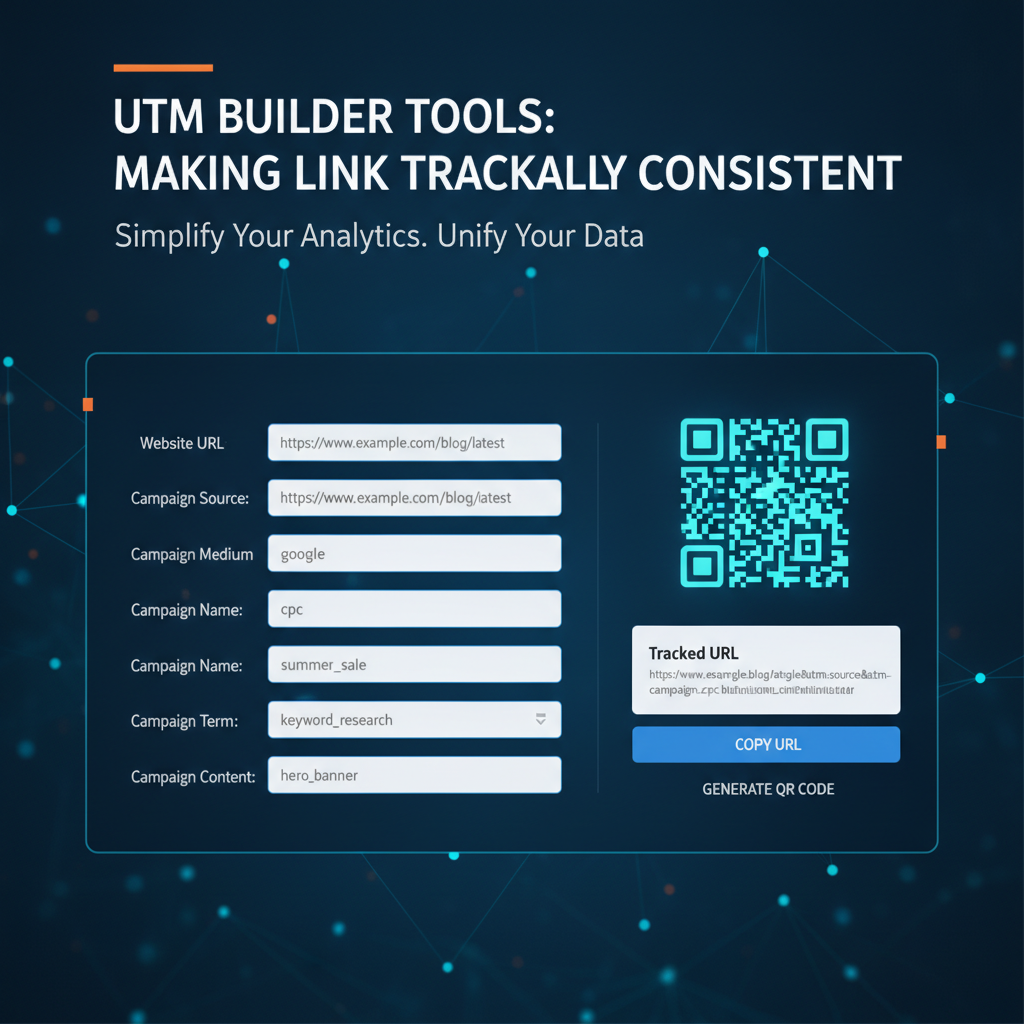
A utm builder simplifies campaign tracking by standardizing Urchin Tracking Module parameters added to website URLs, allowing marketing teams to precisely measure content marketing roi across channels. By enforcing consistent lowercasing, hyphenation, and parameter structures, a campaign URL builder prevents fragmented analytics data and ensures clear attribution for every traffic source.
Accurate data is the foundation of smart business decisions. When running digital marketing campaigns across multiple platforms, understanding exactly where website visitors originate—and which specific assets inspire them to act—is vital. However, many organizations struggle with fragmented analytics simply because different team members construct tracking links differently.
Using a standardized utm builder removes the frustrating guesswork from link creation. By establishing consistent tracking rules across your entire organization, you can maintain clean analytics dashboards, eliminate attribution headaches, accurately calculate your content marketing roi, and make confident investments in your highest-performing channels.
Why Is Consistent Link Tracking Critical for Measuring Content Marketing ROI?
Consistent link tracking ensures that every visit, conversion, and interaction on your website is correctly attributed to its original traffic source. Without standardized parameters, web analytics platforms split your incoming traffic into fragmented categories, obscuring true performance metrics and making it difficult to appreciate the real impact of your team's creative efforts.
How do UTM parameters work in analytics platforms?
Urchin Tracking Module (UTM) parameters are specialized text tags appended to the end of a URL. When a user clicks a tagged link, web analytics platforms like Google Analytics 4 capture these tags to categorize the session accurately.
There are five standard UTM parameters used in modern campaign tracking:
`utm_source`: Identifies the specific platform or publisher (e.g., `linkedin`, `newsletter`, `google`).
`utm_medium`: Identifies the high-level marketing channel (e.g., `cpc`, `social`, `email`).
`utm_campaign`: Identifies the specific strategic campaign or promotion (e.g., `spring_launch`, `q3_webinar`).
`utm_term`: Identifies paid search keywords or audience targets (e.g., `business_software`).
`utm_content`: Differentiates specific links or call-to-action buttons within the same piece of content (e.g., `banner_blue`, `text_link_footer`).
What happens when UTM parameter formatting is inconsistent?
Analytics tools are strict regarding character case and formatting. If one team member uses `utm_medium=email` while another uses `utm_medium=Email` or `utm_medium=e-mail`, your analytics software reports these as three entirely distinct traffic channels.
In practice, decentralized or unstandardized link creation can cause up to 30% of campaign traffic to be miscategorized under "Direct" or "Unassigned" channels. This fragmentation makes evaluating true asset performance difficult, obscures true campaign ROI, and risks underfunding initiatives that are actually driving meaningful business growth.
📊 Analytics Attribution Data Accuracy by Governance Level
How Do You Set Up and Standardize a UTM Builder Tool?
Setting up a structured campaign URL builder process involves defining clear parameter rules and distributing automated tools that enforce those conventions seamlessly across your team.
What are the essential parameter rules for clean link building?
To maintain data integrity and give your team complete confidence in their reporting, every organization should adopt five core formatting standards:
- 1 Strict Lowercasing: Convert all characters to lowercase automatically to prevent case-sensitive duplication.
- 2 Hyphenation for Spaces: Use hyphens (`-`) rather than spaces, underscores, or `%20` encodings to separate multi-word parameter values clean and readably.
- 3 No Special Characters: Exclude punctuation, symbols, and ampersands, which can disrupt link redirection or analytics parsing.
- 4 Standardized Channel Taxonomies: Maintain a strict picklist of approved values for `utm_medium` and `utm_source`.
- 5 Clean Destination URLs: Ensure parameters are appended to final landing pages rather than URLs that trigger HTTP 301 or 302 redirects, which frequently strip UTM tags entirely.
💡 Tip
Always enforce lowercasing across all custom parameter fields in your campaign URL builder. Analytics platforms treat "Newsletter" and "newsletter" as completely separate traffic streams, leading to fragmented reporting.
How do automated tools enforce syntax rules?
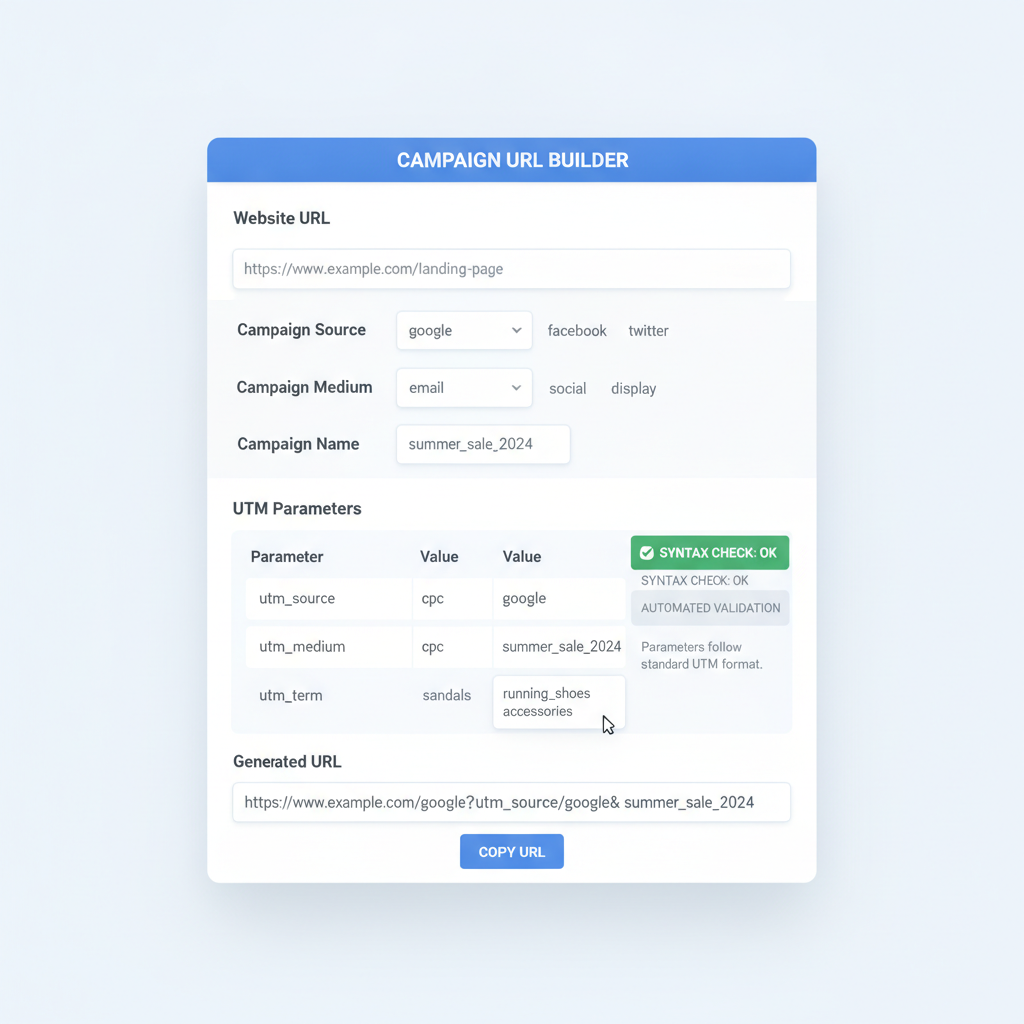
A dedicated utm builder tool automates parameter sanitization by dynamically constructing URLs as team members fill out simple form fields. Rather than relying on manual text entry into web browsers, a centralized builder automatically converts spaces to hyphens, strips unauthorized characters, and converts text to lowercase before generating the final link.
What Are the Best Practices for Managing UTM Builders Across Teams?
Managing campaign URLs effectively requires combining accessible tools with collaborative governance that supports, rather than slows down, your marketing operations. While spreadsheets are a common starting point, dedicated management systems provide greater control and peace of mind as teams scale.
How do shared spreadsheets compare to dedicated builder software?
Many businesses start tracking links using shared spreadsheet templates built with concatenated string formulas. While spreadsheets are accessible, they are naturally vulnerable to accidental formula deletion, missing field entries, and unauthorized parameter additions that creep in over time.
Dedicated link management systems and enterprise tracking software offer friendly validation safeguards, such as:
Pre-populated dropdown lists for sources and mediums.
Required field validation before link generation.
Automated integration with URL shortening services.
Centralized click logs for auditability and team alignment.
🥧 Primary Causes of Campaign Traffic Attribution Loss
How do custom short links maintain user trust and tracking integrity?
Long campaign URLs filled with multiple parameters can look cluttered and uninviting when shared on social media or in print materials. Pairing a campaign URL builder with a branded short-link domain presents a clean, professional appearance while preserving vital background tracking data.
"Clean marketing data isn't just about organized reporting—it gives your business the clarity and confidence to allocate resources to the channels that truly drive business growth."
Key Takeaways for Implementing UTM Parameter Standards
Establishing reliable tracking across your digital presence does not have to feel overwhelming. By following a clear, structured operational process, your team can maintain high-quality data effortlessly:
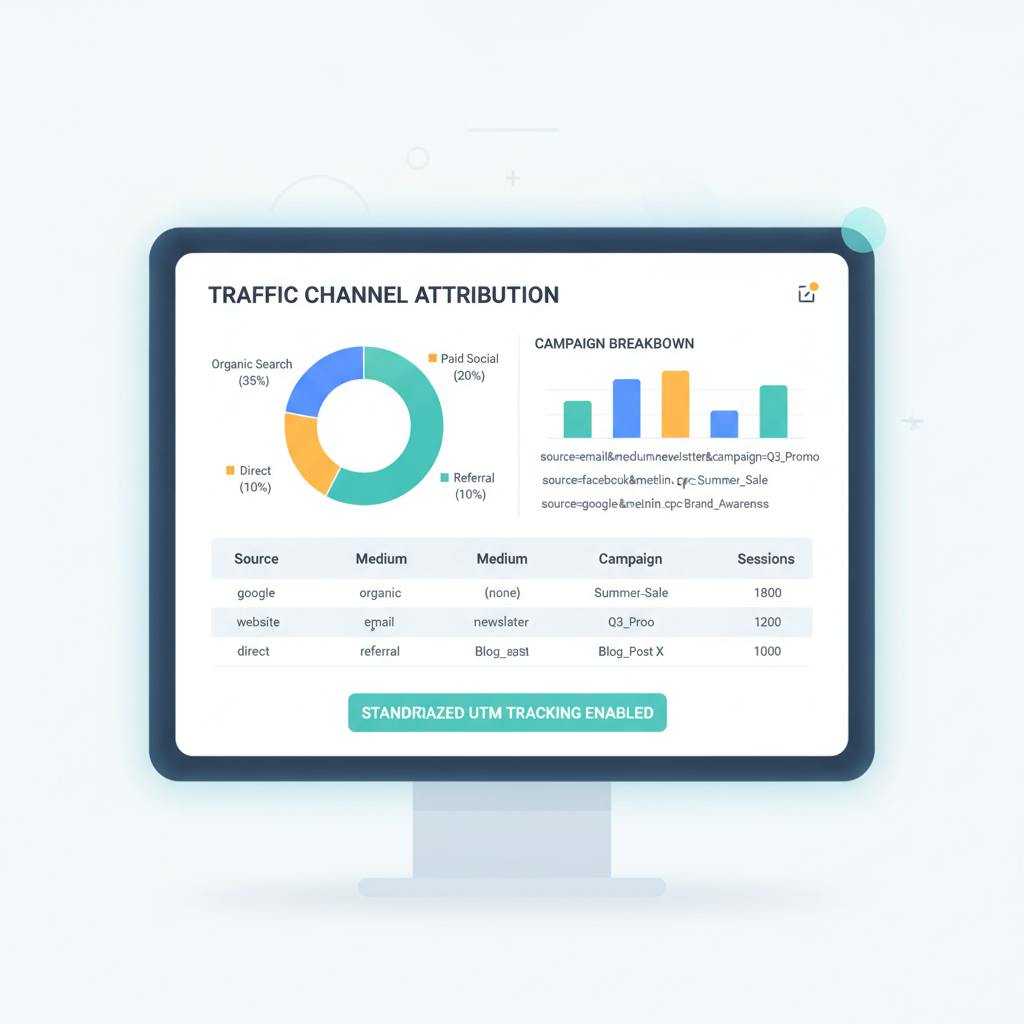
Establish a Single Source of Truth: Adopt a shared utm builder tool equipped with forced lowercasing and predefined taxonomy dropdowns.
Audit Destination Pages: Ensure landing page redirects do not drop URL parameters before analytics scripts load.
Document Governance Rules: Maintain a clear, accessible guide detailing approved `utm_medium` and `utm_source` values for all team members.
- Focus on Business Impact: Accurate link tracking directly improves your ability to calculate content marketing roi and optimize your overall marketing strategies.
Give Your Marketing Team the Data Clarity They Deserve
Measuring campaign success shouldn't feel like solving a puzzle with missing pieces. When your team has access to an intuitive, standardized URL building workflow, manual tracking errors disappear, data reporting becomes effortless, and every contributor gains clear visibility into what truly resonates with your audience. Empower your team with clean, reliable analytics links today—and start making strategic marketing decisions rooted in total confidence.
