

Quick Answers
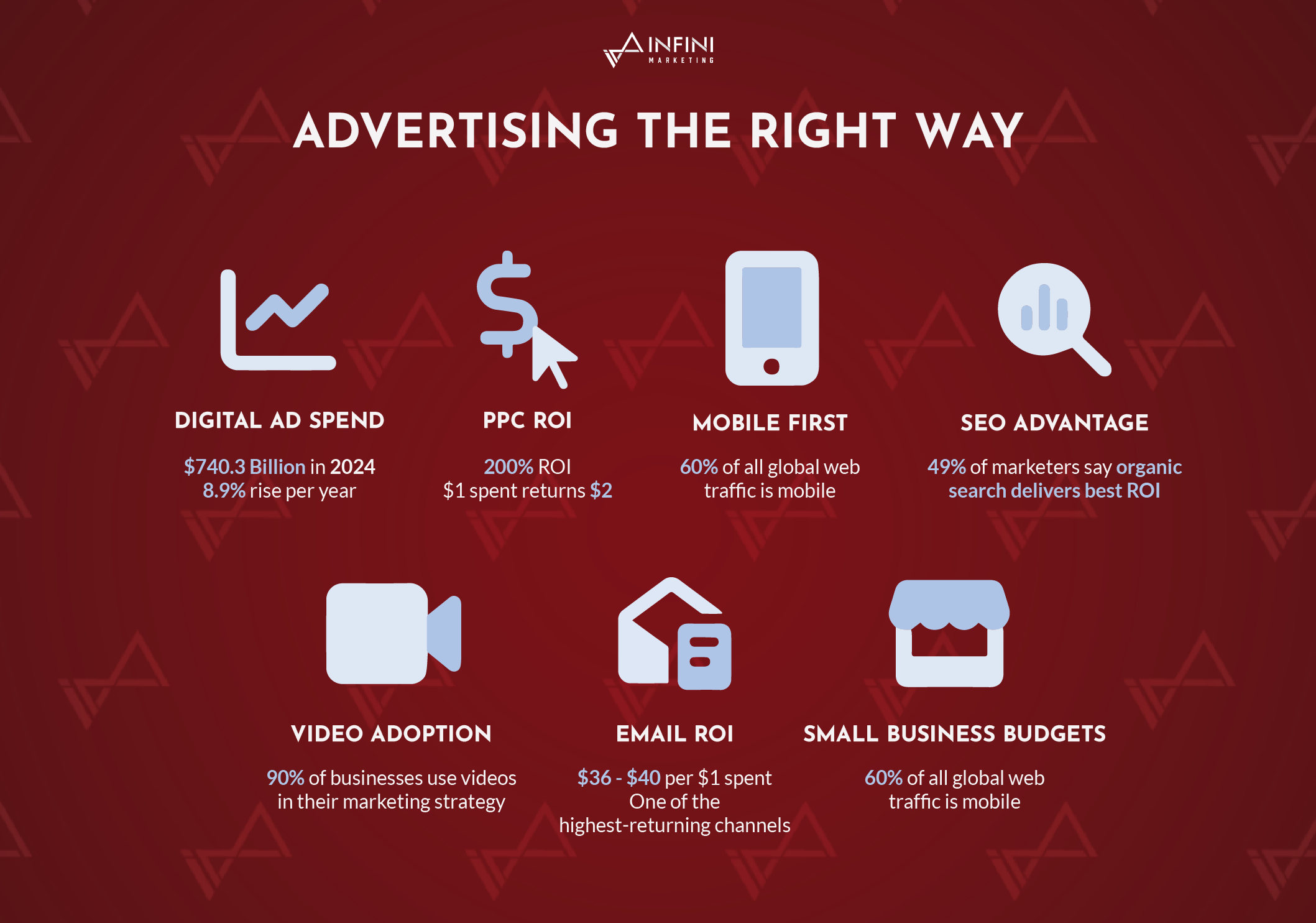
- Digital Ad Spend: Global digital advertising spend reaches $740.3 billion in 2024, marking an 8.9% rise year over year.
- PPC ROI: Pay-per-click advertising returns an average of $2 for every $1 spent, a 200% ROI.
- Email ROI: Email marketing generates $36 to $40 for every $1 spent, making it one of the highest-returning channels available.
- SEO Advantage: 49% of marketers say organic search delivers the best overall marketing ROI of any channel.
- Video Adoption: Over 91% of businesses incorporate video into their marketing strategy in 2026.
- Mobile First: More than 60% of all global web traffic is mobile, making mobile optimization non-negotiable.
- Small Business Budgets: The average local business allocates 5% to 10% of revenue toward digital marketing.
How Has Advertising Changed?
Traditional advertising relies on booking a billboard or placing a print ad and waiting for results. That approach still has its place, but it no longer works on its own. Companies growing fastest treat advertising as a data-driven, always-on function rather than a quarterly push. Whether operating as a small business or a scaling enterprise, knowing which channels to use, where to allocate budget, and which metrics actually reflect performance is what separates brands that grow from those that plateau.
A good marketing firm does not simply place ads. It builds a system where each channel informs the next, budget decisions are backed by data, and campaigns sharpen over time. Getting that system right from the start is what this guide addresses.
What Does Modern Advertising Look Like?
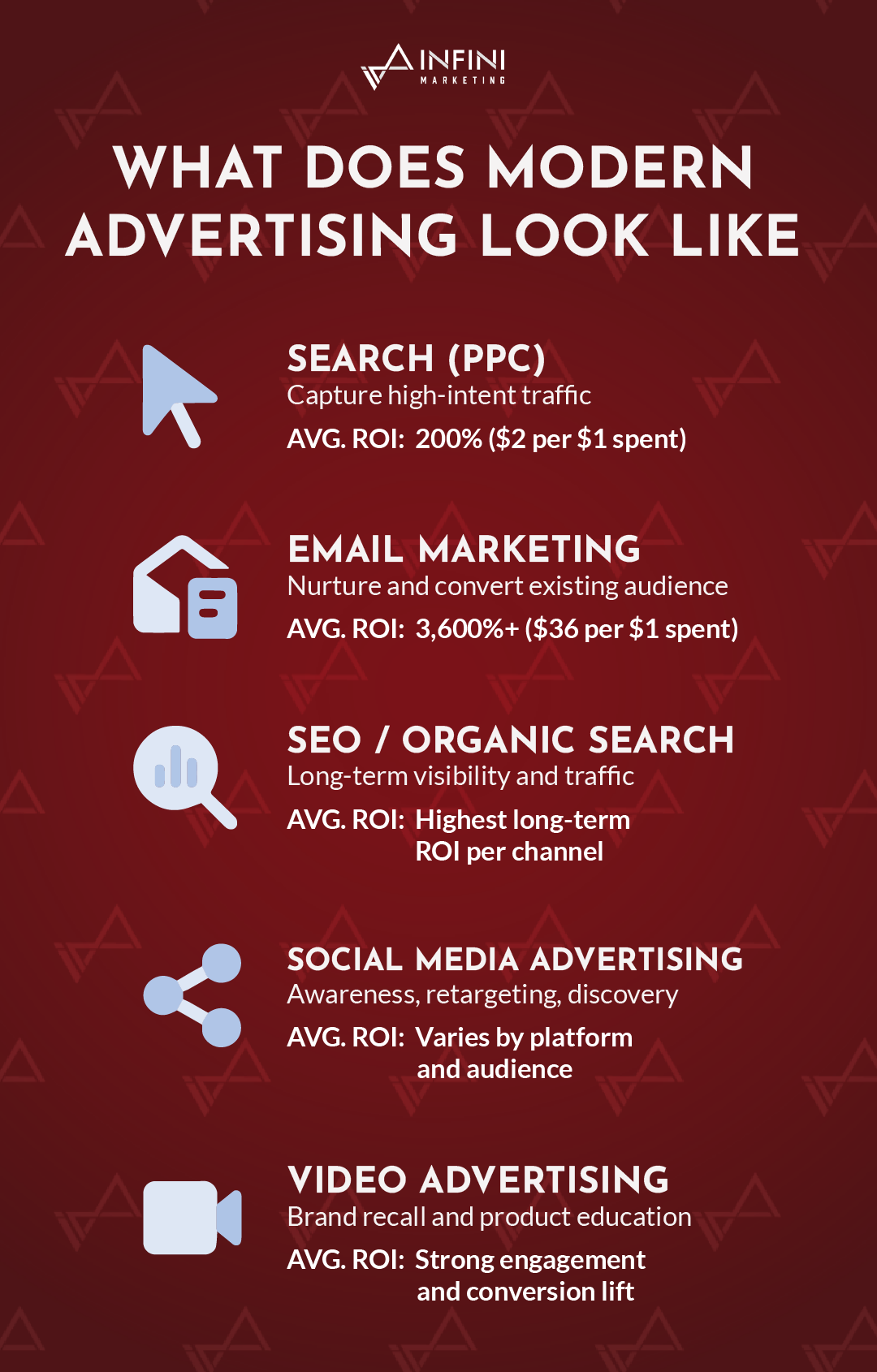
Advertising today spans a wide range of formats, each with its own audience, cost structure, and purpose. The most effective strategies avoid relying on a single medium. A well-structured plan uses paid, organic, and content-driven approaches that reinforce one another.
Each format serves a distinct role in the customer journey. Paid search captures audiences ready to act. Email converts contacts who already have familiarity with a brand. SEO reduces cost per acquisition over time by building organic visibility. A marketing firm that maps the right format to the right stage of the funnel will consistently outperform one that treats all channels as interchangeable.
Is Advertising Worth the Investment?
Considering how resource intensive advertising can be, it’s important you understand the numbers behind it. Will there be a return on your investment if you choose to work with a marketing firm to advertise your business?
Do PPC Campaigns Work?
Pay-per-click campaigns place a business in front of people actively searching for relevant offerings. The average return of $2 for every $1 spent makes PPC one of the most measurable formats available. Because costs tie to clicks rather than impressions, controlling spend and optimizing toward actual outcomes is far more straightforward than with traditional media.
What Role Do Social Ads Play?
Social media campaigns extend reach beyond search intent by targeting users based on demographics, interests, and behavior. Mobile formats account for 77% of all digital ad spend, reflecting where people actually spend time online. Platform selection should be driven by where target customers are most active, not by which option carries the lowest price tag.
Is SEO Worth It?
Paid campaigns stop generating results the moment funding stops. SEO compounds differently. A well-optimized site ranking for high-intent keywords continues drawing traffic and qualified leads without recurring ad spend. For every $1 invested, SEO delivers an average return of $22, making it the strongest long-term ROI channel available to most companies.
The distinction a marketing firm will often draw for clients is between renting attention through paid media and owning visibility through organic search. Both approaches belong in a well-rounded strategy, but companies relying exclusively on sponsored campaigns remain permanently dependent on budget to stay visible.
Why Is Video One of the Most Effective Advertising Formats?
Short-form content has become one of the most effective advertising formats across every industry. Over 91% of companies now incorporate video into their marketing strategy, and 83% of video marketers report video has directly increased sales. The key factors are relevance and speed. Audiences decide within the first few seconds whether content is worth their attention, which means the hook needs to lead.
User-generated and authentic, low-production clips frequently outperform polished brand material because they read as peer recommendations rather than advertising. Any marketing firm building an audience-first strategy will account for this shift.
How Do You Determine Your Advertising Budget?
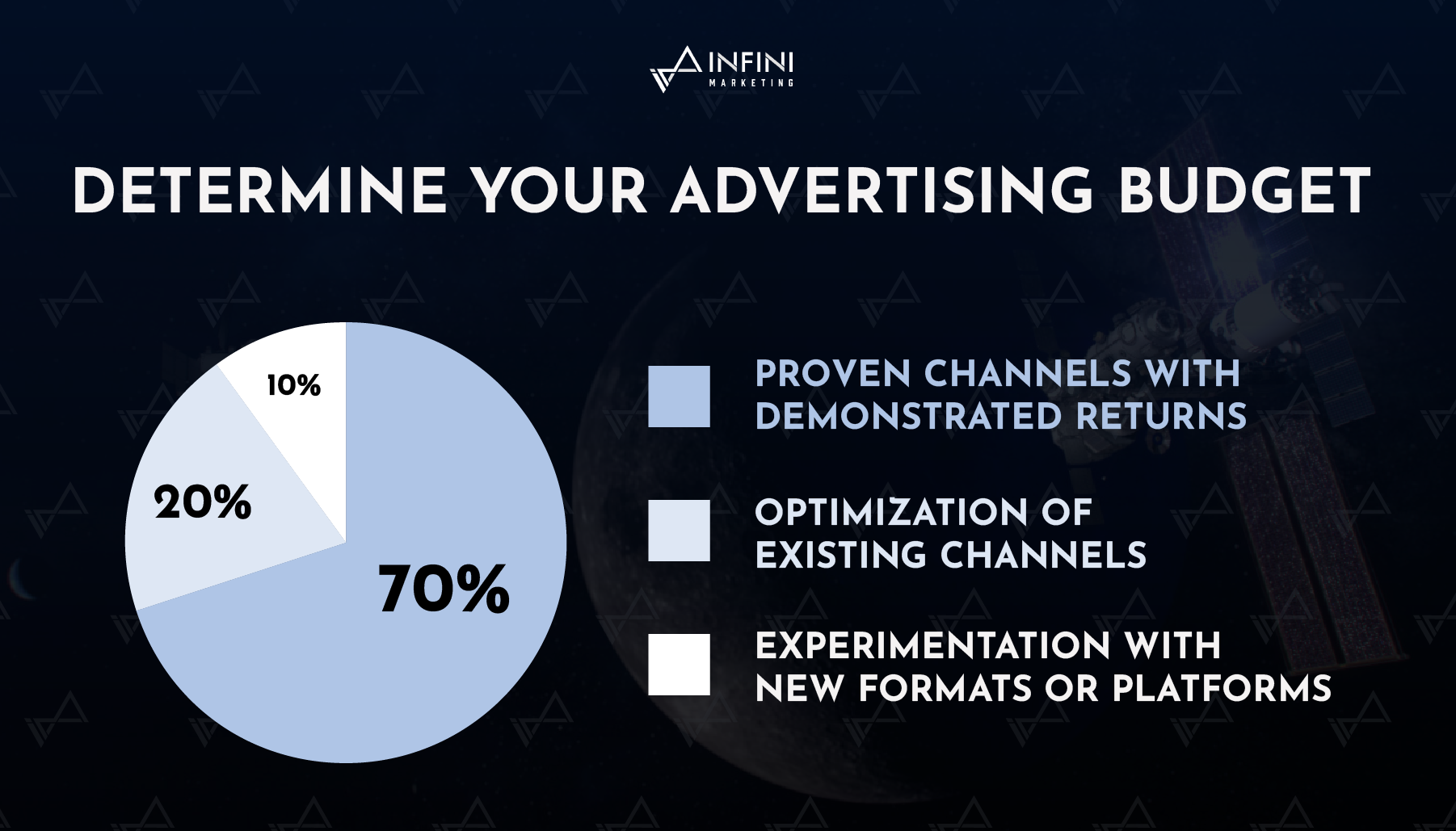
One of the most common questions businesses ask is how much to spend. There is no single right answer, but the most practical framework is proportional allocation:
This structure keeps the majority of spend focused on channels already producing results, while reserving room to test new approaches. The biggest mistake companies make is cutting campaigns too quickly before sufficient data exists to optimize them. Most paid platforms require a learning phase before targeting stabilizes and performance reaches its potential.
Which Metrics Actually Matter?
Running ads without tracking is the same as spending without a receipt. The metrics worth focusing on are the ones tied to revenue, not vanity:
- Conversion Rate: Of the people who clicked, how many took the desired action?
- Customer Acquisition Cost (CAC): What does it cost to bring in each new customer?
- Return on Ad Spend (ROAS): For every dollar spent on advertising, how many come back?
- Customer Lifetime Value (CLV): Is the buyer a one-time transaction or a repeat relationship?
Tracking these figures across channels gives a clear picture of where to invest more and what to cut. A marketing firm managing campaigns should report on these numbers regularly, not solely on impressions and clicks.
What Does This Look Like in Practice?
Consider a service-based business with strong word-of-mouth but limited digital presence: inconsistent lead flow, no clear picture of where inquiries originate, and no system for scaling what works. This is a common starting point for Infini Marketing clients.
How Can Infini Marketing Help Your Business?
Industry statistics tell one story. Real results tell another. Here's a look at what happened when one of Infini Marketing's clients, a mid-sized metal building construction company, stopped guessing and started marketing with a strategy built around data.
The Challenge
- No structured digital advertising strategy
- High reliance on referrals with no scalable acquisition channel
- No conversion tracking or attribution in place
- Ad spend spread across platforms with no performance data
The Strategy
Infini Marketing builds focused multi-channel approaches that typically include:
- Search advertising targeting high-intent keywords in the client's service area
- Landing pages built around specific offerings with clear calls to action
- Conversion tracking set up across all active channels
- Email follow-up sequences for leads that do not convert immediately
- Monthly reporting against CAC and ROAS targets
The outcome is not simply more leads. It is a measurable, adjustable, scalable system. That distinction separates a structured advertising approach from unfocused spending.
Conclusion
Advertising in 2026 rewards businesses that combine the right mix of channels with clear measurement and consistent optimization. Paid search drives immediate results. SEO establishes long-term visibility. Video builds trust and recall. Email converts. No single channel performs at its best in isolation, and none functions effectively without data. Working with a marketing firm that understands how these pieces fit together is the fastest path to an advertising strategy that compounds over time rather than restarting each quarter.

Sources
- WordStream. (2026). 180+ Powerful Digital Marketing Statistics for 2026. https://www.wordstream.com/blog/ws/2022/04/19/digital-marketing-statistics
- HubSpot. (2026). 2026 Marketing Statistics, Trends and Data. https://www.hubspot.com/marketing-statistics
- Wyzowl. (2026). Video Marketing Statistics 2026. https://wyzowl.com/video-marketing-statistics/
- Litmus. (2025). Email Marketing ROI Statistics. https://www.litmus.com/blog/email-marketing-roi
- Oberlo.(2024). Digital Ad Spend 2017 to 2028. https://www.oberlo.com/statistics/digital-ad-spend
- Consultus Digital. (2025). SEO ROI Statistics 2025. https://consultusdigital.com/blog/small-business-seo-budget-guide-2025/
- Statista. (2025). Digital Advertising Worldwide Market Forecast. https://www.statista.com/outlook/dmo/digital-advertising/worldwide
