
Quick Answer
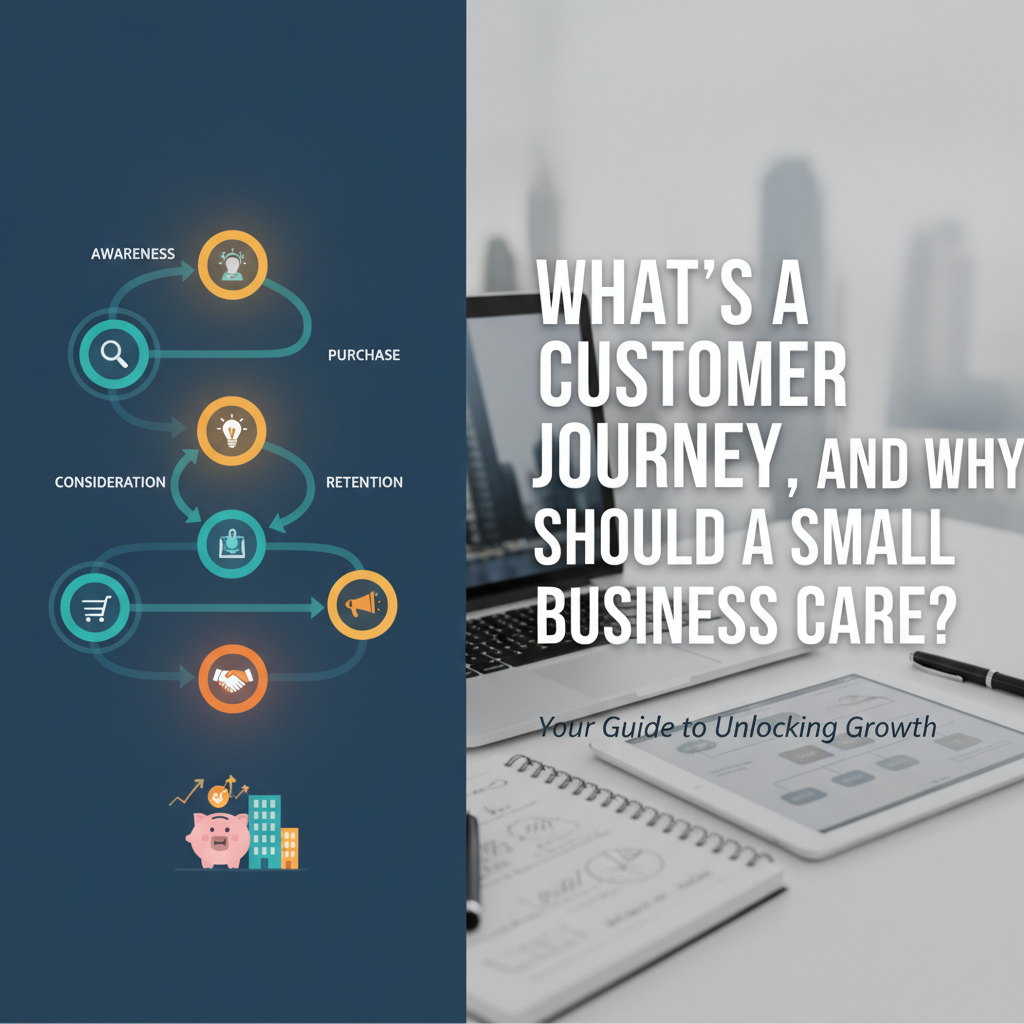
A customer journey map is a visual representation of every interaction a buyer has with your business, from initial awareness to post-purchase advocacy. For small businesses, customer journey mapping reveals hidden friction points, improves customer retention, and increases conversion rates by aligning internal processes directly with actual buyer needs and expectations.
Understanding how a customer interacts with your brand is one of the most effective ways to drive meaningful business growth. While large enterprises often spend millions analyzing consumer behavior, small businesses can achieve remarkable results using concise, practical mapping techniques.
By taking the time to map out every touchpoint, you gain an empathetic, clear picture of what your buyers experience, where they feel frustrated, and what drives them to make a purchase.
What Is a Customer Journey Map and How Does It Work?
A customer journey map is a visual narrative framework that outlines the steps, emotions, touchpoints, and potential hurdles a customer experiences while interacting with a brand. Rather than evaluating sales performance strictly through internal metrics, this tool shifts the focus outward, examining your business through the eyes of the consumer.
What is a customer journey versus a customer journey map?
A customer journey is the end-to-end experience an individual goes through when recognizing a need, evaluating options, making a purchase, and continuing to use a product or service. It happens organically, whether a business tracks it or not.
In contrast, a customer journey map is an intentional, strategic document that illustrates this journey. It organizes complex buyer behavior into distinct stages, identifying exact moments where customers interact with your marketing, sales, and support channels.
What are the core components of a small business customer journey map?
Every effective small business customer journey map includes five foundational elements:
- 1Buyer Personas: A detailed profile representing a key segment of your target audience based on real customer data and market research.
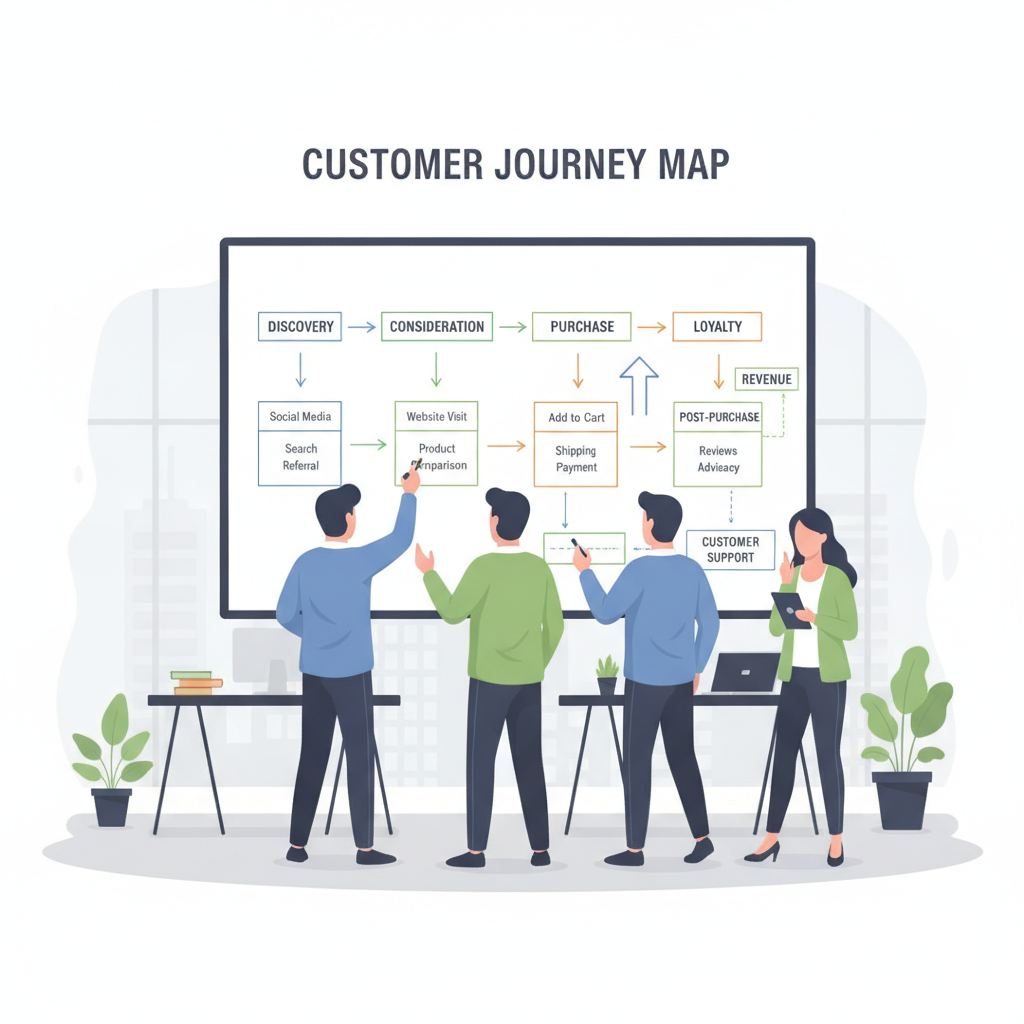
- 2Journey Stages: The chronological phases a customer moves through, typically categorized as Awareness, Consideration, Decision, Retention, and Advocacy.
- 3Touchpoints: Every direct or indirect point of contact between the buyer and your brand, such as a social media ad, website landing page, email inquiry, or phone conversation.
- 4Customer Actions and Emotions: What the customer is actively doing at each phase and how they feel during the process (e.g., confused, excited, re-assured).
- 5Pain Points and Friction Areas: Bottlenecks where prospective buyers drop off, encounter delays, or experience dissatisfaction.
🥧 Primary Stages Where Small Business Customers Drop Off
Understanding where drop-offs occur allows team leaders to deploy targeted solutions rather than making broad, unproven assumptions about why revenue may be plateauing.
Why Should a Small Business Care About Customer Journey Mapping?
Small businesses often operate with lean teams and tight marketing budgets. Spending resources on administrative mapping might initially feel secondary to immediate revenue-generating tasks. However, customer journey mapping directly impacts profitability, operations, and customer retention.
"When you design an experience around customer ease rather than internal convenience, marketing efficiency increases naturally because you stop solving the wrong problems."
What are the key customer journey mapping benefits for small businesses?
In practice, mapping your small business customer experience yields significant operational and financial benefits:
Higher Conversion Rates: Identifying friction on your website checkout page or in-store ordering process reduces cart abandonment and lost leads.
Improved Customer Retention: Acquiring a new customer typically costs five to seven times more than retaining an existing one. Mapping helps maintain satisfaction after the initial sale.
Streamlined Service Operations: When team members understand common customer pain points, they can resolve inquiries faster and proactively address recurring issues.
Targeted Marketing Spend: Instead of broadcasting generic messages across all platforms, you can focus ad spend on channels that genuine prospective buyers use during their evaluation phase.
📊 Impact of Journey Mapping on Small Business CX Metrics
By establishing clearer insight into these metrics, small organizations can compete effectively against larger competitors who may offer broader inventory but lack personalized care.
How to Create a Customer Journey Map for Your Small Business
Creating a customer journey map does not require expensive software or months of research. Small business teams can build a high-impact map by following a clear, step-by-step process grounded in genuine customer feedback.
Step 1: Define buyer personas and business goals
Before mapping touchpoints, identify precisely who you are mapping for and what business objective you want to achieve. Focus on one primary buyer persona at a time to keep the analysis clear and actionable.
Gather direct feedback through brief email surveys, phone interviews, or direct sales conversations.
Review analytics from platforms like Google Analytics to understand demographic and behavioral patterns.
Clarify your primary business goal, such as reducing onboarding time or increasing repeat purchases.
Step 2: Map customer touchpoints across all channels
List every place where prospective or current customers interact with your business. Organize these touchpoints chronologically across the primary journey stages.
- 1Awareness: Local search listings, organic search results, word-of-mouth recommendations, social media posts.
- 2Consideration: Product pages, client testimonials, FAQ sections, pricing guides, review sites.
- 3Decision: Checkout process, payment processing options, contract signing, welcome confirmation emails.
- 4Retention: Product delivery updates, customer onboarding guides, help desk interactions.
- 5Advocacy: Review requests, referral incentive programs, follow-up feedback surveys.
Step 3: Identify friction points and optimize the experience
Examine each touchpoint to discover where customers experience confusion, hesitation, or unnecessary effort. A common metric used to evaluate these interactions is the Customer Effort Score (CES), which measures how easy or difficult it was for a buyer to complete a specific task.
💡 Tip
Gather your frontline staff—such as customer support agents, cashiers, or account managers—when reviewing touchpoints. Frontline employees often recognize customer frustrations and software hiccups long before leadership becomes aware of them.
What Are Common Pitfalls in Small Business Customer Experience Mapping?
While customer journey mapping for small businesses offers clear advantages, missteps during the mapping process can lead to inaccurate conclusions and wasted effort.
Mapping internal processes instead of customer perspectives
A frequent mistake is designing a map that reflects how you want the sales pipeline to run, rather than how buyers actually behave. For instance, requiring a buyer to fill out a five-page form might align with your administrative intake needs, but from the buyer’s perspective, it creates unnecessary friction during the decision phase.
Failing to update the map as buyer behavior changes
A customer journey map should serve as an evolving reference document rather than a one-time project. Consumer expectations shift rapidly, especially as online search habits and modern communication preferences evolve.
Reviewing your journey map twice a year ensures your operations stay aligned with real-world customer habits and ongoing market shifts.
Summary and Key Takeaways
A well-crafted customer journey map bridges the gap between your operational goals and your customers' actual experiences. By systematically documenting buyer touchpoints, identifying friction areas, and measuring satisfaction metrics, small businesses can create memorable experiences that foster long-term loyalty.
Focus on Reality: Base your map on real customer feedback and observable analytics rather than internal assumptions.
Prioritize High-Friction Moments: Address the biggest drop-off points first to achieve the fastest return on your efforts.
Involve Frontline Teams: Engage staff members who interact with buyers daily to ensure your map captures authentic customer sentiment.
- Keep It Updated: Revisit and adjust your journey map periodically as buyer preferences and technology change.
