
How to Do a Competitor Analysis That Actually Tells You Something Useful

Quick Answer
A competitor analysis is a systematic evaluation of your rivals' strategies, strengths, market positioning, and performance metrics to identify growth opportunities and mitigate business risks. Learning how to do competitor analysis effectively requires segmenting rivals, auditing product offerings, conducting a competitor keyword analysis, and converting competitive gaps into actionable strategy.
Understanding your market landscape requires more than occasionally browsing a competitor's website or monitoring their social media channels. To build a resilient business strategy, you need structured competitive intelligence that reveals why customers choose alternative solutions and where market opportunities remain unexploited.
When done correctly, benchmarking your peers provides clear operational guidance, highlights strategic blind spots, and informs product and marketing roadmap decisions.
What Is a Competitor Analysis and Why Is It Essential for Growth?
A competitor analysis is a strategic framework for identifying, researching, and evaluating external companies within your market landscape to understand their strengths, weaknesses, and tactical direction. Rather than simply tracking revenue or product features, a thorough evaluation investigates customer perception, marketing channels, pricing structure, and audience acquisition strategies.
In practice, organizations that conduct formal competitive evaluations on a recurring basis are significantly better positioned to anticipate market shifts. According to research published by the Harvard Business Review, proactive market orientation directly correlates with improved long-term financial performance and customer retention.
By analyzing real-world customer behavior and digital footprints, your team can avoid costly experimentation by leveraging existing industry data to inform your decisions.
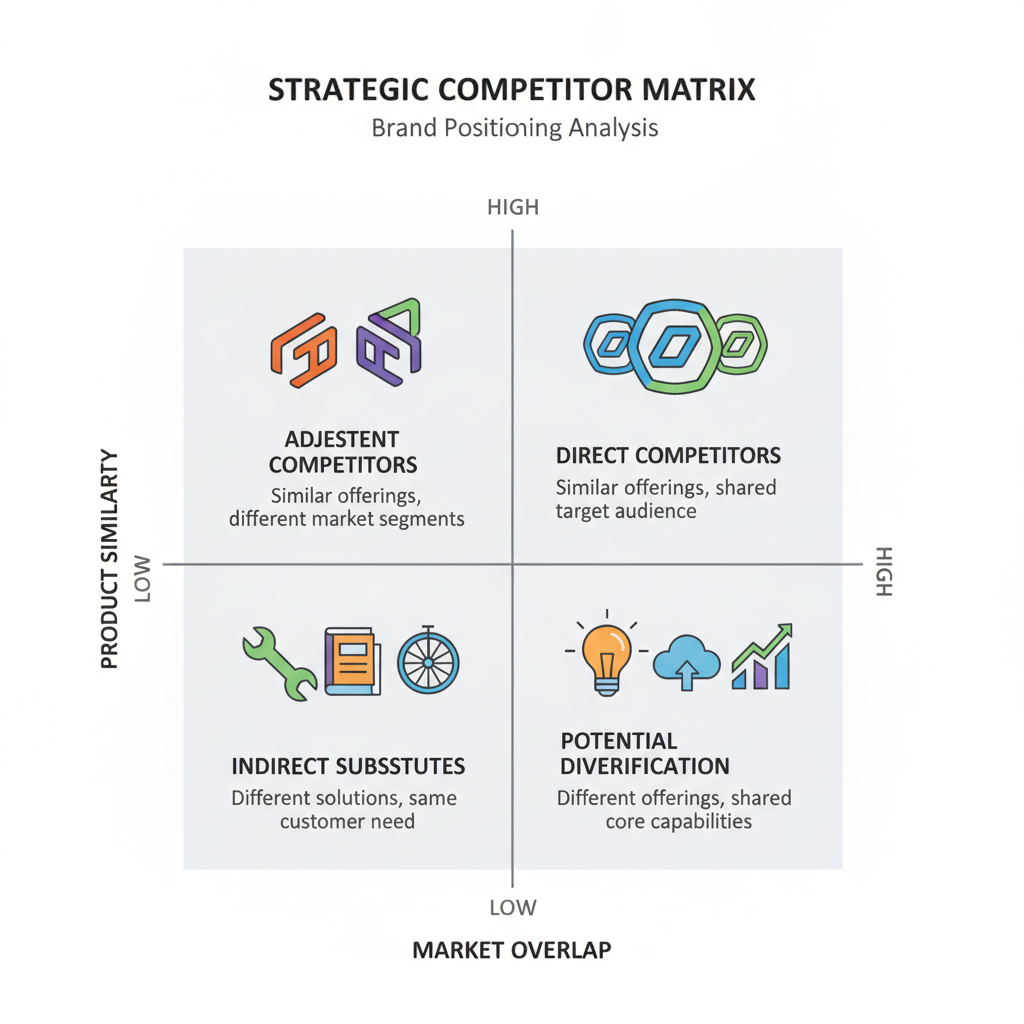
Direct vs. Indirect Competitors: How to Categorize Your Landscape
Not all competitors challenge your business in the same manner, which makes audience-based segmentation essential before gathering data.
Direct Competitors: Brands offering substantially similar products or services to the same target audience (e.g., two subscription project management software platforms).
Indirect Competitors: Companies offering alternative solutions that fulfill the same underlying customer need (e.g., a spreadsheet application competing with project management software).
Tertiary Competitors: Businesses offering related products that might expand into your category or compete for similar marketing keywords and audience attention.
Categorizing your landscape into these three distinct buckets prevents resource wastage by ensuring you apply appropriate evaluation frameworks to each competitive tier.
How to Do Competitor Analysis in 5 Actionable Steps
Knowing how to do competitor analysis requires a structured, repeatable methodology rather than ad-hoc research. Following a systematic five-step framework ensures your findings translate into practical strategies.
💡 Tip
Focus on trajectory rather than static snapshot data. Tracking changes in a competitor's pricing tiers, hiring trends, or publishing velocity over a six-month window reveals their strategic direction far better than a single point-in-time audit.
Step 1: Identify and Segment Your Real Competitors
Begin by selecting 3 to 5 direct competitors and 2 to 3 indirect competitors for intensive evaluation. Use market research databases, customer survey data, and search engine results pages (SERPs) to verify who actively competes for your prospective customers' budgets and online queries.
Step 2: Analyze Competitor Products, Pricing, and Value Propositions
Evaluate each brand's primary product or service offering by examining feature availability, packaging, onboarding workflows, and public pricing tiers. Look for friction points in their purchasing funnel and identify value proposition gaps—such as missing integrations, rigid contract structures, or limited support tiers—that your brand can capitalize on.
Step 3: Conduct a Comprehensive Competitor Keyword Analysis
Search visibility dictates digital market share. Evaluating your competitors' search engine optimization (SEO) profiles reveals which topics drive revenue for them and where high-intent search traffic remains uncaptured.
Step 4: Evaluate Content Strategy and Customer Touchpoints
Audit the media formats, publication frequencies, and distribution channels your competitors rely upon. Look at organic content hubs, email marketing cadences, case study presentations, and social channel engagement to evaluate how effectively they cultivate trust with prospective buyers.
Step 5: Synthesize Insights into an Actionable SWOT Matrix
Transform raw analytical observations into strategic priorities by mapping findings onto a tailored SWOT (Strengths, Weaknesses, Opportunities, Threats) matrix. Ensure every listed opportunity connects directly to a specific strategic initiative or operational improvement.
🥧 Industry Organic Traffic Acquisition Channels (2024 Benchmark)
How to Conduct a Competitor Keyword Analysis to Find Content Gaps
A competitor keyword analysis is the process of identifying the search queries, phrases, and intent categories that drive organic traffic to competing websites, while isolating keywords your brand has yet to target. This analytical exercise uncovers audience demand trends and content opportunities with measurable organic value.
"The goal of competitive intelligence is not to mirror your rivals' moves, but to discover the underserved spaces they leave behind in the customer journey."
To execute a targeted competitor keyword analysis, follow this proven process:
- 1 Extract Competitor Ranking Profiles: Utilize search research tools to export keyword portfolios for your top three direct organic rivals.
- 2 Filter by Search Intent: Group keywords into informational, commercial, and transactional categories to isolate queries with commercial intent.
- 3 Perform Keyword Gap Analysis: Cross-reference your domain’s ranking footprint against competitors to identify high-volume queries where rivals rank on page one while your domain does not rank at all.
- 4 Evaluate Content Depth: Analyze top-ranking competitor pages for identified gap keywords. Note structural gaps, lack of data citations, or poor user experience elements that your team can improve upon.
📈 Average Keyword Gap Density by Market Tier
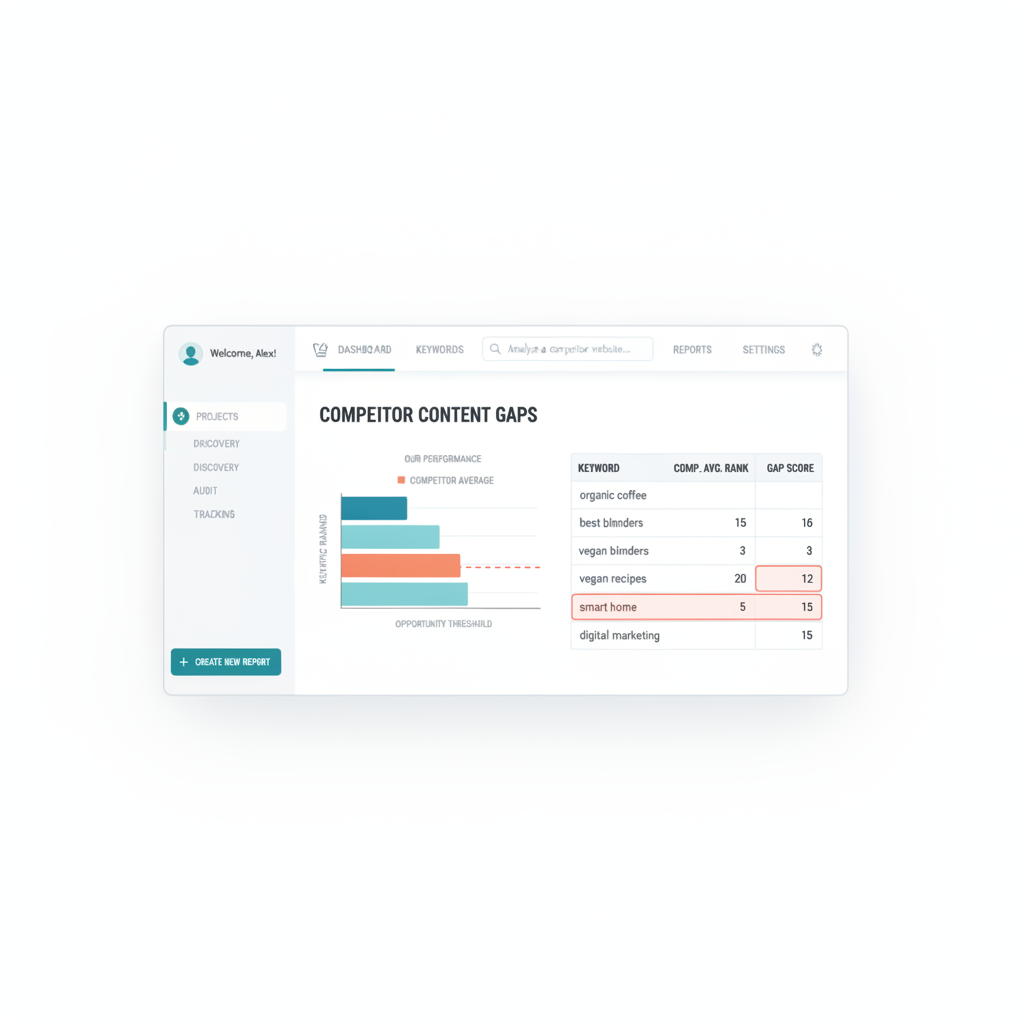
By evaluating keyword gaps systematically, team leaders can build content roadmaps grounded in real search demand rather than subjective assumptions.
What Common Competitor Analysis Mistakes Should You Avoid?
The most frequent error in market research is treating competitive analysis as a one-time exercise focused strictly on surface-level design or messaging. Relying on superficial observations often leads to reactive decision-making rather than sustainable market differentiation.
To maintain analytical accuracy, guard against these common pitfalls:
Focusing Exclusively on Direct Competitors: Ignoring indirect substitutes leaves your strategy vulnerable to market displacement from non-traditional solutions.
Over-Indexing on Vanity Metrics: Social follower counts and estimated site visits rarely provide a complete picture of customer satisfaction, actual revenue, or retention rates.
Copying Without Differentiation: Replicating a rival's strategy often reinforces their market position. Always seek ways to deliver superior or unique value.
Ignoring User Experience and Support Touchpoints: Product features mean little if customer support, onboarding documentation, or purchase workflows are frustrating.
"A competitor analysis should serve as a launchpad for brand differentiation, not a blueprint for imitation."
How Often Should You Update Your Competitor Benchmarks?
Competitive intelligence should be updated on a structured schedule: perform light monthly tracking of digital marketing assets and pricing changes, combined with comprehensive quarterly reviews of organic market positioning and product updates.
Based on real-world implementation, annual strategy planning sessions should always be preceded by a full market audit. Establishing consistent update schedules ensures your strategy remains agile while giving tactics sufficient time to yield measurable performance data.
Key Takeaways for Market Research Success
Segment competitors into direct, indirect, and tertiary categories to focus analytical resources effectively.
Conduct continuous competitor keyword analysis to locate low-competition, high-intent traffic opportunities.
Ground evaluation in customer experience, messaging clarity, and operational strength rather than vanity metrics.
- Transform analytical findings into immediate strategic initiatives using a focused SWOT framework.
