
Quick Answer
Content repurposing is the practice of converting a single core piece of content into multiple distinct assets across different formats and channels to maximize reach and efficiency. By using a systematic content atomization strategy, businesses transform one comprehensive pillar asset into ten or more targeted pieces, driving long-term engagement while significantly reducing overall creation costs.
Managing an effective digital marketing strategy requires a continuous stream of valuable communication. However, creating high-quality content from scratch for every platform is often resource-intensive and difficult to sustain. Content repurposing solves this challenge by helping teams squeeze maximum value out of their existing research, ideas, and published media.
By adopting a structured approach to asset transformation, your team can maintain a consistent online presence, reach audiences across diverse channels, and maximize return on investment (ROI) without burning out your creative team.
What Is Content Repurposing and Why Is It Essential for Growth?
Content repurposing is the process of taking existing material—such as a long-form article, webinar, or research report—and modifying its format, structure, or medium to suit different platforms and audiences. Rather than constantly writing new material, content repurposing focuses on extracting core insights and delivering them through fresh formats like videos, social posts, podcasts, and infographics.
In practice, a single detailed anchor asset can serve as the foundation for dozens of cross-channel touchpoints. According to industry benchmarks, organizations that implement strategic repurposing reduce their total content creation hours by up to 60% while expanding their total organic reach across digital networks.
"Strategic content repurposing is not about copying and pasting; it is about adapting valuable ideas into the natural language of each distribution platform."
How Does Content Atomization Maximize Resource Efficiency?
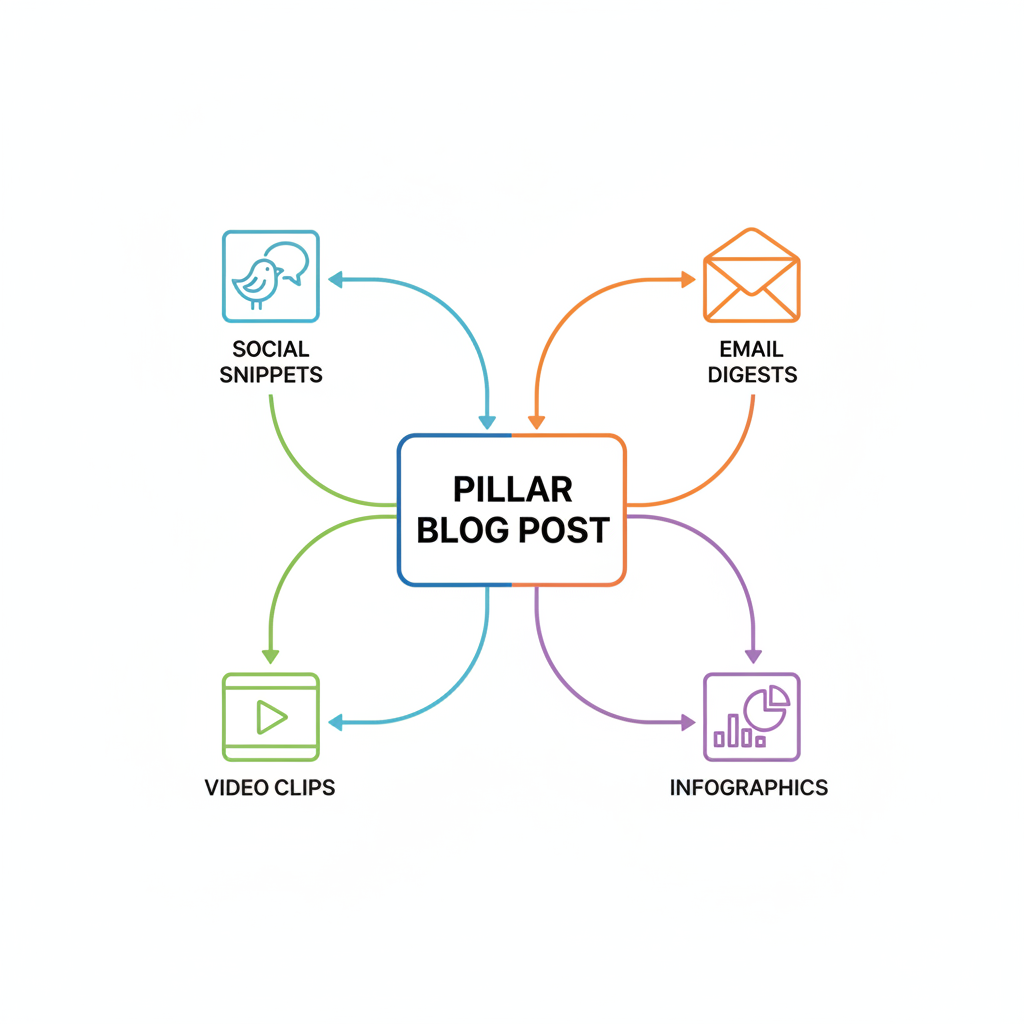
Content atomization is the methodical process of breaking down a large, comprehensive piece of media into smaller, stand-alone micro-assets. Instead of viewing a 3,000-word whitepaper or a 45-minute webinar as a single asset, content atomization treats it as an aggregate of individual statistics, takeaways, case studies, and quote cards.
This framework allows marketing and business development teams to scale output predictably. By dissecting one central topic into focused, bite-sized components, you satisfy the distinct preferences of modern digital channels without multiplying your workload.
📈 Time Required to Produce 10 Content Assets (Original vs. Repurposed)
What Makes Evergreen Content the Ideal Foundation for Repurposing?
Evergreen content is topic material that remains relevant, accurate, and valuable to readers over an extended period. Topics rooted in core industry principles, step-by-step tutorials, baseline definitions, and fundamental problem-solving frameworks naturally retain their authority regardless of season or short-term trends.
Focusing your atomization efforts on evergreen content guarantees that your derivative assets maintain long-term utility. When you atomize evergreen resources, your distributed snippets continue to generate organic search traffic and engagement months—or even years—after their initial publication.
How Do You Turn 1 Core Asset Into 10 Targeted Content Pieces?
Transforming a single piece of primary content into ten specialized assets requires a deliberate workflow. To illustrate how this operates in practice, consider a single 2,000-word comprehensive guide or video webinar on industry best practices as your initial anchor.
💡 Tip
Pro Tip: Choose anchor assets that contain rich qualitative data, distinct subheadings, action steps, or compelling expert quotes. The richer the foundation, the easier it is to extract individual atomized components.
Step 1: Create a High-Value Anchor Asset
Your anchor asset acts as the master repository of knowledge for your entire campaign. Effective anchor assets include comprehensive ultimate guides, recorded virtual events, original research surveys, or detailed customer case studies.
Ensure your initial anchor asset is thoroughly researched, well-structured with logical subheadings, and aligned with search intent. Adhering to standards like Google's Search Quality Rater Guidelines ensures your core material delivers genuine Expertise, Authoritativeness, and Trustworthiness (E-E-A-T) right from the start.
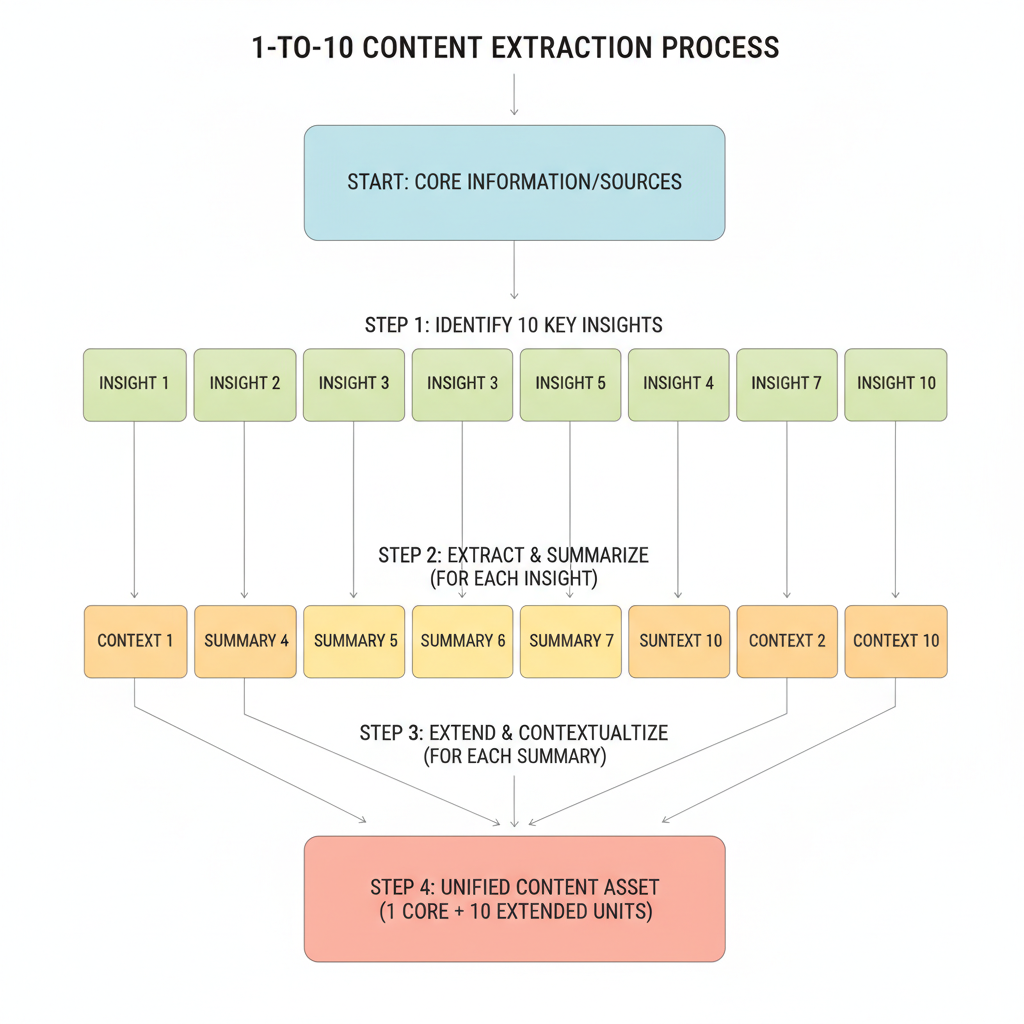
Step 2: Extract and Format 10 Distinct Content Derivatives
Once your anchor asset is live, execute a structured extraction plan to produce ten distinct secondary pieces:
- 1Detailed Long-Form Blog Post: The primary anchor asset published on your main website.
- 2Email Newsletter Summary: A curated overview sent to subscribers highlighting three key actionable takeaways with a link back to the main article.
- 3LinkedIn Carousel (PDF): A 5-to-7 slide visual breakdown highlighting the core process steps outlined in the anchor piece.
- 4Short-Form Video Clip #1: A 60-second vertical video explaining the primary problem statement and core solution.
- 5Short-Form Video Clip #2: A quick tutorial video demonstrating a single actionable technique from the guide.
- 6Data-Driven Infographic: A visual graphic summarizing key statistics, decision trees, or processes mentioned in the text.
- 7Text-Based Social Post: A personal or brand narrative shared on social channels focusing on a single impactful lesson learned.
- 8Audience Q&A / FAQ Block: A dedicated FAQ section optimized for organic search snippets and AI discovery tools.
- 9Visual Quote Card: A stylized quote graphic highlighting a key perspective or stat for visual networks.
- 10Audio Commentary / Micro-Podcast: A 5-minute audio recap expanding on the practical implications of the topic.
📊 Average Engagement Boost via Multi-Channel Repurposing (2024 Industry Benchmark)
What Are the Best Practices and Common Pitfalls in Content Repurposing?
While content repurposing offers clear efficiency gains, successful execution requires thoughtful adaptation to avoid common pitfalls. Simply copy-pasting text from a blog post into a social media channel often yields disappointing engagement because each platform has its own native formatting norms and user expectations.
"True repurposing respects the platform. Formats change, visual rhythms shift, but the underlying value proposition remains steady."
How Can Teams Avoid Channel Fatigue and Duplication?
Preventing channel fatigue requires tailoring tone, formatting, and hooks to match the culture of each platform. Content intended for a deep-dive website blog post must be restructured when converted into a fast-paced video script or a concise social update.
To ensure long-term audience engagement across all platforms:
Customize the Hook: Rewrite introductory headlines to match platform-specific search and browsing habits.
Stagger Distribution Timelines: Avoid publishing all ten derivatives on the exact same day; space them out over weeks or months.
Native Adaptation: Use platform-native tools, fonts, and interaction features (such as polls or stickers) whenever possible.
How Do You Measure the ROI of Repurposed Content?
Tracking performance involves measuring aggregated reach, engagement rates, and conversion paths across all derived assets. Instead of evaluating each asset in isolation, evaluate the combined traffic, leads, and brand impressions generated by the entire asset family.
Key metrics to track include:
Combined Organic Traffic: Total views accumulated across the primary anchor page and secondary landing pages.
Cross-Platform Engagement: Likes, comments, shares, and saves across social channels.
Resource Cost Savings: Net reduction in hours spent producing original content compared to traditional single-asset workflows.
Frequently Asked Questions About Content Repurposing
What is the difference between content repurposing and content syndication?
Content repurposing involves altering the format, structure, or voice of an asset to fit a new medium (e.g., turning a blog into a video). Content syndication, by contrast, is the process of republishing identical content on third-party websites to reach a wider audience.
How frequently should you repurpose evergreen content?
Evergreen content should be reviewed and republished or repurposed every 6 to 12 months. Updating statistical points, adding new insights, and releasing fresh derivative formats helps maintain SEO relevance and continuous engagement over time.
Which content formats offer the highest repurposing yield?
Long-form video recordings, recorded webinars, and detailed research reports offer the highest repurposing potential. These formats contain rich audio, visual, and written data points that can be easily split into text posts, short videos, infographics, and email newsletters.
Your Best Insights Deserve More Than a Single Moment in the Spotlight
Creating meaningful, high-impact communication shouldn't feel like an exhausting treadmill where your creative team is constantly struggling to stay ahead of the next deadline. When you establish an intentional atomization system around your foundational ideas, you honor the original care and expertise that went into creating them—while meeting your audience naturally wherever they prefer to learn and interact.
You don't need to produce more volume to achieve greater connection; you simply need to let your strongest work travel further. If you are looking to simplify your content workflows, protect your creative energy, and build an efficient publication engine that drives lasting growth, let’s start a conversation to craft a content repurposing roadmap tailored to your goals.
