
Quick Answer
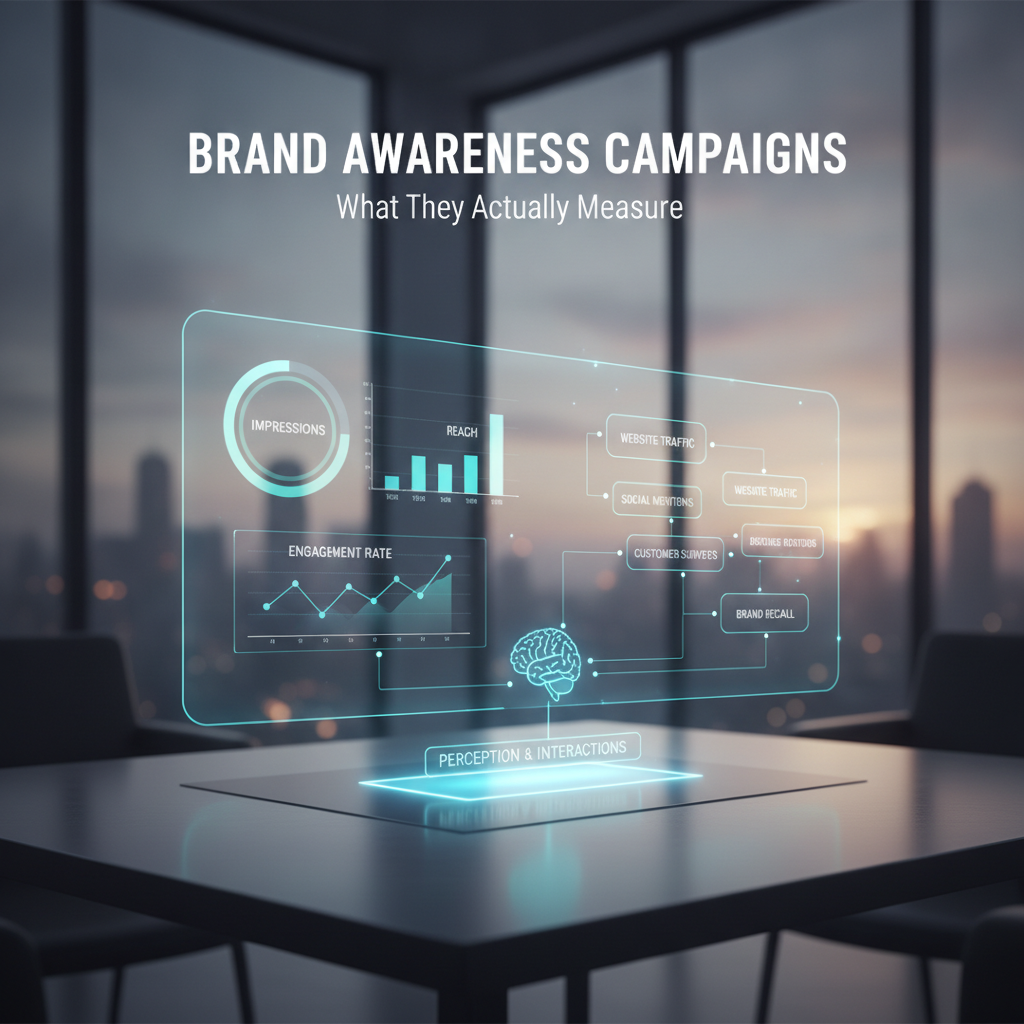
A brand awareness campaign measures how recognizable and familiar your brand becomes to a target audience over time. Rather than driving immediate direct sales, it tracks long-term growth through key brand awareness metrics such as direct website traffic, branded search volume, social sentiment, and Share of Voice (SoV).
Measuring the true impact of a brand awareness campaign can often feel challenging for business leaders and marketers alike. When direct response campaigns focus on immediate conversions, it is easy to see the direct path from ad spend to sales. However, evaluating brand awareness requires a shift in perspective. It involves measuring how prospective customers perceive, remember, and search for your business across digital ecosystems.
In practice, a well-structured awareness initiative builds the psychological equity that makes future performance marketing significantly more efficient. Based on real-world results across diverse industries, businesses that maintain consistent brand visibility routinely enjoy lower customer acquisition costs (CAC) and higher conversion rates over time.
What Is a Brand Awareness Campaign and Why Does Measurement Matter?
A brand awareness campaign is a targeted marketing strategy designed to increase public familiarity with a business, its values, and its core offerings. Unlike direct response campaigns—which demand immediate action like a form fill or product purchase—awareness initiatives focus on building mindshare and topical authority within your industry.
Measuring these efforts is critical because unmeasured awareness spend quickly leads to unoptimized marketing budgets. Establishing clear baselines allows organizations to determine which channels generate genuine recall versus passive viewability.
What is the primary objective of a brand awareness initiative?
The primary objective is to establish top-of-mind recall so that when a potential customer enters a buying cycle, your business is their first choice. This foundational visibility warms up prospective buyers, shortening future sales cycles and increasing overall brand equity.
How does brand awareness impact long-term business growth?
Sustained brand presence creates what industry analysts often call the "halo effect." When buyers recognize a name, they naturally attribute higher trust, quality, and credibility to its products. According to benchmarks documented by market research authorities, strong brand recognition directly correlates with higher organic traffic retention and stronger pricing power in competitive markets.
What Key Brand Awareness Metrics Should You Actually Track?
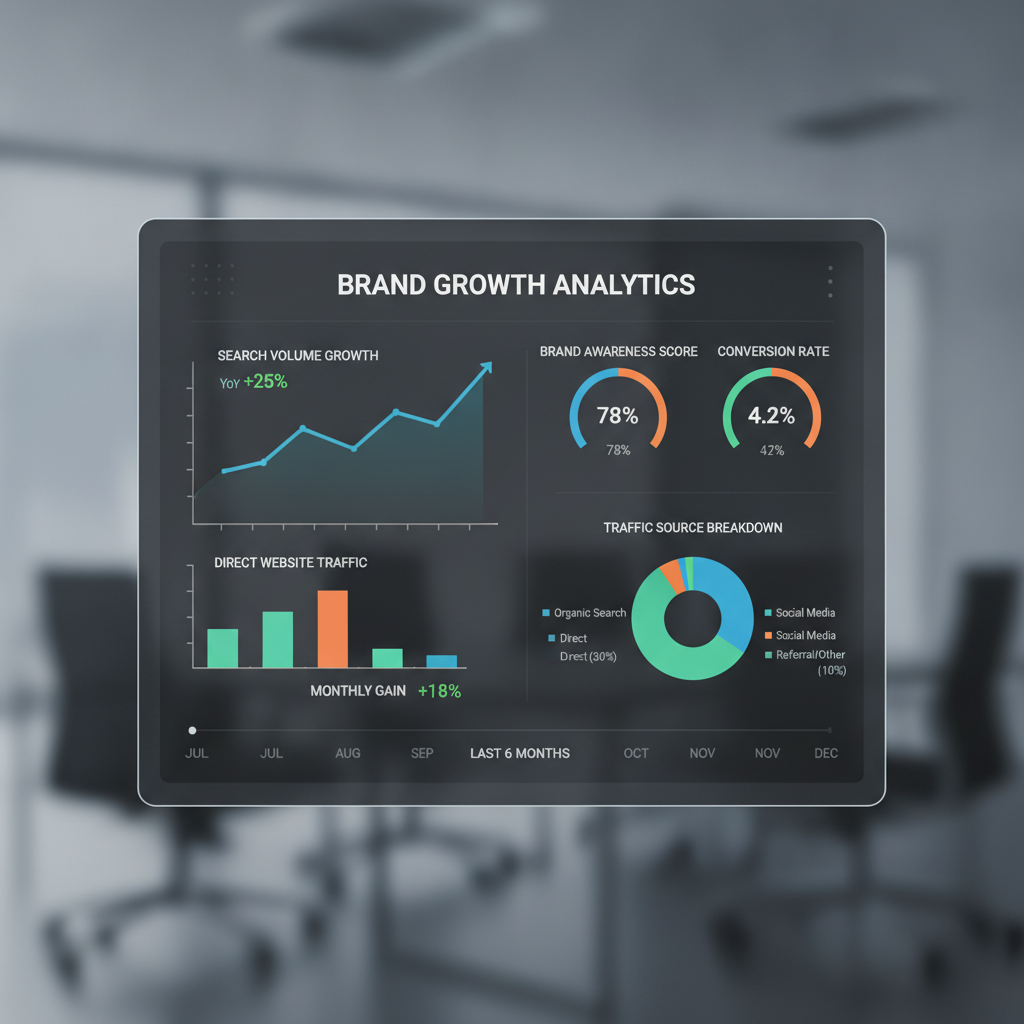
To evaluate campaign success accurately, organizations must look beyond basic impression counts. Modern analytics frameworks categorize brand awareness metrics into two major buckets: direct behavioral indicators and indirect perception data.
```
+-----------------------------------------------------------------------+
| BRAND AWARENESS METRIC FRAMEWORK |
+-----------------------------------------------------------------------+
| QUANTITATIVE (Behavioral) | QUALITATIVE (Perception) |
| • Branded Search Volume | • Brand Recall Surveys |
| • Direct Website Traffic | • Brand Sentiment Analysis |
| • Share of Voice (SoV) | • Unprompted Association |
| • Social Referral Traffic | • Focus Group Feedback |
+-----------------------------------------------------------------------+
```
Which quantitative metrics offer the most accurate insights?
Quantitative metrics measure direct audience actions that signal brand familiarity. The most reliable data points include:
- 1Branded Search Volume: Tracked via platforms like Google Search Central tools, this measures how many users specifically type your brand or product name into search engines.
- 2Direct Website Traffic: Users who type your exact URL into their browser demonstrate high brand recall and direct intent.
- 3Share of Voice (SoV): SoV measures your brand's percentage of overall industry conversations and search impressions compared to key competitors.
- 4Earned Media and Mentions: Tracking press coverage, unprompted blog mentions, and social discussions across digital channels.
📊 Brand Metric Correlation to Long-Term Sales Growth
Which qualitative metrics measure brand sentiment and perception?
Qualitative metrics reveal how people feel about your brand when they encounter it. Key evaluation methods include:
Brand Lift Studies: Standardized surveys served to exposed versus unexposed audience groups to measure changes in brand favorability and purchase intent.
Sentiment Analysis: Natural Language Processing tools that evaluate public social commentary to determine whether brand mentions are positive, neutral, or negative.
Message Recall Rates: Assessing whether audiences remember your brand's specific value proposition rather than just its logo or imagery.
How Do You Track and Calculate Brand Awareness ROI?
Calculating return on investment for top-of-funnel campaigns requires correlating multi-channel effort with broad business trends. Rather than looking for single-touch attribution, successful organizations evaluate overall baseline movement over 60- to 90-day evaluation windows.
"Brand awareness is not a static score; it is the momentum that lowers customer acquisition costs across every conversion channel in your business."
ℹ️ Info
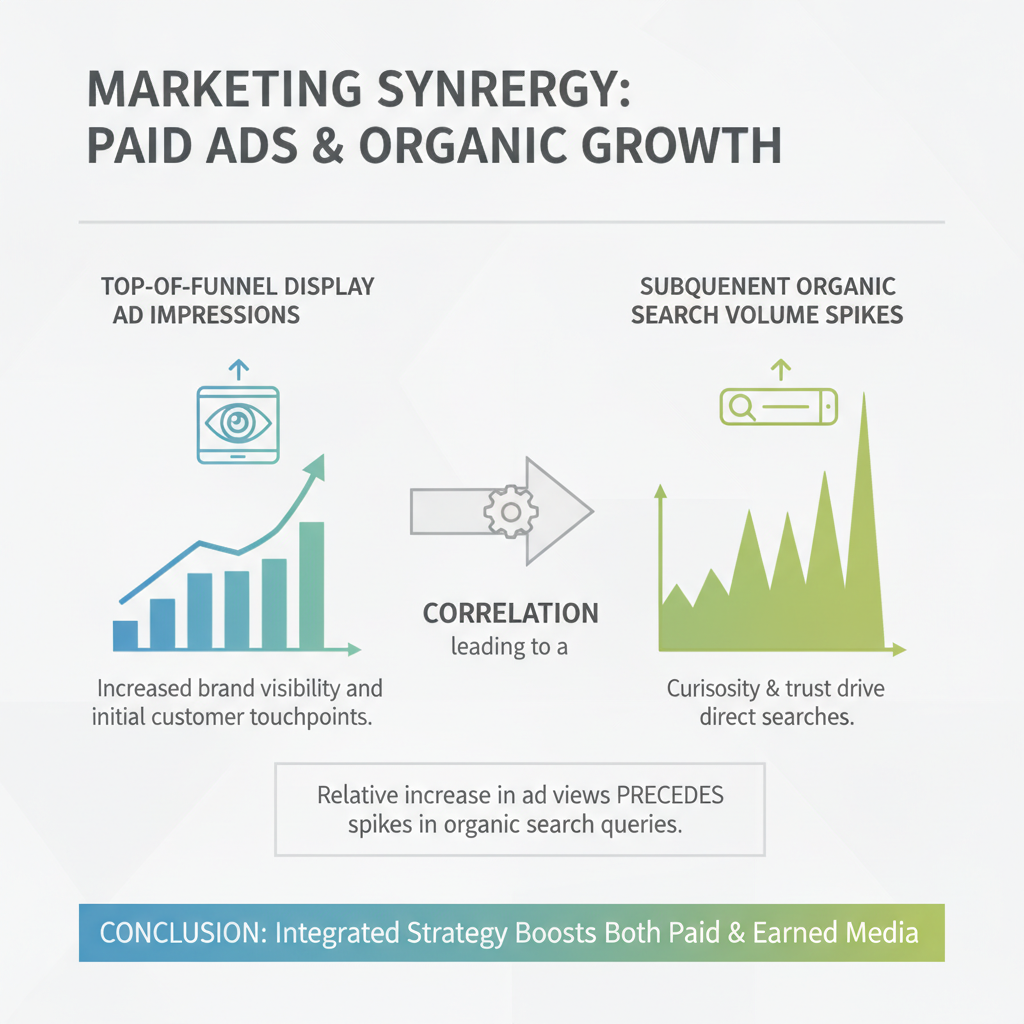
Pro Tip for Marketers: When running awareness campaigns across display or video networks, always monitor your organic and paid search brand terms simultaneously. A successful awareness campaign almost always triggers an immediate lift in branded search volume within 7 to 14 days of launch.
How do brand lift studies measure campaign impact?
Brand lift studies compare two isolated groups: an control group that was not shown your campaign materials and an exposed group that was. By surveying both groups on brand recognition, brand attribute association, and purchase consideration, analysts isolate the exact percentage lift driven directly by your campaign efforts.
How can you isolate awareness lift from normal traffic fluctuations?
To isolate campaign impact, establish a historical baseline of direct traffic and branded search volume covering at least six months prior to campaign launch. When the campaign goes live, track lift against this historical baseline while accounting for seasonal fluctuations, macroeconomic factors, and concurrent promotional activities.
What Are the Common Pitfalls When Measuring Brand Awareness?
Evaluating awareness campaigns without proper guardrails can lead to misleading conclusions. A common scenario we encounter involves teams mistaking high impression counts for genuine market awareness.
🥧 Awareness Campaign Budget Allocation (Industry Benchmark)
Why is relying exclusively on impressions dangerous?
Ad impressions simply measure how many times a digital asset was rendered on a screen, not whether a human actually observed or processed the content. High impression counts can occur alongside low viewability rates and minimal audience engagement, yielding a false sense of campaign reach.
How do vanity metrics distort campaign performance?
Vanity metrics—such as unvalidated social likes, superficial page views, or total potential reach—rarely translate into business value. Effective measurement frameworks focus on engaged time-on-page, active content interactions, and subsequent search behavior to verify that awareness efforts are driving meaningful mindshare.
Key Takeaways: Measuring What Matters
Evaluating a brand awareness campaign requires balancing quantitative digital signals with qualitative sentiment metrics. By tracking direct behavioral changes alongside overall brand lift, business leaders can confidently invest in building market presence.
Focus on Branded Search: Increased branded search volume is one of the clearest indicators of rising market awareness.
Measure Share of Voice: Compare your brand's search and media share against industry competitors to benchmark real growth.
Look at the Baseline Lift: Evaluate direct traffic and organic search improvements over 60- to 90-day windows to capture the full halo effect.
- Avoid Vanity Traps: Prioritize viewability, lift studies, and engaged interactions over raw impression counts.
Navigating Brand Growth with Insight and Confidence
Every growing organization deserves a clear, meaningful picture of how its story resonates with real people. Measuring brand presence shouldn't feel like deciphering abstract vanity charts or justifying unmapped spend. When you align qualitative perception with genuine behavioral data, top-of-funnel visibility becomes your most powerful driver of sustained commercial success. Let's work together to illuminate your true brand reach and build lasting connection with the audiences that matter most.
