
Quick Answer
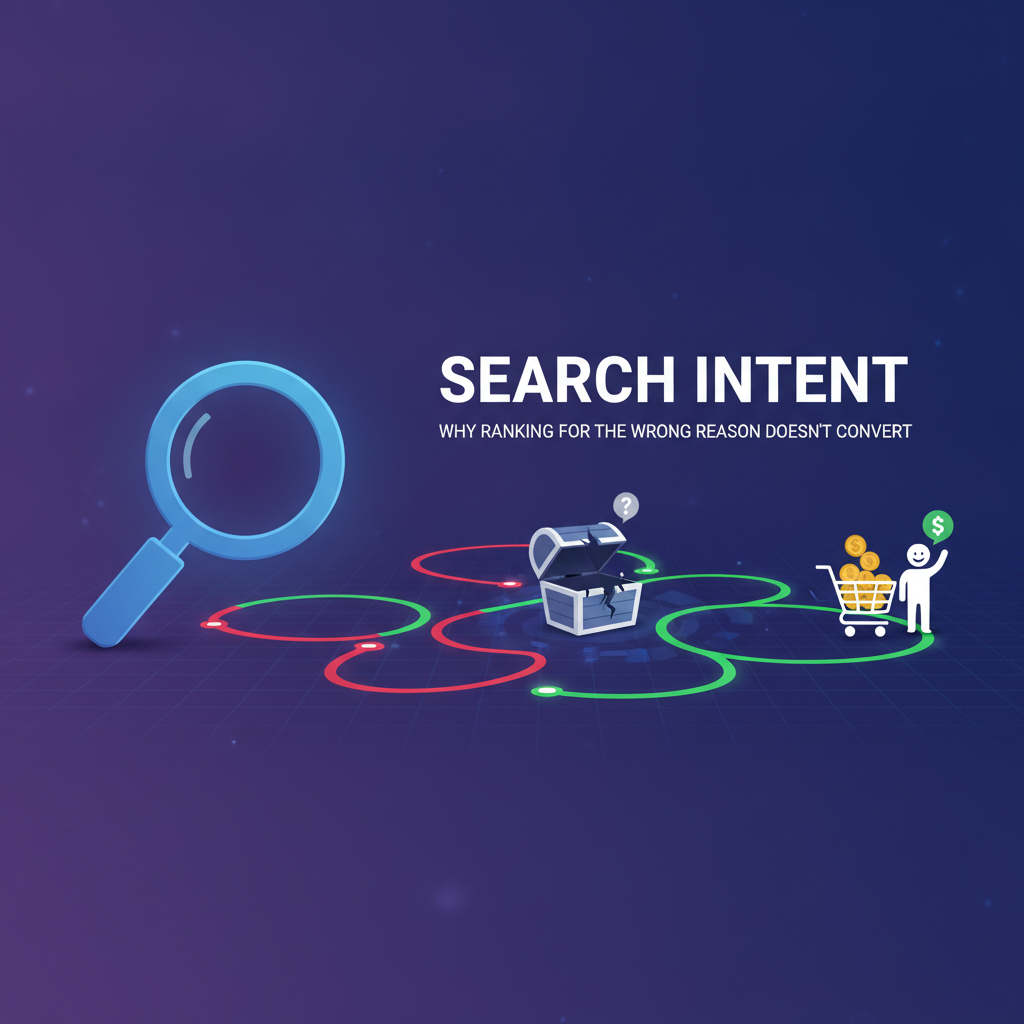
Search intent represents the underlying motivation behind a user's search query, determining whether they want to buy, learn, or find a specific website. Ranking for the wrong search intent attracts unqualified traffic that fails to convert, leading to high bounce rates and wasted marketing resources. Aligning content with transactional keywords ensures higher conversion rates and business growth.
What Is Search Intent and Why Does It Matter for Conversions?
Search intent is the primary goal a user has when typing a query into a search engine. Search engine algorithms, such as those detailed in Google Search Central documentation, continuously evolve to evaluate whether web pages satisfy the specific user need behind each search. Driving thousands of site visitors per month may look impressive on an analytics dashboard, but if those visitors expect a quick answer and you present them with a sales checkout page, they will leave immediately.
Understanding customer motivation ensures that website content serves the audience at their precise point in the buying journey. When your content matches what users want, engagement metrics improve, bounce rates decrease, and conversion rates rise naturally.
How Does Mismatched Search Intent Harm Conversion Rates?
Mismatched search intent occurs when a web page ranks for a keyword but fails to satisfy the user's specific objective. In practice, this creates friction in the user experience. For example, if a user searches for "how to fix a leaking faucet" and lands on a product landing page selling plumber tools without instructional content, they will return to the search results.
This behavior signals to search engines that your page was not helpful for that query. Over time, high bounce rates and low dwell times can diminish your visibility. More importantly, mismatched traffic drains resources; team members spend time managing leads that were never qualified to buy in the first place.
What Are the Four Primary Types of Search Intent?
Search engine queries generally fall into four core categories, each reflecting a different stage of user awareness and readiness to act.
Informational Intent: The user wants knowledge, answers, or guides (e.g., "what is search intent").
Navigational Intent: The user wants to reach a specific website or branded portal (e.g., "brand name login").
Commercial Investigation: The user is comparing options, reading reviews, or evaluating solutions before making a final choice (e.g., "top email marketing tools for small businesses").
Transactional Intent: The user is ready to make a purchase or complete a business action (e.g., "buy accounting software subscription").
🥧 Search Query Distribution by Intent Type (SEO Industry Benchmark)
Understanding this breakdown helps businesses allocate resources wisely. While informational queries comprise the largest volume of global searches, transactional queries generate the highest direct return on investment.
Why Does Ranking Number One Fail to Produce Sales?
A common frustration for website owners is holding a top-three organic ranking for a high-volume keyword while receiving zero sales from that traffic. High ranking position does not automatically equal business growth if the ranking page addresses the wrong stage of the sales funnel.
"Traffic without clear intent is simply a vanity metric. True search visibility focuses on bringing the right visitor to the right message at the exact moment of decision."
When a business targets a broad, high-volume phrase using an aggressive sales pitch, they are often reaching users who are merely gathering preliminary information.
How Do Transactional Keywords Differ from Informational Queries?
Transactional keywords contain explicit commercial signals that indicate an intent to buy. Phrases incorporating words like "pricing," "discount," "vendor," "near me," or specific product category terms signal that the searcher is entering the purchase phase.
In contrast, informational queries usually begin with "how," "what," "why," or "tips." Based on real-world results across digital campaigns, directing informational traffic directly to a hard-sell landing page yields conversion rates under 1%. However, guiding that same informational traffic to an educational guide with an opt-in lead magnet yields significantly higher long-term value.
💡 Tip
Before creating new content, search your target phrase in an incognito browser window. If the top five results are in-depth guides rather than product sales pages, search engines view that keyword as informational—not transactional.
📈 Average Conversion Rate by Search Intent Alignment
What Role Does Keyword Cannibalization Play in Intent Mismatch?
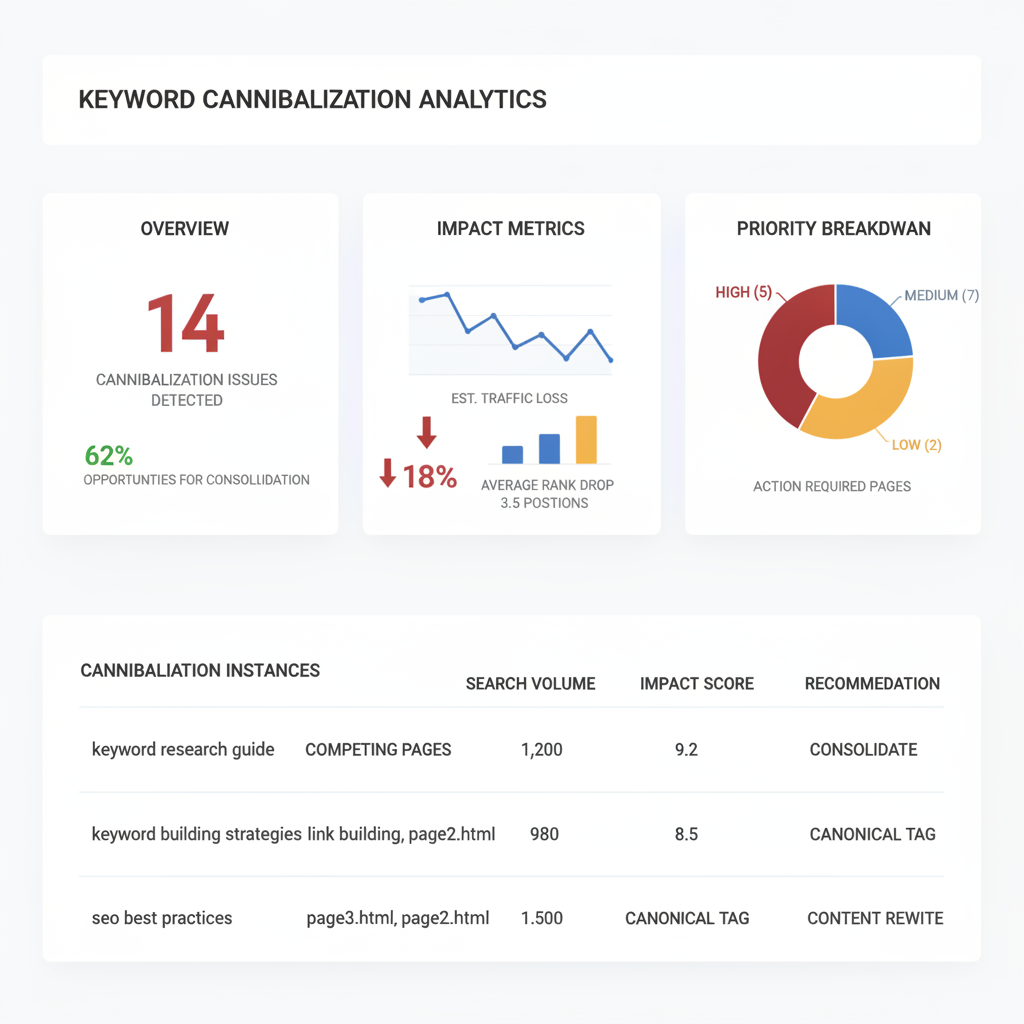
Keyword cannibalization occurs when multiple pages on your website target the same keyword or search intent, competing against each other in search engine rankings. This internal competition confuses search engines regarding which page is the definitive authority, often leading to lower rankings for both pages.
In worst-case scenarios, keyword cannibalization results in your informational blog post outranking your primary transactional sales page for purchase-focused search queries. When buyers land on an introductory blog article instead of a product page, conversion paths become fragmented and sales opportunities are lost.
How Can You Audit and Fix Search Intent Alignment on Your Website?
Correcting intent mismatch requires a systematic review of your current content assets, keyword mapping, and user conversion paths.
"Fixing search intent is rarely about writing more content. It is usually about clarifying the purpose of the content you already have."
Step 1: Analyze Search Engine Result Pages (SERPs)
To understand what search engines expect for a target keyword, inspect the top-ranking results currently occupying page one.
- 1 Examine Content Formats: Are top results blog posts, product pages, calculators, or video tutorials?
- 2 Identify Common Themes: What core problems do the top three ranking pages solve for the user?
- 3 Evaluate Calls to Action: Are competitor pages encouraging immediate purchases or offering downloadable whitepapers?
If your existing page format differs entirely from what currently ranks in the top five positions, your page is likely out of alignment with user intent.
Step 2: Map Existing Pages to Funnel Stages
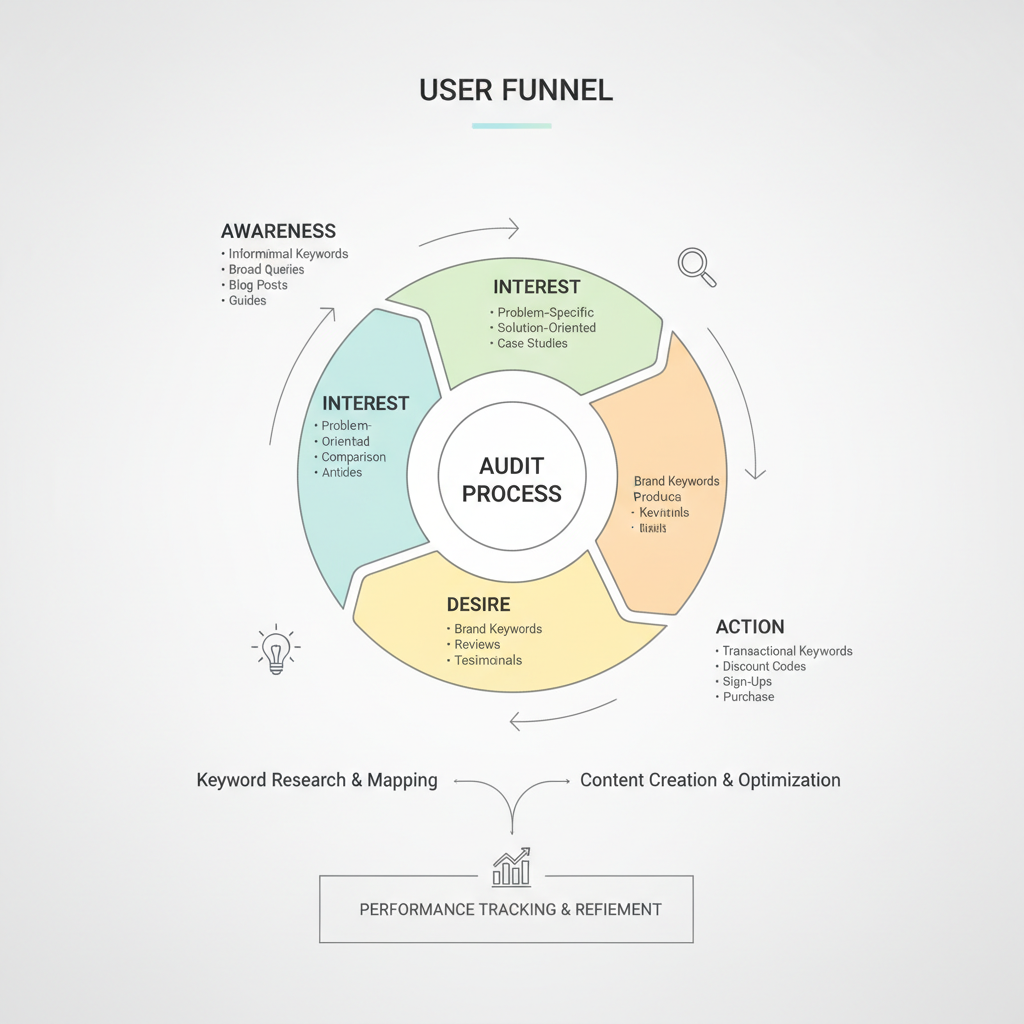
Organize your site architecture by mapping every indexable page to a specific stage in your customer journey:
Top of Funnel (ToFu): Informational blog articles, ultimate guides, free tools.
Middle of Funnel (MoFu): Comparison pages, buyer guides, feature overviews.
Bottom of Funnel (BoFu): Product catalog pages, pricing tables, request-a-demo forms utilizing transactional keywords.
Ensure every page serves a single clear purpose and includes a logical call to action (CTA) that guides the visitor to the next step in their decision-making process.
Step 3: Resolve Keyword Cannibalization and Refine CTAs
When auditing identifies multiple pages competing for identical search queries, apply one of three remedies:
Consolidate: Merge thin or duplicate informational articles into one comprehensive resource.
Redirect: Use 301 redirects to point secondary cannibalizing pages to your main landing page.
Re-target: Modify secondary pages to target distinct long-tail keywords with clear, unique intent.
Key Takeaways for Aligning Search Intent
Achieving sustainable organic growth requires aligning content creation directly with user expectations. Focusing on transactional keywords for sales pages while serving informational intent with educational guides ensures every visitor receives a tailored experience.
Focus on Satisfaction Over Volume: High traffic from mismatched queries will not generate meaningful sales revenue.
Honor SERP Signals: Let top-ranking results guide your page format and structural choices.
Eliminate Internal Competition: Audit your site regularly to resolve keyword cannibalization.
Match CTAs to Awareness: Never force a hard sell on an informational searcher; build trust first.
Meeting Your Searchers Exactly Where They Stand
Building strong organic visibility takes immense dedication, and watching high rankings fail to generate meaningful business results can feel disheartening. If your website is attracting visitors but struggling to foster genuine interest, you are not alone—and you do not need to rebuild your online presence from scratch.
By taking time to truly understand the questions, anxieties, and motivations behind every search query, you can turn casual clicks into lasting customer relationships. Reach out to start a conversation about refining your search strategy, mapping user intent with precision, and helping your content achieve the sustainable growth your hard work deserves.
