
Quick Answer
Achieving a fully GDPR compliance website requires implementing an active ssl certificate for data encryption, establishing an explicit cookie consent banner before dropping non-essential tracking cookies, and publishing a clear, updated privacy policy. Together, these technical and legal safeguards protect visitor privacy while shielding business owners from regulatory fines and search engine penalties.
Navigating modern web compliance can feel overwhelming for business owners and digital marketers alike. Between data privacy regulations, browser security warnings, and legal documentation requirements, knowing what your site truly needs—and what is merely optional—is critical. Protecting user data is not just a regulatory obligation; it is a fundamental pillar of building customer trust and maintaining a resilient online presence.
This reference guide breaks down the core components of website compliance, explaining how data encryption, cookie tracking consent, and legal documentation fit together into a manageable, human-centered strategy.

Why Is an SSL Certificate Essential for Web Compliance and Security?
An ssl certificate (Secure Sockets Layer) is a digital credential that authenticates a website's identity and enables an encrypted connection between a web server and a visitor's browser. In modern web standards, operating without HTTPS encryption is no longer an option.
In practice, data sent over an unencrypted HTTP connection travels as plain text. This exposes sensitive user input—such as login passwords, contact details, and payment information—to potential interception by unauthorized third parties. Major web browsers, following guidelines established by Google Search Central, explicitly flag non-HTTPS websites as "Not Secure," which directly increases visitor bounce rates and undermines commercial credibility.
📊 User Trust Impact of Security Warnings (2024 Survey)
How does SSL encryption affect search engine rankings and trust?
Google formally introduced HTTPS as a lightweight search ranking signal in 2014, and its importance has grown significantly. Beyond search engine optimization (SEO), an SSL certificate establishes immediate visual trust. Browsers display a padlock icon next to your domain, reassuring visitors that their session is secure.
Based on real-world results across client implementations, transitioning a domain from HTTP to HTTPS yields a measurable stabilization in user session duration and conversion rates. Consumers have become increasingly trained to look for security indicators before submitting forms or completing transactions.
What type of SSL certificate does your website actually need?
Selecting the right SSL certificate depends on your technical infrastructure and organization type. Certificate Authorities (CAs) offer three primary validation levels:
- 1Domain Validation (DV): Verifies domain ownership only. It is issued quickly, costs little to nothing, and is ideal for blogs, standard content websites, and small business portfolios.
- 2Organization Validation (OV): Verifies domain ownership plus the legal existence of the organization. Recommended for business websites that collect non-financial user inquiry data.
- 3Extended Validation (EV): Requires rigorous background checks of the legal entity. Best suited for enterprise organizations, financial institutions, and high-volume e-commerce platforms.
For the vast majority of small to mid-sized businesses, standard DV certificates (such as those provided via automated hosting providers) deliver the exact same 256-bit encryption strength as higher-cost options.
How Do Cookie Consent Banners Work Under GDPR Rules?
A cookie consent banner is an interactive interface that informs visitors about the tracking technologies used on a site and provides them with granular control over which cookies may be stored on their devices. Under the European Union’s General Data Protection Regulation (GDPR) and the ePrivacy Directive, collecting analytics or marketing data without explicit prior consent is unlawful.
A compliant banner must enforce a strict "block before consent" policy. This means non-essential scripts—such as remarketing pixels, behavioral analytics, and third-party widgets—must not fire until the user affirmatively clicks an accept button.
🥧 Average Commercial Website Cookie Distribution
What differentiates a compliant consent banner from an non-compliant one?
Many websites mistakenly use implicit consent banners—popups that claim "by continuing to browse this site, you accept cookies." Under regulatory guidance from the European Data Protection Board (EDPB), passive consent is invalid.
⚠️ Warning
Compliance Warning: Pre-ticked checkboxes for cookie categories are illegal under GDPR Article 7. Visitors must actively toggle or click to enable non-essential cookie categories. Additionally, rejecting cookies must be as simple and accessible as accepting them, requiring a clear "Reject All" option on the first layer of the banner.
A valid gdpr compliance website must meet four specific consent criteria:
Freely Given: Access to website content cannot be conditional on accepting non-essential cookies (prohibiting strict "cookie walls").
Specific: Users must be able to consent to individual cookie categories (e.g., accepting functional cookies while declining marketing cookies).
Informed: The banner must explain what data is collected, who processes it, and link directly to a comprehensive Cookie Policy.
Revocable: Visitors must have an easily accessible way to change or withdraw their consent preferences at any time.
What Documents Are Required for Full Website GDPR Compliance?
Technical safeguards like SSL encryption and consent management address data in transit, but clear documentation covers how your organization manages stored data. Having transparent, accurate legal pages published in your site menu or footer is mandatory under international privacy laws.
"Data protection compliance should not be viewed merely as a legal obligation, but as an opportunity to build standard-setting trust with your audience through transparency and respect for personal privacy."
Should you use a privacy policy generator or hire legal counsel?
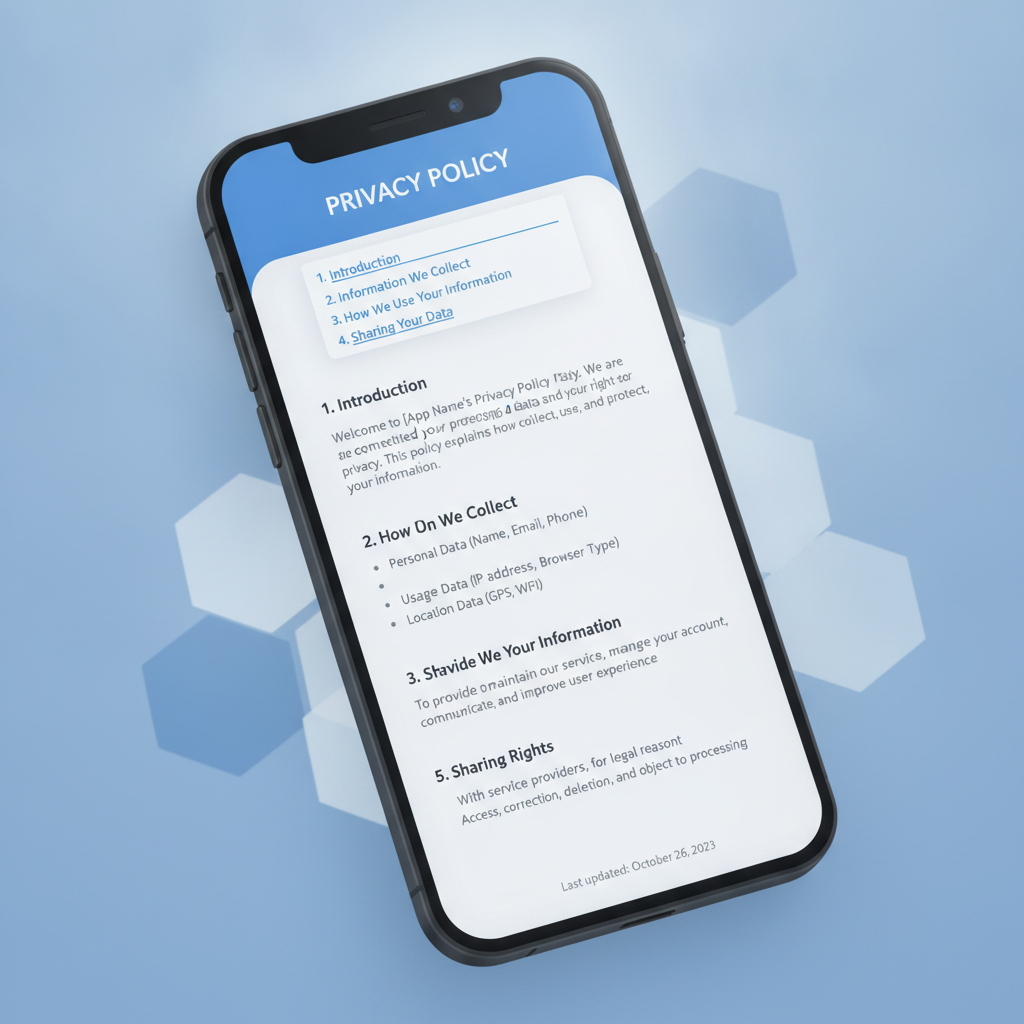
Using a reputable privacy policy generator can serve as an efficient starting point for startup websites, small businesses, and standard content publishers. These automated tools ask a series of questions about your data collection habits (e.g., newsletter signups, contact forms, Google Analytics) and compile a customized legal document.
However, a standard generator has clear limitations. A common scenario we encounter involves businesses using generic templates that fail to mention third-party integrations, proprietary user tracking, or custom API data sharing. If your business processes sensitive personal data, handles healthcare or financial records, or operates in complex international markets, custom legal counsel is strongly recommended to audit your actual operational practices.
What essential clauses must every website privacy policy contain?
To satisfy regulatory standards across the GDPR, CCPA (California Consumer Privacy Act), and emerging global privacy laws, your privacy policy must explicitly disclose:
- 1Data Categories Collected: Specific details on what personal data is gathered (IP addresses, email addresses, billing details, browsing behavior).
- 2Legal Basis for Processing: The lawful grounds for collecting data (e.g., user consent, contractual necessity, or legitimate business interests).
- 3Third-Party Data Sharing: Full transparency regarding external processors, such as payment gateways, CRM platforms, and analytics providers.
- 4User Rights: Clear instructions on how visitors can request access to, correction of, or complete deletion of their personal data (the "Right to be Forgotten").
- 5Data Retention Timelines: Specific explanations of how long user records are stored before secure deletion or anonymization.
- 6Contact Information for Privacy Inquiries: A direct point of contact, such as a dedicated privacy email address or Data Protection Officer (DPO) listing.
Frequently Asked Questions About Website Compliance
Can a website be fined under GDPR if the business is based outside the European Union?
Yes. The GDPR features extraterritorial reach under Article 3(2). If your website offers goods or services to individuals located within the EU, or monitors the browsing behavior of EU residents (through tracking cookies or analytics), your site must comply with GDPR requirements regardless of where your company is registered or hosted.
Does a free SSL certificate provide the same encryption as a paid certificate?
Yes. Free SSL certificates (such as those issued by non-profit Certificate Authorities like Let's Encrypt) use the exact same industry-standard 256-bit encryption protocols as paid certificates. The primary differences lie in validation depth, identity verification guarantees, customer support availability, and legal warranty coverage included with premium Organization or Extended Validation certificates.
How often should a website's privacy policy be updated?
A privacy policy should be reviewed at least annually, or whenever your business introduces new third-party tools, changes marketing practices, or updates data storage procedures. Major regulatory shifts or additions of new regional privacy statutes also necessitate prompt policy revisions.
Building a Safer Digital Space Doesn't Have to Be Overwhelming
Sorting through encryption protocols, cookie consent rules, and privacy frameworks can easily feel like a daunting task. Yet prioritizing data protection is ultimately one of the most effective ways to show your audience that their safety and peace of mind matter to you.
Whether you need a comprehensive audit of your current SSL configuration, assistance setting up a compliant cookie consent banner, or guidance updating your website privacy disclosures, we are here to support your journey every step of the way. Contact us today to discuss how we can help safeguard your website and cultivate lasting trust with your visitors.
