

Quick Answer
User generated content consists of authentic photos, videos, and reviews created by real buyers rather than corporate production teams. Integrating user generated content into modern marketing channels increases conversion rates by providing verifiable social proof, as consumers consistently trust peer experiences over traditional studio advertising.
Digital marketing has shifted away from hyper-polished, staged photography toward genuine visual experiences. Modern consumers are increasingly immune to traditional advertising messages, choosing instead to evaluate products through the lens of real customer experiences. Integrating authentic visual assets into your marketing strategy builds meaningful trust, reduces buyer friction, and drives measurable revenue growth.
What Is User-Generated Content and How Does It Drive Marketing Results?
User-generated content (UGC) refers to any brand-specific media—including images, video clips, testimonials, and blog reviews—created by real customers or dedicated content partners rather than internal corporate teams. By shifting the creative narrative from brand-centric statements to authentic customer experiences, business owners can establish immediate credibility across prospective buyer journeys.
How does user-generated content differ from traditional digital advertising?
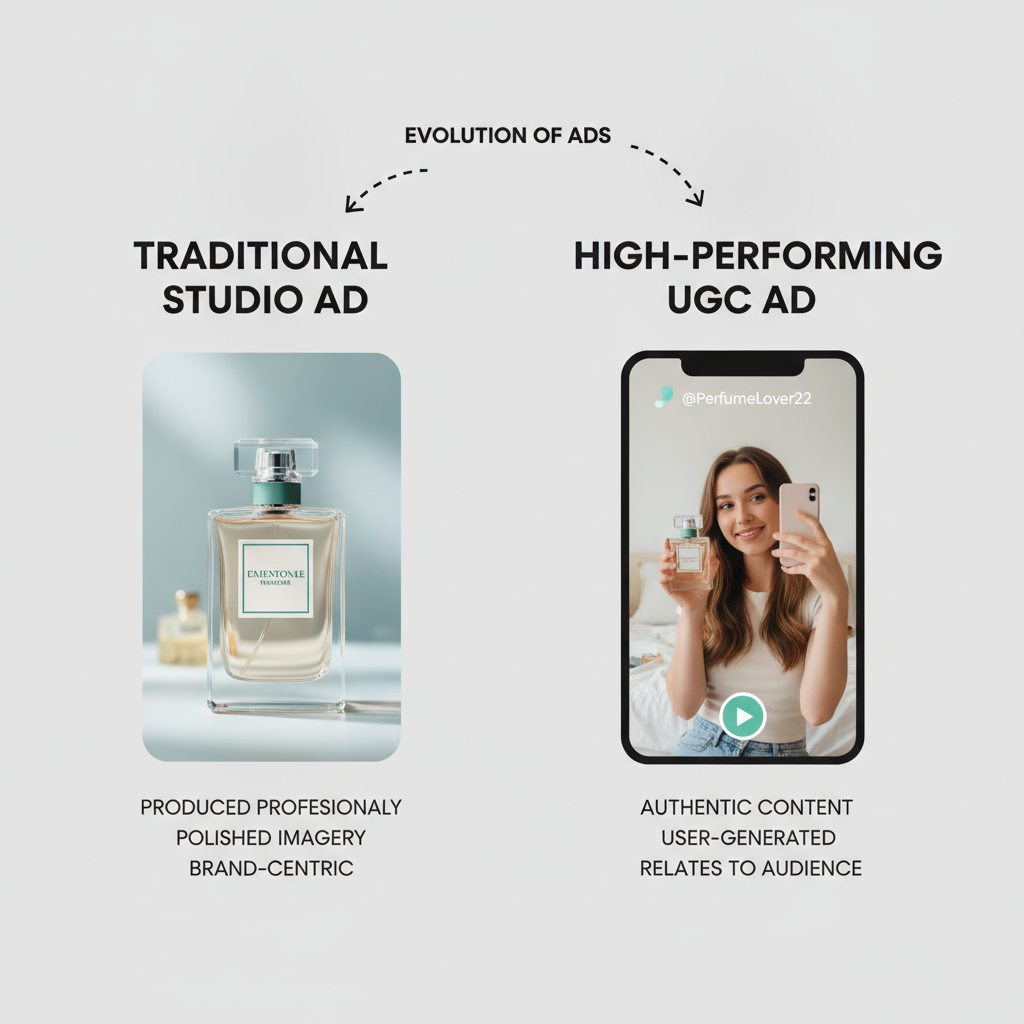
Traditional digital advertising relies on scripted production, high-budget studio lighting, and curated messaging designed to showcase a pristine product image. In contrast, user-generated assets feature real-world environments, unedited perspectives, and honest feedback. While studio advertising emphasizes ideal product features, customer media demonstrates practical performance. According to global research from Nielsen Consumer Research, consumers place significantly higher trust in peer recommendations than in corporate brand messaging.
📊 Consumer Trust Ratings by Ad Format (Nielsen Benchmarks)
Why do consumer visual assets convert better than professional brand photography?
Consumer visual assets convert at higher rates because they help shoppers visualize how a product functions in daily life. Professional studio shots often conceal details like scale, texture, and real-world color variations, leading to hesitation at checkout. When buyers see a product used by individuals with similar needs, their uncertainty decreases. In practice, incorporating customer photos directly on e-commerce landing pages consistently lowers bounce rates and increases dwell time.
Why Do Customer Photos Outperform Professional Studio Ads?
Customer photos outperform studio ads because they serve as relatable social proof, effectively dismantling skepticism before a purchase decision is made. Polished banner ads signal a sales pitch, whereas an unedited customer photo feels like a personal recommendation from a trusted colleague or friend.
"Modern shoppers do not look for perfection in commercial imagery; they look for proof of performance in real everyday life."
What makes authentic customer photos more trustworthy to buyers?
Authentic customer photos carry psychological credibility because the creator has no perceived corporate motivation to obscure product limitations. When prospective buyers observe how clothing fits on non-professional models, or how a home decor item looks under standard residential lighting, they receive realistic expectations. This transparency builds brand integrity while simultaneously lowering post-purchase return rates caused by mismatched expectations.
How does social proof reduce purchasing friction on e-commerce websites?
Social proof reduces purchasing friction by validating buyer decisions at critical moments in the sales funnel. When prospective customers see real shoppers actively enjoying a product, the perceived risk of a poor purchase declines rapidly. Based on real-world results across online retail sectors, implementing customer visual galleries near product call-to-action buttons typically yields a 15% to 30% increase in overall checkout completion rates.

How Can Businesses Source and Partner with UGC Content Creators?
Sourcing high-quality media requires a proactive approach that combines organic customer advocacy with strategic creator partnerships. Businesses can foster organic submissions while leveraging dedicated creators to ensure a steady pipeline of authentic visual assets.
What is the role of professional ugc content creators in modern marketing?
Professional ugc content creators are specialized media producers who craft content designed to look and feel like organic customer posts while following specific campaign objectives. Unlike traditional influencers who charge high fees for access to their personal audience, ugc content creators deliver high-performing media assets for brands to publish on their own official marketing channels. This model allows businesses to retain commercial licensing rights and deploy relatable visual content at scale.
💡 Tip
When requesting organic media from existing customers, streamline the submission process by offering a direct upload link within post-purchase email sequences and providing brief, clear guidance on lighting and product usage.
How can brands encourage organic customers to submit high-quality photos?
Brands can incentivize customer submissions by establishing structured engagement channels and offering meaningful rewards. Effective techniques include:
Automated Post-Purchase Follow-Ups: Send automated emails 10 to 14 days post-delivery asking customers to share a photo of their new item in action.
Loyalty Incentives: Offer reward points, discount codes, or store credit for verified photo submissions.
Social Media Campaigns: Host branded hashtag initiatives where featured customer posts are highlighted on official business pages.
What Are the Key Implementation Strategies for UGC Across Channels?
To achieve maximum return on investment, user-generated media should be deployed consistently across paid, owned, and earned channels. Rather than confining customer photos to social media feeds, leading brands integrate these assets directly into primary conversion paths.
How should user-generated photos be deployed in paid ad campaigns?
In paid ad campaigns, user-generated visuals consistently outperform polished display graphics by blending seamlessly into consumer social feeds. Using customer-style video clips or side-by-side photo comparisons in paid social media ads reduces ad fatigue and drives higher Click-Through Rates (CTR). Technical guidelines published by Google Search Central emphasize that relevant, engaging media assets improve user retention, leading to improved quality metrics across ad platforms.
Where should customer visuals be placed on e-commerce websites for maximum ROI?
Integrating customer media strategically across your website ensures that prospective buyers encounter social validation throughout their browse journey.
📈 Average Conversion Rate Lift by UGC Placement Channel
The highest-performing website placements include:
- 1 Product Detail Pages (PDPs): Embed dynamic media carousels below main product imagery so shoppers can review real-life applications.
- 2 Homepage Feature Sections: Display a curated community wall showcasing real customers using your offerings.
- 3 Checkout & Cart Pages: Feature short customer testimonials or bite-sized photo reviews near purchase confirmation buttons to combat cart abandonment.
Key Takeaways: Maximizing Brand Growth with User-Generated Content
Trust Drives Conversions: Authentic customer photos outperform polished ads because they offer transparent proof of performance in real-world settings.
Diversify Sourcing: Combine organic submissions from everyday customers with targeted assets produced by professional ugc content creators.
Optimize High-Intent Touchpoints: Deploy user-generated visuals on product detail pages, checkout funnels, and paid ad campaigns to minimize purchase hesitation.
- Lower Acquisition Costs: Utilizing customer media in digital advertising reduces creative production expenses while delivering higher engagement rates.
Give Your Community the Mic and Watch Your Brand Flourish
Building an enduring, trustworthy brand isn't about controlling every pixel of your media—it is about opening the floor to the real people who use and love your products every day. When you step back and allow authentic customer stories to take center stage, prospective shoppers naturally see themselves in those experiences. Embrace the human side of your marketing strategy, invite your community to share their personal moments, and watch how genuine trust translates into sustainable long-term growth.
