
Unique Selling Proposition: What Actually Makes You Different From Every Competitor
Quick Answer
A unique selling proposition is the distinct, defensible benefit that sets a business apart from competitors by solving a specific customer problem better than any alternative. Defining a clear unique selling proposition establishes meaningful brand differentiation, guides your strategic positioning statement, and drives measurable improvements in customer acquisition and retention across market channels.
In crowded markets, offering a high-quality product or service is no longer enough to guarantee growth. Buyers evaluate dozens of alternatives before making a purchasing decision, and without a clear reason to choose your company, price often becomes the default decision factor.
Establishing a compelling unique selling proposition (USP) changes this dynamic completely. A strong USP clarifies your market identity, helps prospective clients understand your precise value, and serves as the foundation for your overall marketing and product strategy.
What Is a Unique Selling Proposition and Why Is It Critical?
A unique selling proposition is a foundational business concept that defines the specific advantage your business offers over competitors. It directly answers the question every customer asks: "Why should I buy from you instead of someone else?"
A well-crafted USP is not merely a clever slogan or a generic promise to provide "great service." It is a strategic commitment anchored in a capability or offering that your brand delivers consistently and your competitors cannot easily replicate.
How does a USP differ from a tagline or mission statement?
A unique selling proposition is distinct from taglines and mission statements, though all three support your overarching strategic identity.
Mission Statement: Articulates your internal values, long-term purpose, and operational goals.
Tagline: A short, memorable phrase used in advertising to create brand awareness (for example, Nike's "Just Do It").
Unique Selling Proposition: A concrete, value-driven statement focused entirely on the specific, practical benefit delivered to the customer (for example, Domino's original promise of "Fresh, hot pizza delivered in 30 minutes or less, guaranteed").
While taglines build emotional recognition, a USP provides the logical and economic justification for a customer to select your business.
Why do businesses struggle with true brand differentiation?
In practice, most organizations fall into the trap of claiming "all-in-one" excellence. When companies try to appeal to everyone by highlighting broad traits like quality, speed, and affordability simultaneously, their core message becomes diluted. True brand differentiation requires strategic trade-offs—choosing to specialize deeply in one or two areas rather than being acceptable at everything.
📈 Conversion Rate Lift by Brand Differentiation Level (2024 Benchmark)
As demonstrated in industry benchmarks, organizations that maintain sharp, targeted positioning achieve significantly higher digital conversion rates compared to generalist competitors.
How Do You Uncover Your Genuine Competitive Advantage?
Uncovering your true competitive advantage requires an honest evaluation of market gaps, competitor weaknesses, and your team's authentic strengths. Rather than inventing a differentiation point from scratch, the most successful companies uncover advantages that already exist within their operational model or audience relationships.
What framework helps identify real market gaps?
To systematically identify your unique place in the market, analyze the intersection of three key elements:
- 1What your target audience urgently desires: High-value pain points that cause friction or lost revenue.
- 2What your business does exceptionally well: Proprietary processes, specialized technology, or unique business models.
- 3What your competitors struggle to deliver: Common service gaps, hidden costs, or neglected niche audiences within your sector.
Your USP lives squarely at the point where your unique strengths match an urgent customer desire that competitors ignore.
"True differentiation isn't about being slightly better at what everyone else is doing. It's about being fundamentally different in a way that matters deeply to your specific audience."
How do customer feedback and data reveal your true USP?
A common mistake is brainstorming a positioning strategy entirely within an executive boardroom. Based on real-world results, your actual competitive advantage is often revealed by studying how your best existing customers describe your value.
Review customer support tickets, conduct qualitative buyer interviews, and survey lost leads. Pay specific attention to the exact language clients use when explaining why they renewed a contract or switched from an alternative vendor.
ℹ️ Info
Pro Tip: Look for recurring phrases in customer reviews regarding what surprised them positively after buying. These unexpected delights often highlight your most authentic operational advantages.
🥧 Primary Reasons Customers Choose a Competitor (2024 Survey)
Survey data shows that specialized value and distinct features influence buyer decisions far more than price alone, reinforcing the necessity of clear market positioning.
How to Craft a Winning Positioning Statement (Step-by-Step)
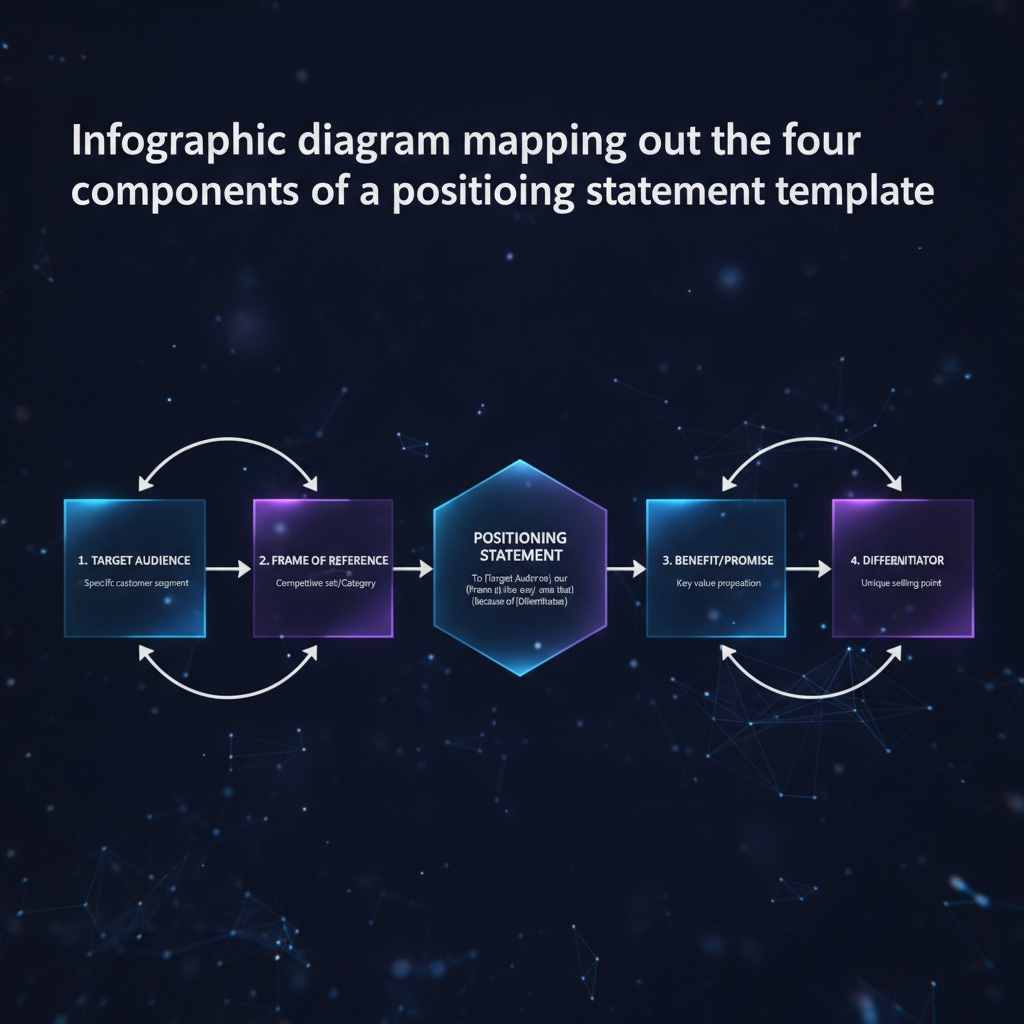
Once you have identified your distinct value proposition, you must translate it into an actionable internal framework known as a positioning statement. This document serves as the north star for product development, sales conversations, and marketing campaigns.
What is the standard structure of an effective positioning statement?
An effective positioning statement follows a clear, structured formula designed to align internal teams and external messaging:
For [Target Audience],
Who need [Specific Need or Opportunity],
Our product/service is a [Category/Market Segment]
That [Key Benefit / Statement of Difference].
Unlike [Primary Alternative/Competitor],
We offer [Primary Proof Point / Unique Feature].
For instance, a modern B2B software company might formulate their position as follows: "For high-growth ecommerce brands who need instant inventory sync, our platform is an automated logistics system that eliminates stockouts in real-time. Unlike traditional ERP software, we offer zero-code setup in under 15 minutes."
What common pitfalls destroy USP clarity?
When refining your positioning statement and public-facing claims, actively avoid these common mistakes:
Overusing Buzzwords: Terms like "innovative," "industry-leading," or "synergistic" carry zero informative value and erode trust.
Focusing on Features Instead of Outcomes: Customers do not buy software features or service hours; they buy specific business or personal outcomes.
Failing to Provide Proof: Any claim made in your USP must be backed by verifiable data, guarantees, or social proof.
How Do You Test and Activate Your USP Across Channels?
Developing a unique selling proposition is only the first step. To generate business value, your differentiation strategy must be thoroughly validated and consistently integrated across every customer touchpoint.
How can you validate your USP before a full launch?
Before rolling out new branding globally, test your proposed positioning using controlled quantitative methods:
- 1A/B Testing Hero Headlines: Run split tests on main landing page headlines to measure changes in sign-up or inquiry rates.
- 2Targeted Paid Campaigns: Launch small-budget ad campaigns testing different value claims to analyze click-through and engagement metrics.
- 3Sales Pitch Iterations: Have sales representatives test different core value statements during introductory calls and track closing rates over 30 to 60 days.
How does a USP guide messaging across digital touchpoints?
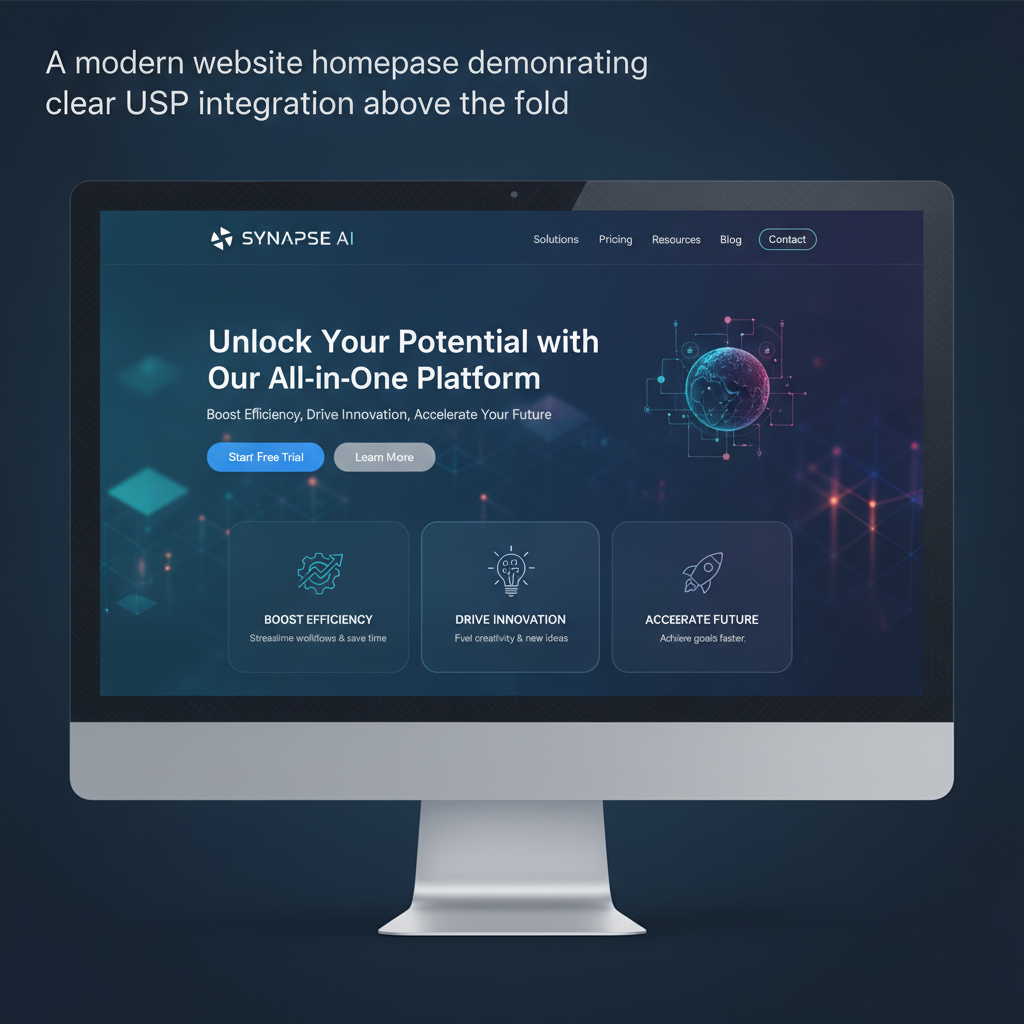
A strong USP should be immediately obvious within five seconds of a user visiting your website. Ensure your core differentiator is prominently highlighted above the fold on key landing pages, incorporated into sales pitch decks, embedded in automated email onboarding sequences, and reflected in customer support service-level agreements (SLAs).
When every department operates from a unified positioning foundation, your brand builds a cohesive, recognizable market presence that naturally attracts your ideal clientele.
Key Takeaways for Brand Differentiation
Solve Specific Problems: A strong unique selling proposition focuses on an urgent, unaddressed need within a clear target audience.
Lead with Evidence: Support your claims with concrete guarantees, measurable metrics, and transparent proof points.
- Maintain Consistency: Reinforce your differentiation across every digital touchpoint, from website messaging to ongoing customer support.
Claiming the Market Space You Deserve
Standing out in a crowded market can feel daunting, especially when you know your team offers exceptional work that prospective buyers simply aren't recognizing yet. You don't have to navigate these positioning trade-offs in isolation. By zeroing in on what your organization authentically does best and aligning it with the deeply felt needs of your ideal audience, you build a firm foundation for lasting customer trust and sustainable growth. Reach out to our brand strategy experts today to evaluate your current messaging, uncover your true market advantage, and build a positioning strategy that commands attention.
